
food-loverscouplessolo
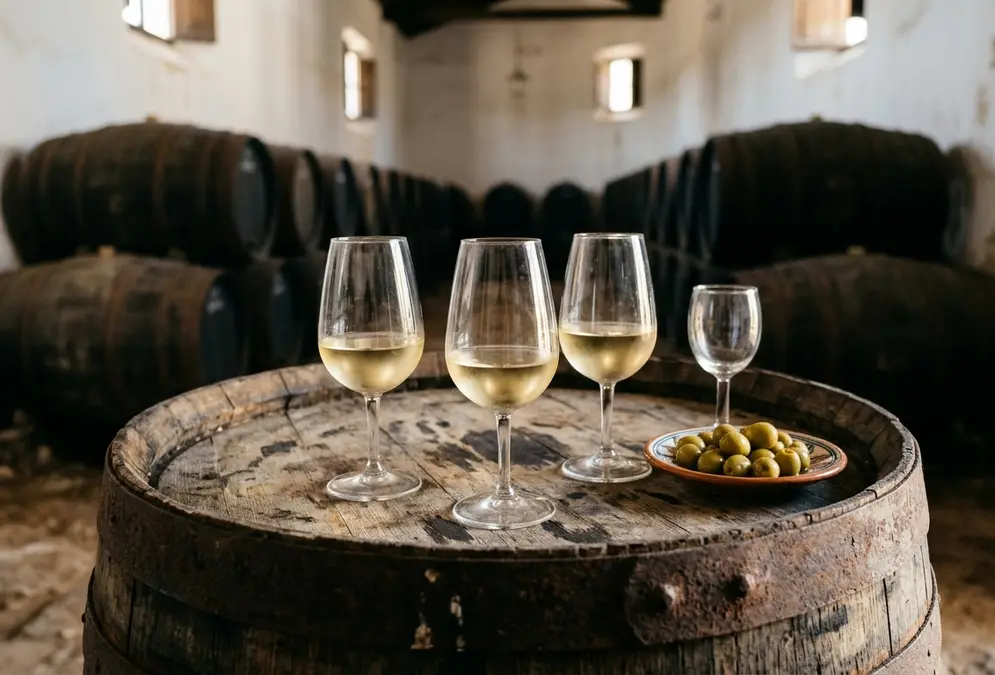
Three glasses of pale sherry and a dish of olives on an old oak cask in a whitewashed bodega near Cádiz, Spain
gastronomy

Sherry Tasting in Cádiz: Bodega Visits and Where to Pour a Glass

Plan a sherry tasting from Cádiz: how to choose a bodega in Jerez, El Puerto or Sanlúcar, which wines to taste in order, and where to taste in the city.

Sherry is made a short hop from Cádiz, in the towns of the Marco de Jerez, and the best tasting here is a half-day that pairs one bodega visit with one glass in the city. There is no single operator behind it, so this page works as a planner: what to taste, in what order, and what to confirm before you go.

Where the sherry comes from

The Regulatory Council describes the three historic sherry towns as Jerez de la Frontera, El Puerto de Santa María and Sanlúcar de Barrameda, all in Cádiz province. El Puerto sits close to Cádiz city, which makes it the easiest bodega town to reach. A local note on vocabulary helps when you read a schedule: in the Jerez region, "bodega" means both the warehouse where wine ages and the company that owns it.

Bodegas across the region welcome visitors for guided tours and tastings, but hours, languages and prices differ by house. None were verified for this page, so choose a bodega from the Consejo Regulador's register and check its own site or phone line before travelling. For the town-by-town logistics, read the Jerez day trip, the Sanlúcar day trip and the El Puerto day trip; the day trips guide compares them.

What a guided tasting usually covers

A visit usually walks through the cellar and the solera system, then pours a flight. The wines to expect, according to the Council, run in a clear order from light to heavy:

  • Manzanilla: a dry white aged under flor, produced exclusively in the bodegas of Sanlúcar de Barrameda. It pairs with fish, seafood and cured meats.
  • Fino: also aged under flor, in the bodegas of Jerez and El Puerto, and served cold at 6º to 8º C. The Council calls it an ideal aperitif with olives, nuts and Iberian ham.
  • Amontillado: aged first under flor, then oxidatively, which gives it more complexity. Serve it at 12 to 14º C.
  • Pedro Ximénez: made from sun-dried grapes and aged only oxidatively. It is a dessert in itself, and works over bitter chocolate or intense blue cheese.

Manzanilla and fino taste alike on first sip and differ in the details, so taste them side by side if the flight allows. Some manzanillas are aged long enough for the flor to weaken, giving a manzanilla pasada with more structure.

Fitting it into a day from Cádiz

Plan one bodega, not three. A guided tour and tasting takes a good part of a morning or afternoon, and a dry fino at noon is easier to enjoy than a sweet PX. A workable shape is a morning transfer to your chosen town, one booked visit, a seafood lunch there, and the return in the afternoon.

Confirm three things with the bodega before you commit: the language of the tour, the number of wines poured, and whether children or non-tasters can join. Ask about the price at the same time, since it is not listed here. Allow a designated driver if you go by car, or use the train and bus options covered on the day-trip pages.

Tasting back in Cádiz

If you want the tasting without leaving the city, three places on this site cover it from different angles. Listán Wine Tasca is the one to try for a by-the-glass comparison and its own tastings, Taberna La Manzanilla is the counter for manzanilla from the barrel, and El Aljibe suits a seated meal. This page does not repeat what those venues serve.

The Council notes that tabancos, the old sherry bars of Jerez, serve wine straight from the cask and are sometimes accompanied by flamenco. In Cádiz the closest match for that evening is a flamenco show, with fried fish from pescaito frito beforehand.

Before you go

Check the bodega's current opening days and booking terms; both change with the season. Book ahead for groups and for any tour in a language other than Spanish. Keep a glass of water between wines, and take a printed or saved confirmation to the door. The tasting is for adults, so confirm with the bodega how it treats minors.

Reporter notebook

Insider tips

Booking tip

Book one bodega, not a crawl

Pick one house from the Consejo Regulador's register and confirm the language, the wines poured and the price with it before you travel.

Pairing tip

Taste dry before sweet

Start with manzanilla and fino, served cold, then amontillado, and finish with Pedro Ximénez, which the Council calls a dessert in itself.

Local custom

Learn the word bodega

In the Jerez region it names both the cellar and the firm, so a schedule that lists a bodega may mean a company with several buildings. Ask which one hosts the visit.

Practical information

Duration
Varies by bodega; allow a half day including transfer
Schedule
Set by each bodega. Check the bodega's own site for current visit days, times and languages.
Price
Varies by bodega; check the bodega's own site
Meeting point
At the chosen bodega. Confirm the address and entrance with the bodega before travelling.

Frequently asked questions

Where can you do a sherry tasting near Cádiz?

Bodegas in the sherry towns of Jerez de la Frontera, El Puerto de Santa María and Sanlúcar de Barrameda welcome visitors for guided tours and tastings. El Puerto is the closest to Cádiz city. Choose a house from the Consejo Regulador's register and book with it directly.

What is the difference between manzanilla and fino?

Both are dry whites aged under flor. Manzanilla is produced exclusively in the bodegas of Sanlúcar de Barrameda, while fino is aged in Jerez and El Puerto. Taste them side by side to hear the difference.

How much does a bodega tasting cost?

Prices differ by bodega and tour type, and none were verified for this page. Check the bodega's own site for the current price and what the flight includes.

What order should you taste sherry in?

Go from light to heavy: manzanilla and fino first, then amontillado, with Pedro Ximénez last as a dessert wine. The Council's serving advice is cold for manzanilla and fino and slightly cool for amontillado and PX.

Can you taste sherry in Cádiz city without a bodega trip?

Yes. Listán Wine Tasca, Taberna La Manzanilla and El Aljibe each cover a different way to drink it in the city. Their own pages explain what they serve.

What does bodega mean in the sherry region?

In the Jerez region the word means both the warehouse where wine ages and the company that runs it. A bodega visit therefore usually means a cellar tour at a producing house.

What food goes with a sherry tasting?

The Council recommends olives, nuts and Iberian ham with fino, fish and seafood with manzanilla, and dark chocolate or blue cheese with Pedro Ximénez.

Further reading

Sources

15 references Show
  1. sherry.wine — The sherry triangle evolves from three to ten (opens in a new tab)

    “Across the region, bodegas welcome visitors to discover the art of Sherry-making with guided tours and tastings”

  2. sherry.wine — The sherry triangle evolves from three to ten (opens in a new tab)

    “the three historic towns of Jerez de la Frontera, El Puerto de Santa Maria and Sanlucar de Barrameda - all located in the province of Cadiz in south-western Spain”

  3. sherry.wine — Bodegas listing (opens in a new tab)

    “Within the Jerez region the term "bodega" is used not only to refer to the warehouses where sherry wines are stored during their production and ageing, but is also used to describe those companies which are dedicated to the activity.”

  4. sherry.wine — Manzanilla (opens in a new tab)

    “It is produced exclusively in the bodegas of Sanlúcar de Barrameda.”

  5. sherry.wine — Manzanilla (opens in a new tab)

    “Manzanilla combines perfectly with fish and seafood, as well as with salted fish and cured meats.”

  6. sherry.wine — Manzanilla (opens in a new tab)

    “Occasionally, Manzanilla wines are subjected to unusually long ageing periods, in which the flor is slightly weakened, causing a small level of oxidation and greater complexity which are known as "Manzanilla Pasada".”

  7. sherry.wine — Fino (opens in a new tab)

    “It is stored and aged in American oak butts using the traditional solera y criaderas system in the bodegas of Jerez de la Frontera and El Puerto de Santa María.”

  8. sherry.wine — Fino (opens in a new tab)

    “It is an ideal aperitif wine and goes well with all types of tapa, especially olives, nuts and Iberian cured ham.”

  9. sherry.wine — Fino (opens in a new tab)

    “Use an ice bucket with both ice and water to serve chilled between 6º & 8º C.”

  10. sherry.wine — Amontillado (opens in a new tab)

    “Amontillado is a very unique wine due to its dual aging process: first under the veil of flor, typical of Fino and Manzanilla, followed by a period in which the flor disappears and the wine is exposed to oxidation.”

  11. sherry.wine — Amontillado (opens in a new tab)

    “Amontillado should be served at a temperature of between 12 and 14º C.”

  12. sherry.wine — Pedro ximenez (opens in a new tab)

    “Pedro Ximénez should be served slightly chilled, at between 12 and 14ºC, though the younger wines may be served at lower temperatures.”

  13. sherry.wine — Pedro ximenez (opens in a new tab)

    “It is a dessert in itself, though combining exceptionally well with desserts based on slightly bitter chocolate, with ice-creams and blue cheeses of great intensity, such as Cabrales or Roquefort.”

  14. sherry.wine — The sherry triangle evolves from three to ten (opens in a new tab)

    “tabancos are traditional Sherry bars where the wines are served straight from the cask - sometimes accompanied by flamenco.”

  15. sherry.wine — The sherry triangle evolves from three to ten (opens in a new tab)

    “Situated at the mouth of the Guadalete river, close to Cádiz city, the port town’s wines benefit from Atlantic breezes which lend them a distinct elegance.”