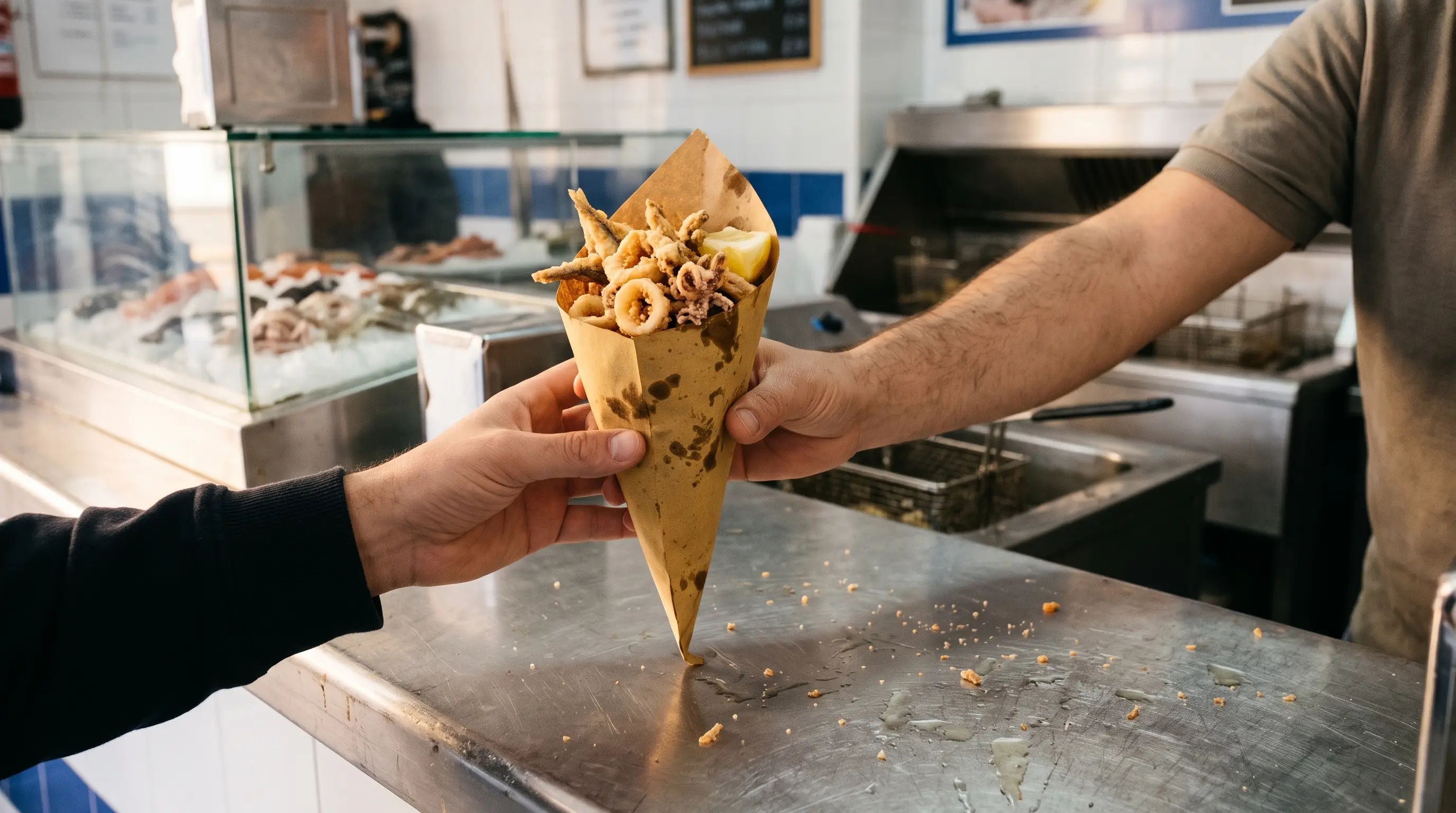

What a freiduría is and how Cádiz orders it
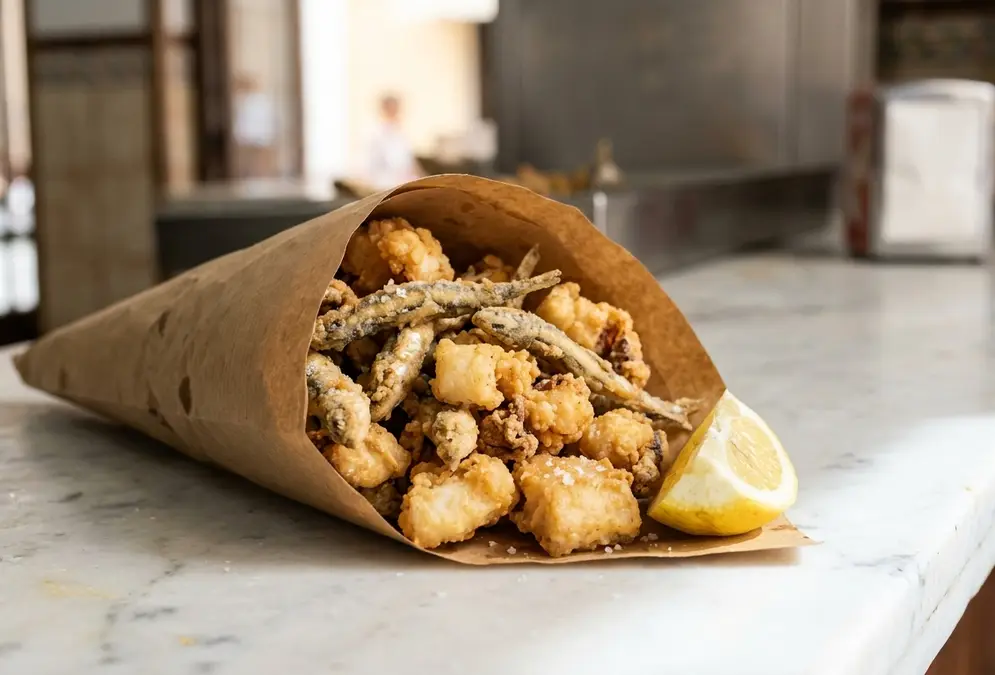
A freiduría is a fry counter that cooks to order, and in Cádiz the word you will hear is freidor[6]. The freidores' own unit is the cuarto y mitá, and the proper way to take it is in a paper cartucho holding a mix of chocos, adobo and pescadilla[7]. The cone is traditionally paper de estraza, and some places weigh the fish rather than count it[8].
What ends up in the cone follows the day's catch. The usual cast, in no particular order[9]:
- Boquerones, fresh anchovies
- Acedías, small flat fish
- Cazón en adobo, dogfish marinated before it is floured
- Puntillas and chipirones, small squid
- Pijotas, young hake
Don't miss · Dish
Pescaíto frito
Cádiz's fried fish, floured and fried to order, then sold by weight in paper cones. What to order at a freiduría, how it is made, and where…
Two names trip up visitors: puntillitas are baby squid and chopitos are baby cuttlefish[10]. Both are best eaten fast, while the crust is still brittle.
The flour question: wheat, chickpea or both
Wheat flour is the most common coating for Andalusian fried fish, with chickpea flour used in some areas for extra crunch[11]. Beyond that, the accounts diverge.
Directo al Paladar describes the standard Andalusian method as a mix of flours, mainly wheat and chickpea[12], and Hola calls chickpea flour the flour par excellence for this frying[13]. The Cádiz chiringuito owner in elDiario takes a different line, using only very fine wheat semolina for fish while conceding that some cooks in the city mix in a little chickpea[14].
Recipes make the split concrete. Acedías, the flat estuary fish tied to Cádiz's way of frying, are rolled in half wheat and half chickpea flour in a gaditano recipe on Directo al Paladar[15], while a standard recipe for the Andalusian fry asks for a coarse flour sold for frying fish[16], a long way from that owner's fine semolina.
So I would not repeat the chickpea line as a rule. Wheat is the safer default, a wheat-and-chickpea blend is real enough to turn up in recipes, and none of it adds up to chickpea alone. Ask the freidor what is in the sack and you will get a straighter answer than any article gives.
The difference is easier to taste than to read about. A wheat-only coating shatters lightly and tastes of little beyond the fish and the oil, which is the point of a freiduría. A coat with chickpea in it turns a shade darker, a little nuttier and slightly denser, so the same cone of chopitos can read as two different dishes depending on the counter.
Dry, dust, shake and fry hot in small batches
The technique is the same whichever flour a cook picks: oil near 180 °C, with the fish added in batches so the temperature never drops[4]. Flour goes on at the last moment, because floured fish left to sit turns damp and loses its crispness[17]. A freidor keeps the layer thin, uses flour sold for frying and shakes off the excess over a sieve[18]. That is the whole trick behind a good cone of pescaíto frito, and the reason it suits a quick, busy counter better than a kitchen working through table orders.
Two details are still argued over. Oil is one, since olive and sunflower both turn out a good fry[19]. Salt is the other: one school adds it only after frying, so the fish does not release water into the crust[20], while another salts the cleaned fish before flouring[21]. Whichever camp a freidor belongs to, the fish should arrive crisp and dry, with no pools of oil in the paper.
Water is the enemy at every step: dry fish, last-minute flour, hot oil and a cone that lets steam out. A damp fish under a thick coat steams instead of frying, which is how you end up with the soggy cartucho everyone warns you about.
That is also why the home version so often disappoints. A domestic pan holds less oil, loses heat the moment the fish goes in and gets crowded because nobody wants to fry six rounds. The freidor's advantage is not a secret flour but volume, a deep fryer that recovers fast and a habit of cooking little and often.
Where chickpea flour really lives: tortillitas de camarones
Chickpea flour's strongest claim in Cádiz is the tortillitas de camarones, the crisp shrimp fritters, and even there it has been losing ground: cooks replaced it with wheat flour gradually as money became less tight[22]. A recipe still in circulation pairs 100 g of chickpea flour with 100 g of wheat flour for every 100 g of shrimp[5].
The batter is an egg-free mix of flour and water[23], and the origin is disputed between Cádiz and San Fernando, or possibly both[24].
Deep dive · Article
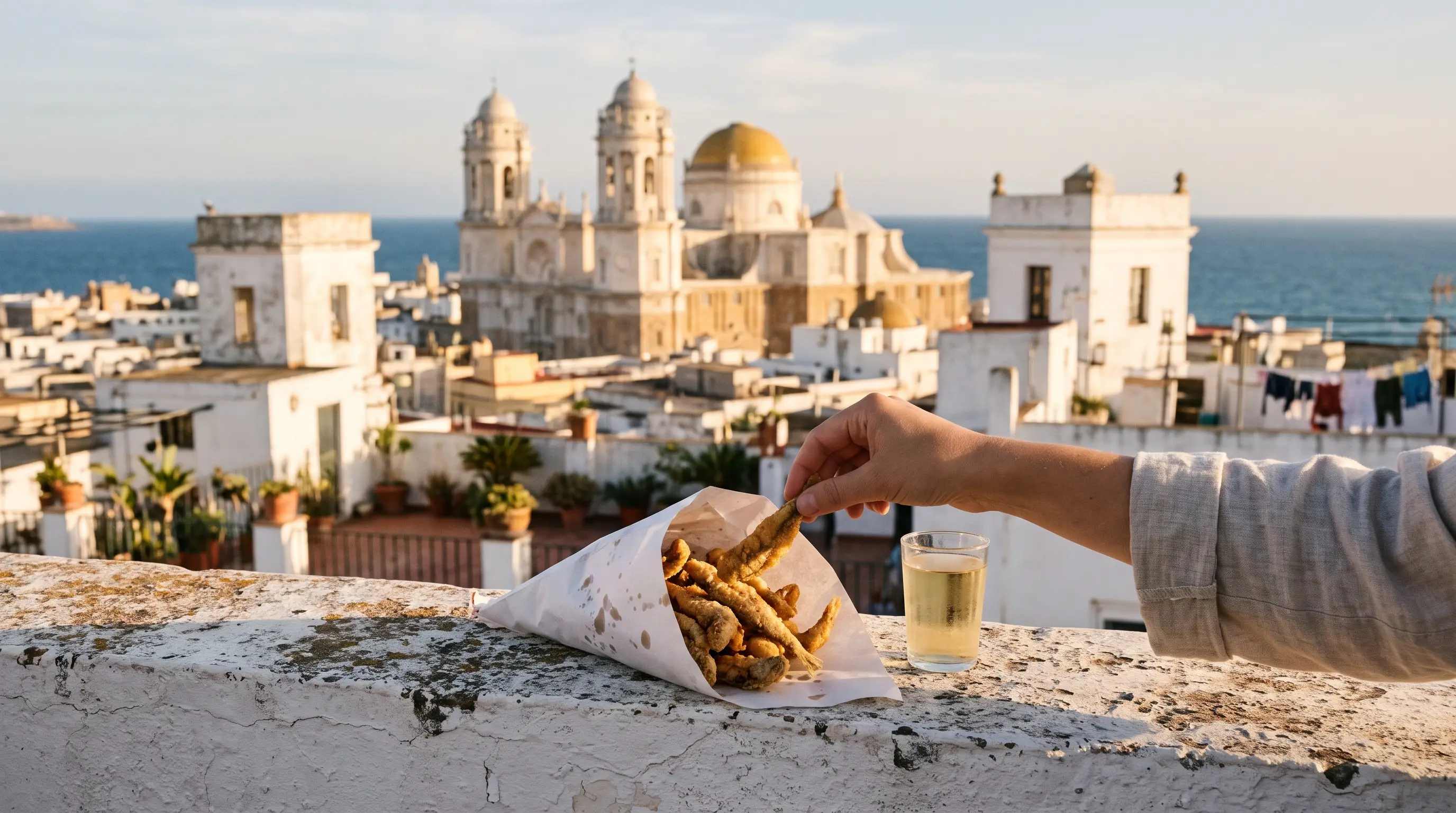
What Is Cádiz Known For? Gadir, 1812 and Carnival
Cádiz is known for Phoenician Gadir, the 1812 Constitution, a satirical Carnival and Atlantic tuna and fried fish. Here is how each one sha…
My guess is that the confusion starts here: a flour that defines one fry in Cádiz gets credited to every other fry in the city. It is a short step from a plate of tortillitas to the idea that the fish in the next cone wears the same coat.
Where to try it in Cádiz
The easiest place to see all this in action is Freiduría Las Flores, on the plaza that gives it its name and known for chocos, cazón and every kind of fried fish at popular prices[25]. Stand at the counter, point at the tray and watch the routine above play out.
When the cone arrives, use the flour question as a test. The crust should be thin enough to see the fish through, golden rather than brown and brittle at the edges; a thick or doughy coat points to a heavy hand with the flour or a pan crowded with too much fish. Anything that tastes of chickpea is a cook's choice, not a regional rule.
Recommended tours
Tours are selected for quality, not commission. We earn a small fee if you book, at no extra cost to you.
Three habits help at any freidor:
- Order by the cuarto y mitá rather than by the plate.
- Eat from the paper cone while it is hot.
- Ask what is freshest that day instead of repeating the same mixed order.