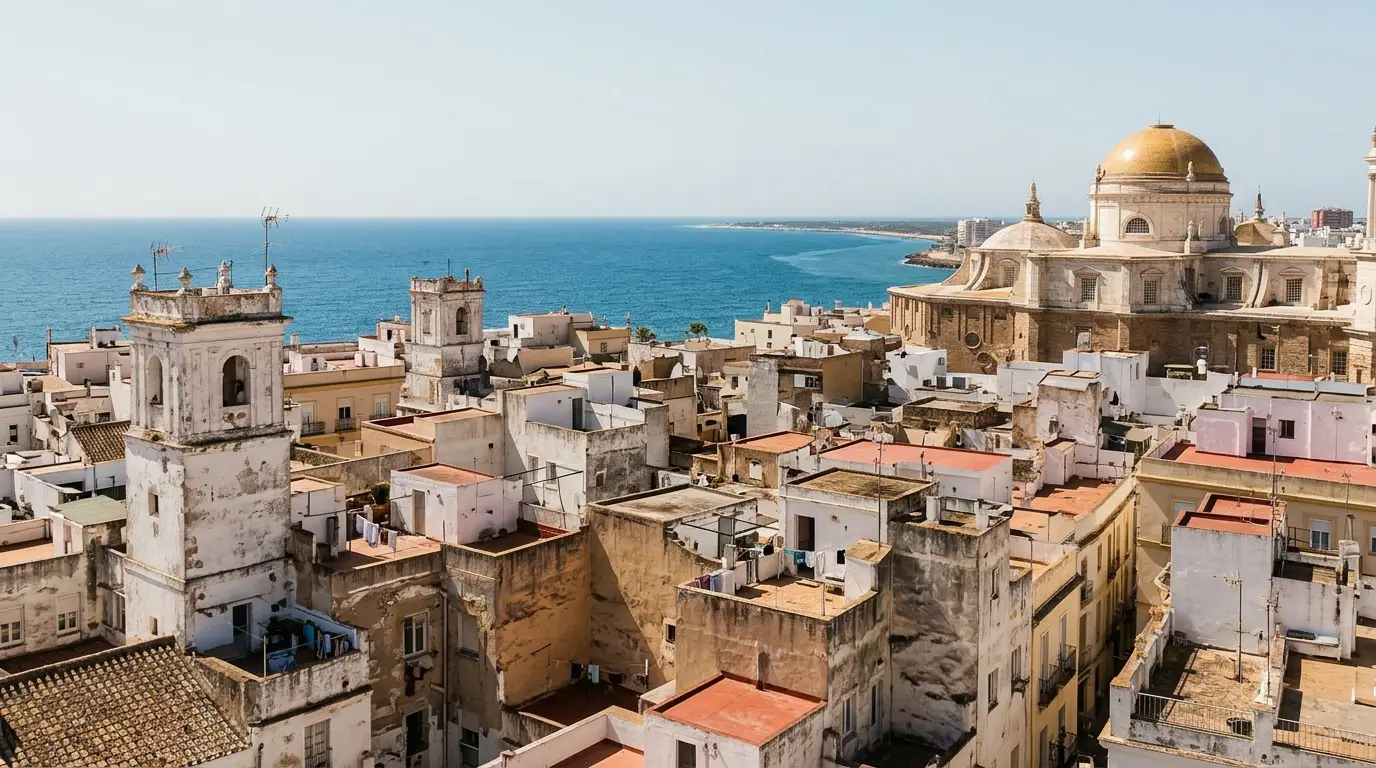
Best Things to Do in Cádiz, Ranked for a First Visit
Written by
Lucía Barbera Quintero Historian specialising in Cádiz's ancient, colonial and constitutional heritage.
Updated Published
Cádiz is small enough to see properly in two days, and the best order runs from the oldest stones to the newest noise. Start underground with the Roman Theatre, the oldest in Iberia, then climb to the cathedral and Torre Tavira for the view that explains the street plan.
The ranking below weighs three things: how much a place tells you about why Cádiz exists, how little effort it takes to reach on foot from the old town, and whether it is free or cheap. Free sights such as the Roman Theatre and the Castillo de Santa Catalina sit high for that reason. Hours and ticket prices change, and several of the smaller sights publish no firm schedule, so each pick says what to confirm before you walk over.
If you only have a day, take picks 1, 4, 6 and 10: theatre, tower, beach and a flamenco evening. If you have two, add El Pópulo and Santa María on foot and keep La Viña for lunch, when the fried fish is at its best.
Roman and medieval Cádiz
-
No. 1
Monument
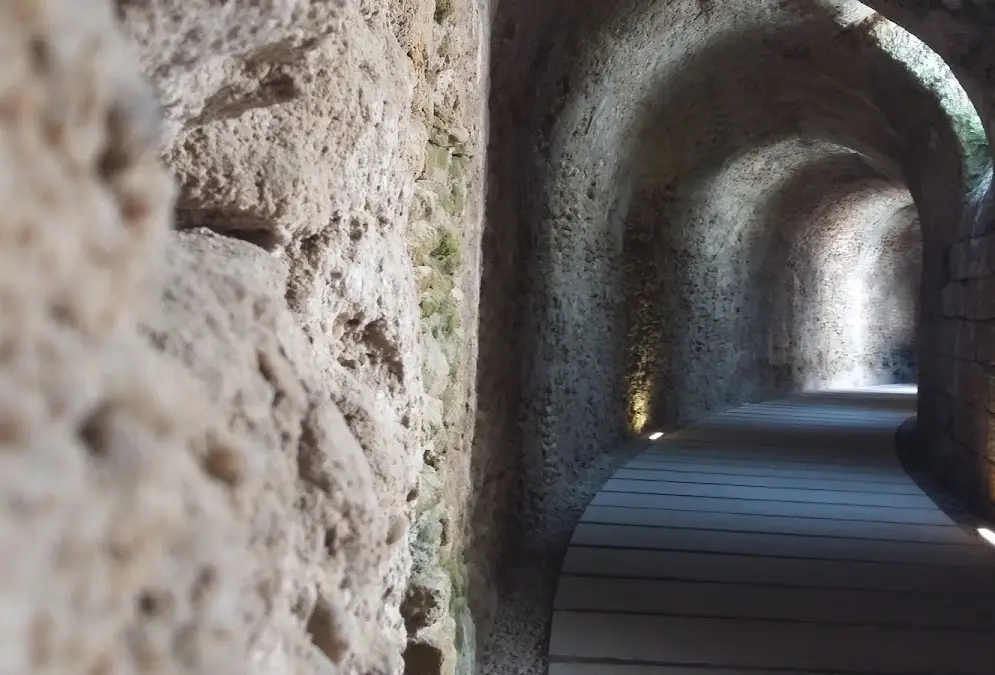
Roman Theatre of Cádiz (Theatrum Balbi)
Cádiz's Roman Theatre is the oldest in Iberia: a first-century BCE Gades theatre under El Pópulo, free to enter, with the dig closed during…
A first-century BCE theatre built on the orders of Lucius Cornelius Balbus the Younger, almost 120 m across and the oldest in the Iberian Peninsula. Admission is free. The dig itself has been restricted while expansion works run, so go for the Interpretation Centre on Calle Mesón, where survey wells show the stage-building remains. It anchors El Pópulo, and it is the first stop because everything later in the city sits on top of it.- Address:
- C. Mesón, 11, 13, 11005 Cádiz, Spain
- Admission:
- Free admission
-
No. 2
Neighborhood
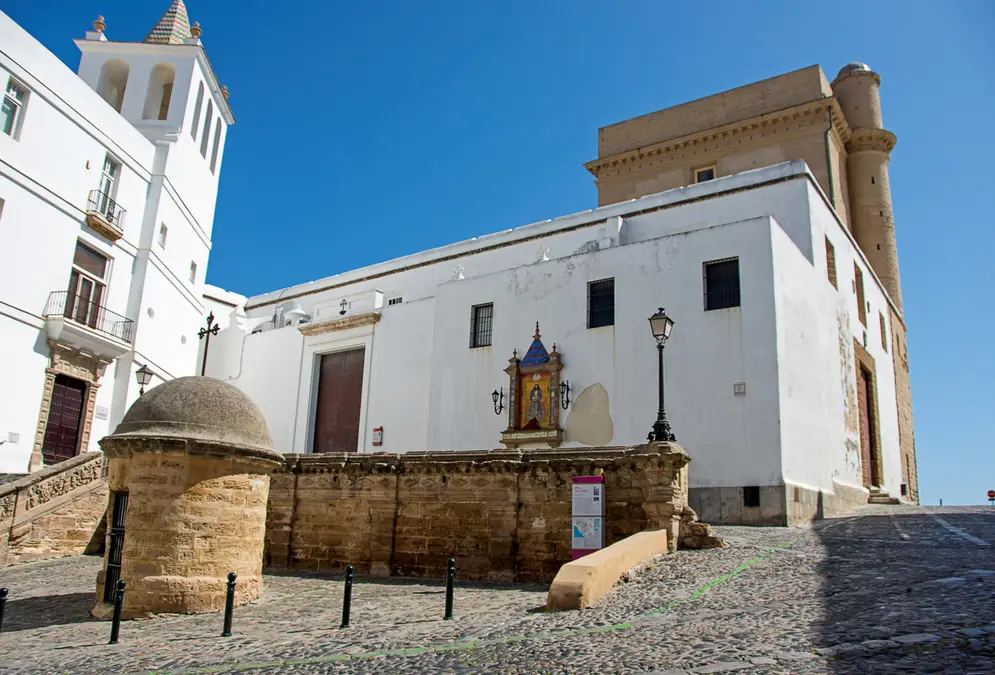
El Pópulo
El Pópulo is the medieval core of Cádiz: a quarter of narrow lanes above a Roman theatre, with the Arco del Pópulo and the Old Cathedral of…
The medieval core, where Alfonso X made the site of the old mosque the first cathedral after the 1262 conquest. The lanes are narrow and the Arco del Pópulo marks the way in. The Old Cathedral of Santa Cruz is currently closed, so treat El Pópulo as a walk around the Roman Theatre and Gorrión Wine Bar rather than a checklist.
Towers, domes and the view from above
-
No. 3
Monument
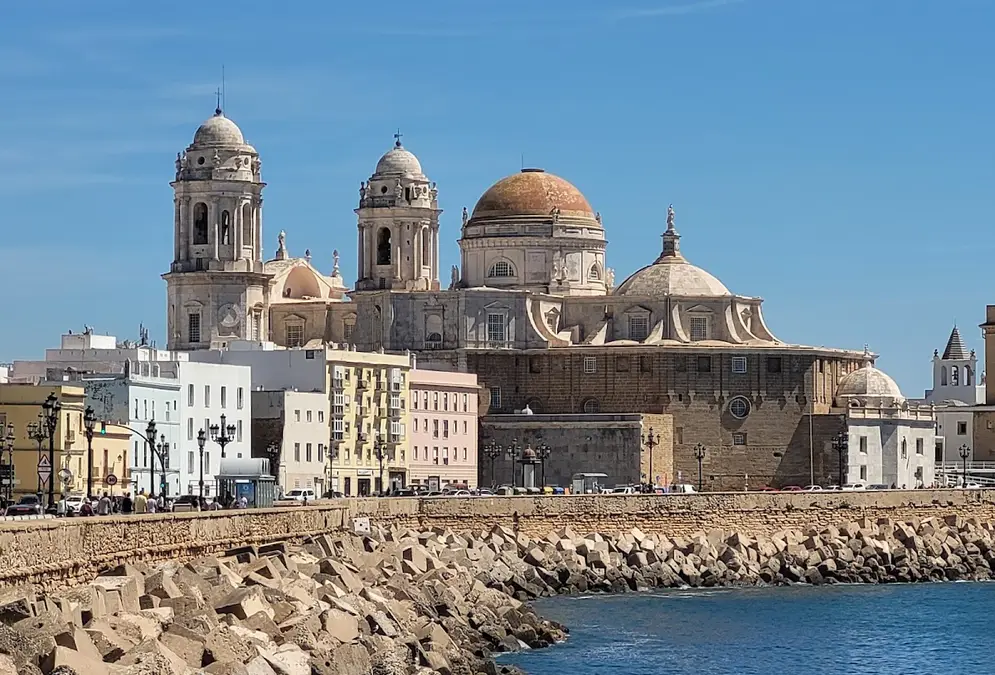
Cádiz Cathedral
Cádiz Cathedral's one ticket covers the crypt, the Clock Tower and the Cathedral Museum with its silver treasury. Check the official site f…
Building Cádiz Cathedral spanned 116 years, which is why a Baroque base ends in neoclassical upper stages. Golden tiles cover the dome, and the crypt below holds the grave of the composer Manuel de Falla. Check the cathedral's own site for hours, because Sunday Mass shifts the visiting pattern.- Address:
- Pl. Catedral, s/n, 11005 Cádiz, Spain
- Admission:
- One paid ticket covers the cathedral, crypt, Clock Tower viewpoint and the Cathedral Museum with its treasury; check the official site or online ticket shop for current prices.
-
No. 4
Activity
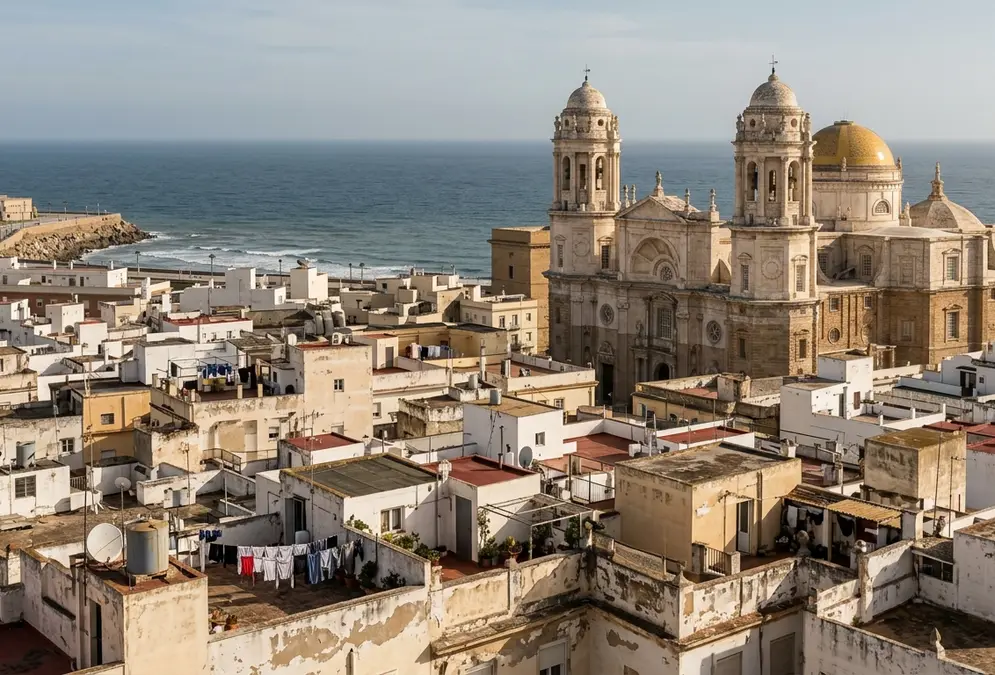
Cádiz Cathedral Tower Climb (Torre del Reloj)
Climb the Torre del Reloj at Cádiz Cathedral: what the ticket includes, the hours to check, and the view over the old town and the Atlantic…
The Torre del Reloj is the cathedral tower open to visitors, and its views cover the whole city and the Atlantic. The general ticket was listed by the city tourism office at 10 euros and covers the cathedral and crypt as well as the climb. Compare the angle with the one from Torre Tavira the same day.- Address:
- Plaza de la Catedral, Cádiz
- Price:
- €10 general admission per the city tourism office (includes cathedral, crypt, tower and Casa de la Contaduría); confirm the current price
-
No. 5
Monument
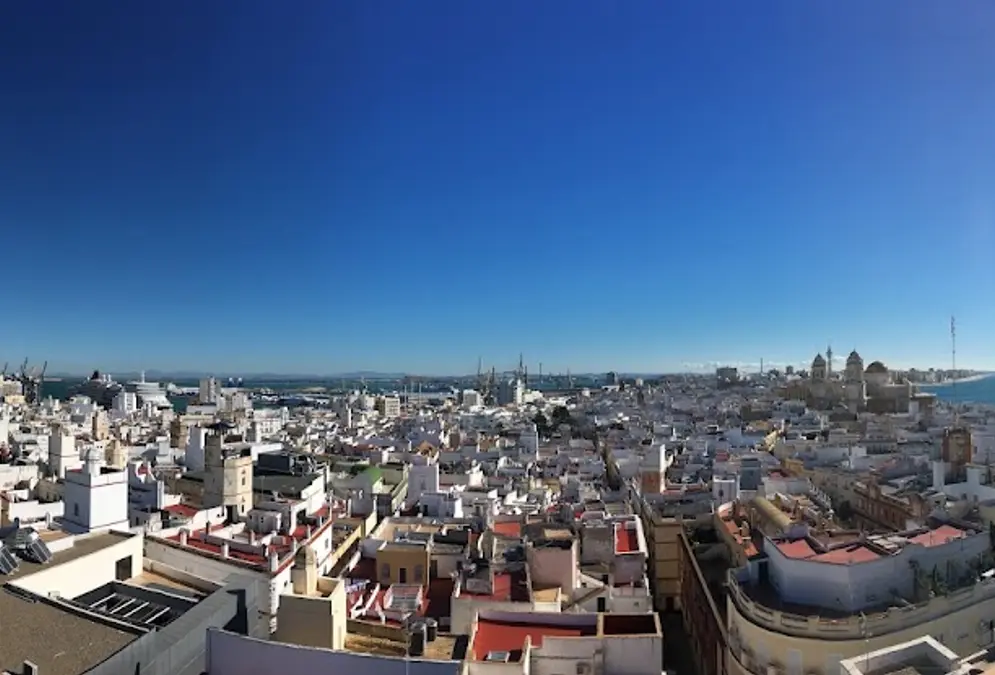
Torre Tavira
Torre Tavira is Cádiz's 1778 watchtower, 45 m above sea level, with Spain's first camera obscura. Tickets are €8; allow 45 minutes and arri…
At 45 m above sea level in the highest part of the old town, Torre Tavira gives a 360-degree view of the rooftops. Its camera obscura, opened on 22 December 1994, was the first installed in Spain, and it projects a live image of the streets you have just walked. It sits in El Mentidero, a short walk from the Gran Teatro Falla.- Address:
- C. Marqués del Real Tesoro, 10, 11001 Cádiz, Spain
- Admission:
- General €8 / reduced €6 (over 65s, students with valid ID, large or single-parent families, groups of more than 10, people with disabilities); official page undated, confirm before you go
Sea walls and the city beach
-
No. 6
Neighborhood
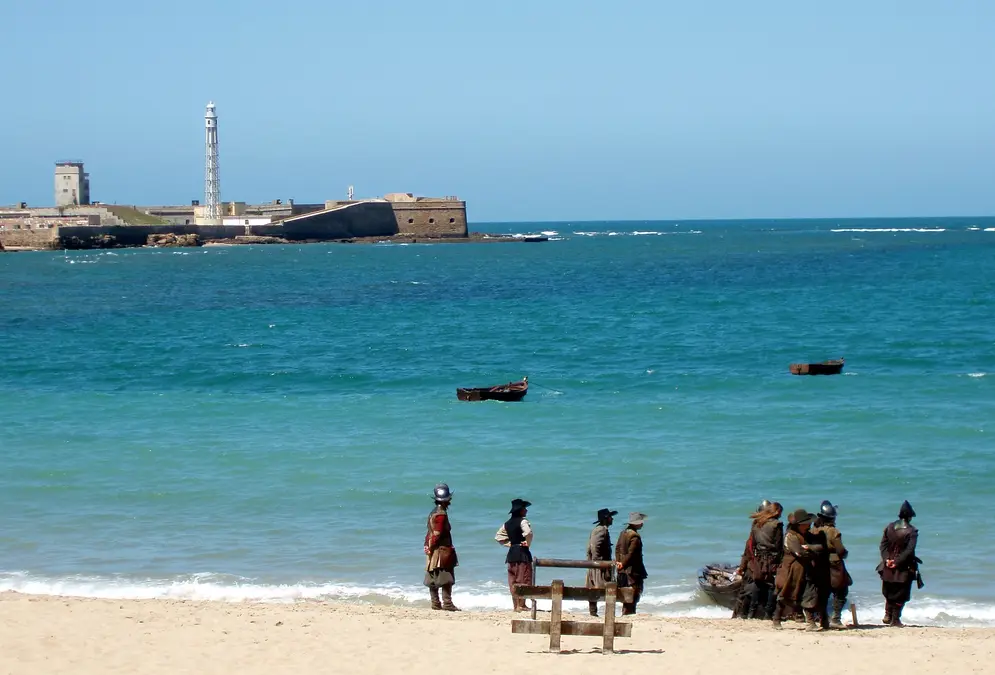
La Caleta
La Caleta is Cádiz's small walled-city beach, closed at each end by a castle. Where Phoenician Gadir met the sea, with practical beach and…
La Caleta is a 450 m city beach closed at each end by a castle, with golden sand and calm water. It is also where Phoenician Gadir kept its port, which makes it more than a swimming spot. Walk out along the Castillo de Santa Catalina afterwards. -
No. 7
Monument
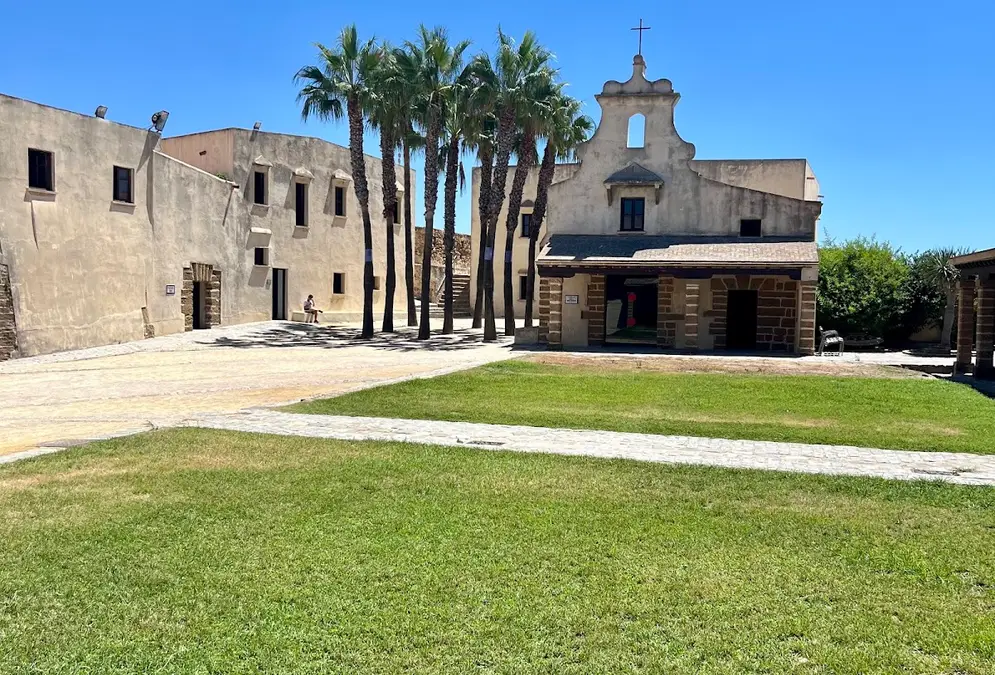
Castillo de Santa Catalina
Star-shaped sea fortress at the north end of La Caleta, built after the 1596 Anglo-Dutch sack. Free entry, exhibition rooms and a past as a…
A star-shaped sea fortress ordered after the 1596 Anglo-Dutch assault and used as a military prison from 1769. The Junta de Andalucía lists entry as free except for announced events. Published opening times are inconsistent, so confirm with the Cádiz tourist office before you commit a late-afternoon slot to it.- Address:
- C. Campo de las Balas, s/n, 11002 Cádiz, Spain
- Admission:
- Free entry, except for previously announced events
-
No. 8
Monument
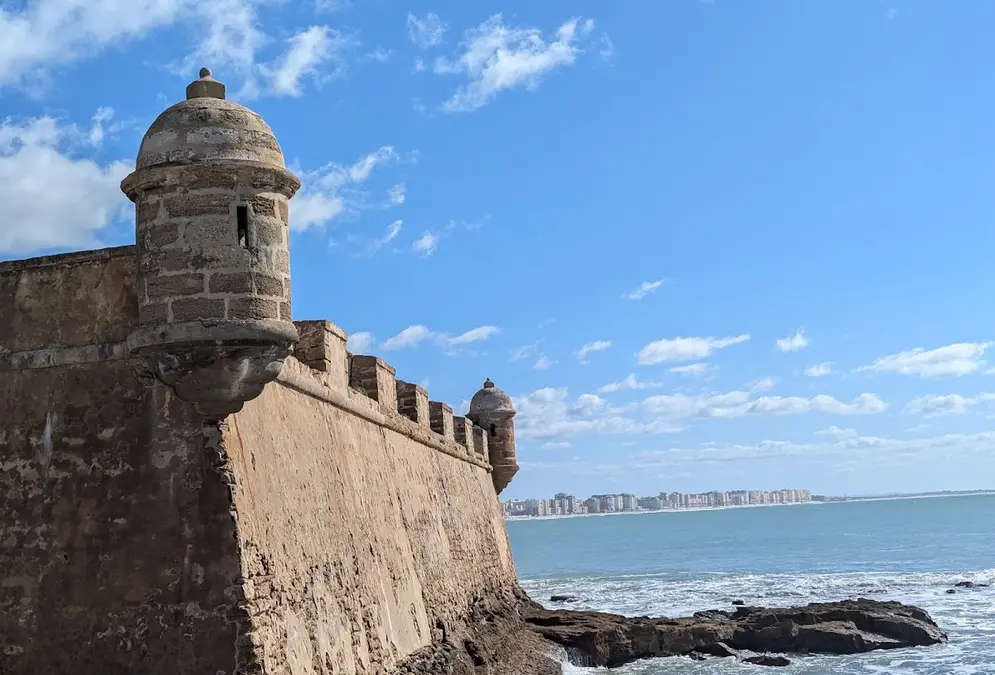
Castillo de San Sebastián
Castillo de San Sebastián is Cádiz's nine-sided sea fortress at the end of La Caleta. Its history, the 2024 reopening and what to check bef…
A nine-sided sea fortress built at the start of the 18th century, with parapets, gun ports, two water moats and drawbridges. It closes La Caleta at the other end from Santa Catalina. The city tourism page lists it open daily from 9:00 until sunset, free, subject to the weather, so check conditions before you walk the causeway.- Address:
- GMHM+FH, P.º Fernando Quiñones, s/n, 11002 Cádiz, Spain
- Admission:
- Free entry, as listed by the Cádiz city council's tourism page.
Flamenco, fishermen and Carnival
-
No. 9
Neighborhood
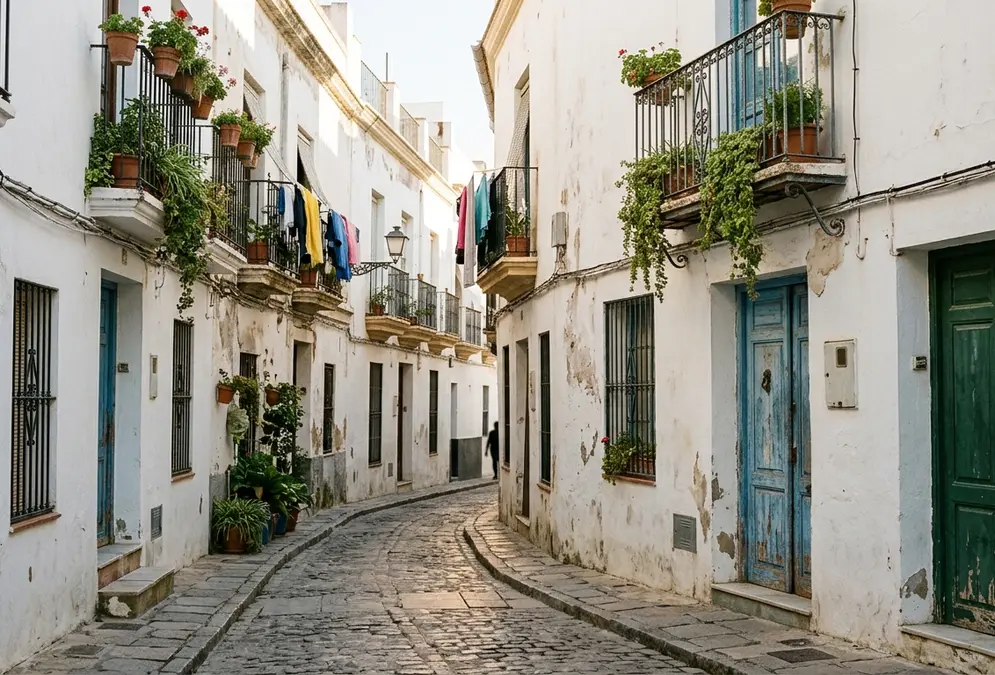
Santa María
Santa María is Cádiz's flamenco and gitano barrio, its curving lanes laid over a buried Roman amphitheatre, with La Merced, a Nazareno chap…
Santa María is the gitano and flamenco barrio, and its curving lanes follow the outline of a buried Roman amphitheatre. Enrique el Mellizo (1848 to 1906), the most influential figure in Cádiz flamenco styles, is remembered here with a bust. The La Merced flamenco centre occupies the former market and has a large stage; check its programme before you go. -
No. 10
Activity
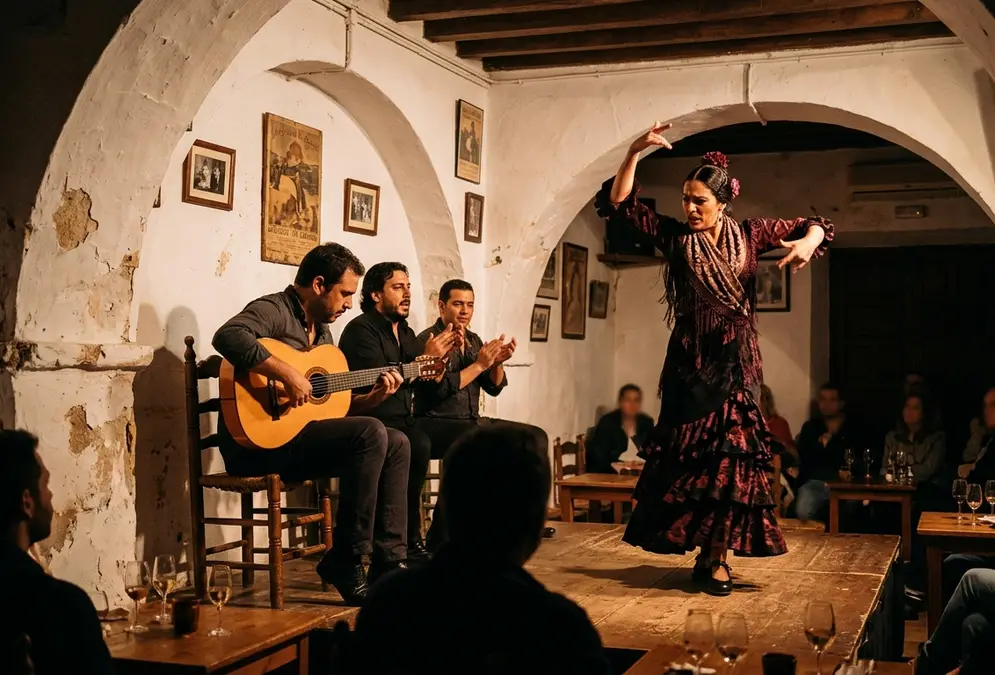
Flamenco Show in Cádiz
Where to see live flamenco in Cádiz: the 60-minute La Cava tavern show, plus the peñas and the municipal flamenco centre in Santa María. Ch…
UNESCO inscribed flamenco on its Representative List in 2010, and Cádiz is one of the places it grew up. The La Cava show lasts 60 minutes, costs 32 euros for an adult with a drink and starts at 21:30. It is loud, with heavy clapping and heel work, so sit back if you want conversation. Confirm which nights it runs; a third-party listing gives a different pattern from the venue.- Price:
- Adult €32, child (3-12) €16, one drink included, per the venue's booking page; confirm the current price
-
No. 11
Neighborhood
La Viña
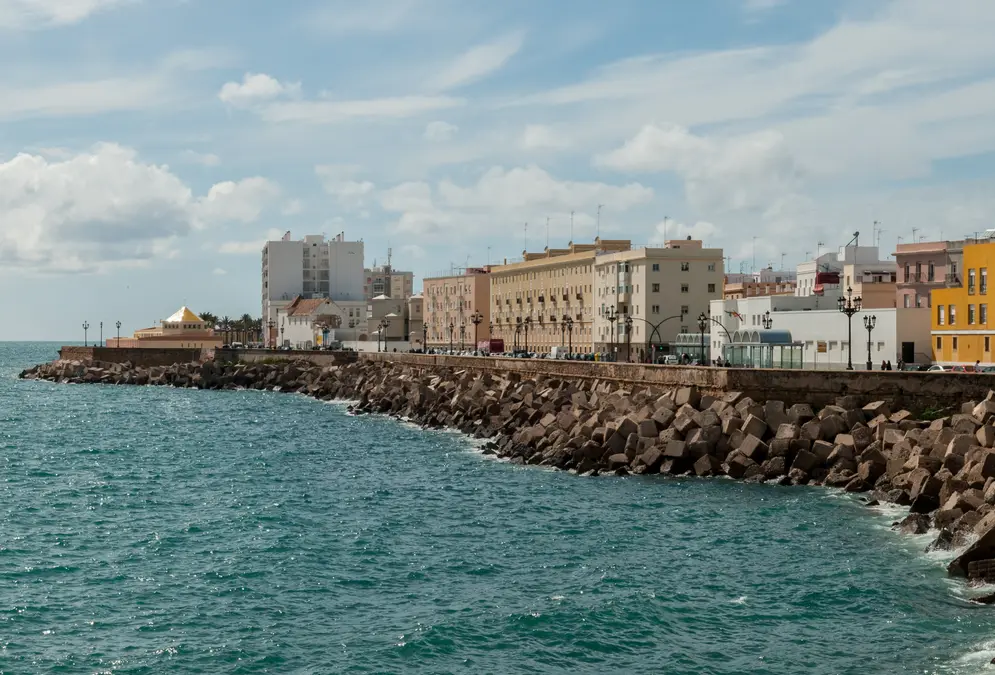
La Viña is Cádiz's fishermen's quarter and the heart of its Carnival: narrow streets, fresh-fish bars, the Palma church and La Caleta beach…
La Viña is the fishermen's quarter, settled by working families who fished off La Caleta, and the heart of Carnival. Come for lunch rather than sightseeing: Casa Manteca and Bar Casa Pepe are both here, and Casa Pepe serves lunch only. Order tortillitas de camarones and keep the pescaíto frito for the end. -
No. 12
Monument
Gran Teatro Falla
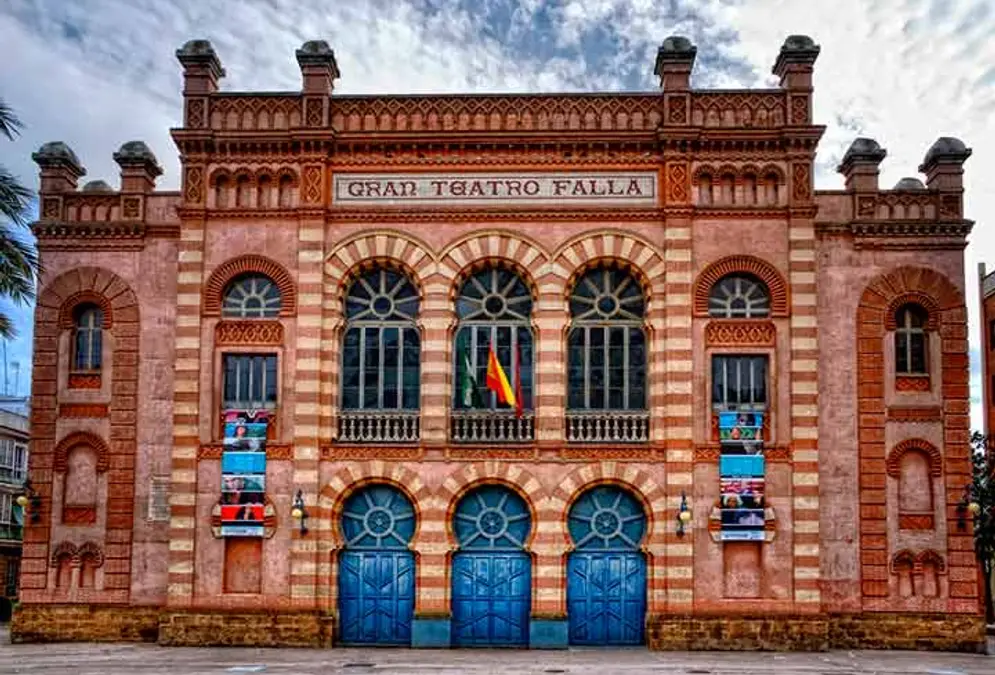
Cádiz's Neo-Mudéjar municipal theatre in Plaza Fragela, built 1884-1905 and home to the February Carnival contest. Interior opens only for…
A Neo-Mudéjar theatre in red brick, built from 1884 and renamed for Manuel de Falla in 1926. Every February it hosts the Carnival contest, which is the real reason to know it. The interior opens only for programmed events, so book a performance or admire the facade from Plaza Fragela.- Address:
- Pl. Fragela, s/n, 11003 Cádiz, Spain
- Admission:
- No general admission: tickets are sold per performance. Prices vary by event; check the official programme or the box office on 956 22 08 34.
Goya, the 1812 Constitution and the old gate
-
No. 13
Monument
Oratorio de la Santa Cueva
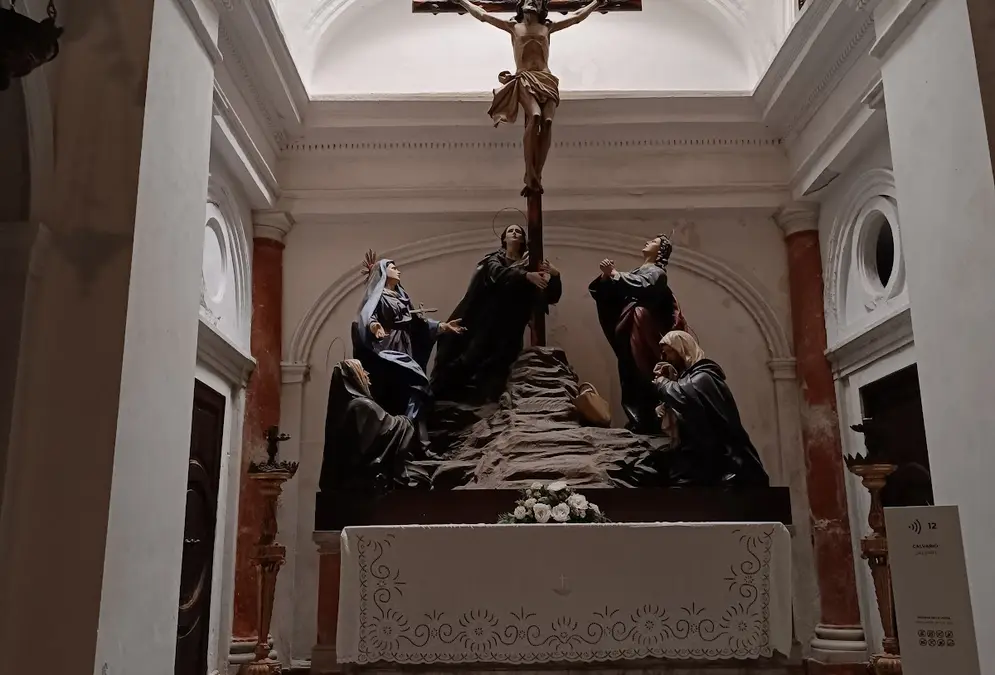
Two chapels, one below the other: a bare underground oratory and an oval upper chapel with three Goya canvases. €5 general entry; no Sunday…
Two chapels, one above the other. The lower one is bare and underground; the oval upper chapel holds three of its five canvases by Goya. The city tourism office lists general admission at 5 euros and no Sunday hours, so plan it for a weekday. Pair it with the Oratorio de San Felipe Neri, a short walk away.- Address:
- C. Rosario, 10, 11004 Cádiz, Spain
- Admission:
- €5 general / €4 over-65s, under-25s and people with a disability under 60% / €3 per person in groups of 15 or more; free for under-12s and people with a disability of 60% or more
-
No. 14
Monument
Oratorio de San Felipe Neri
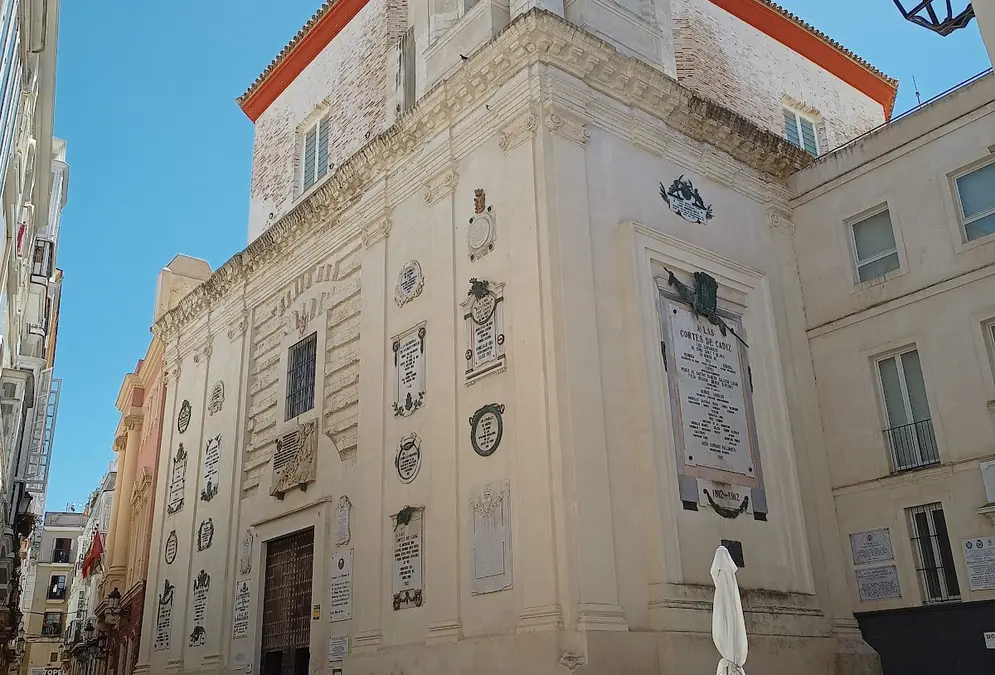
Baroque oratory in Cádiz where the Cortes sat from 1811 and the 1812 Constitution was promulgated. Elliptical plan, rococo altar; hours and…
The Cortes met in this oratory from 24 February 1811 to 25 September 1813, and the Constitution was promulgated on 19 March 1812. The elliptical plan and rococo altar are worth a look. The city tourism office lists it open Monday to Saturday (weekdays 10:30 to 16:00, Saturday 10:00 to 14:00) with a €5 ticket. View the exterior plaques to the deputies if the doors are shut.- Address:
- C. San José, 36, 11003 Cádiz, Spain
- Admission:
- General €5; €4 for over-65s, under-25s and people with a disability under 60%; groups of more than 15 people €3; free for children under 12 and people with a disability over 60% (Cádiz city council).
-
No. 15
Monument
Puerta de Tierra
Cádiz's surviving 18th-century land gate, with Cayón's 1756 marble portal, a walkable upper level and the Puppet and Lithography museums. C…
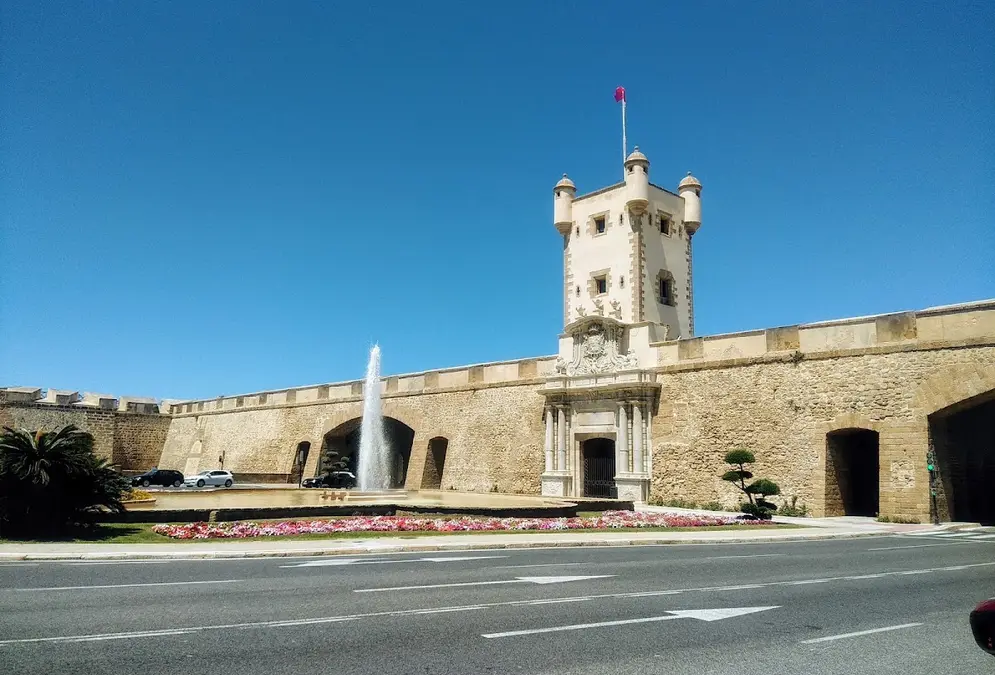
The surviving 18th-century land gate has a marble portal dated 1756, and its central vault, turret and upper walkway have been open to the public since 2013. It also houses a Puppet Museum covering 1,500 m2 across 18 restored barrel vaults. You can see the gate from outside at any hour, but check the council for museum times.- Address:
- Puertas de Tierra, Cádiz, Spain
- Admission:
- Viewing the gate from outside is free. Entry prices for the upper walkway and museums are not confirmed; check with Cádiz City Council.
Cádiz rewards a slow route from the Roman Theatre outward. Keep two slots free for things that cannot be timed, a Carnival-season evening at the Gran Teatro Falla and a long lunch in La Viña, and treat any opening time on this page as something to confirm with the official site.
Frequently asked questions
How many days do you need for the best things to do in Cádiz?
Two days covers the picks above on foot, since the old town sits on a small peninsula. One day is enough for the Roman Theatre, a tower, La Caleta and an evening flamenco show.
What is free to do in Cádiz?
The Roman Theatre has free admission, and the Castillo de Santa Catalina is listed as free except for announced events. La Caleta is a public beach and the old-town lanes cost nothing.
Which is better for views, the cathedral tower or Torre Tavira?
Both give a full panorama. The cathedral's Torre del Reloj looks over the city and the Atlantic, while Torre Tavira adds a camera obscura at 45 m above sea level. Doing both in a morning is realistic.
Can you visit the Old Cathedral of Santa Cruz?
It has been closed to visitors since 6 January 2026 with no reopening date announced, so it is not in the ranking. See El Pópulo for what to do around it.
Where can you see flamenco in Cádiz?
The flamenco show at La Cava runs 60 minutes with a drink included. Santa María is the neighbourhood to explore for peñas and the La Merced centre.
Is Cádiz worth visiting for a beach day?
La Caleta is a 450 m city beach between two castles and works as a swim after sightseeing. Playa de la Victoria is the beachfront outside the walls, where you will find Hotel Playa Victoria.
Further reading
Sources
30 references Show Hide
- Junta de Andalucía — Enclave arqueologico teatro romano de cadiz (opens in a new tab)
“El Teatro Romano de Cádiz, mandado edificar por Lucio Cornelio Balbo el Menor, fue construido en el siglo I a.n.e.”
- Junta de Andalucía — Enclave arqueologico teatro romano de cadiz (opens in a new tab)
“casi 120 metros de diámetro lo convierten en el más antiguo y en el segundo en tamaño de la Península Ibérica. Se le calcula una capacidad de más de 10.000 espectadores.”
- Junta de Andalucía — Enclave arqueologico teatro romano de cadiz (opens in a new tab)
“Las obras de ampliación que se ejecutan actualmente en el enclave afectan al yacimiento arqueológico, cuyo acceso se encuentra temporalmente restringido.”
- torretavira.com — Historia (opens in a new tab)
“Torre Tavira is located in the highest area of the old town, 45 meters above sea level and practically in the city center, giving a 360º view of Cádiz from its lookout.”
- torretavira.com — Que es una camara oscura (opens in a new tab)
“The Dark Room of the Tavira Tower was inaugurated on December 22, 1994, and it is the first one installed in Spain.”
- Turismo de Cádiz — Torre del reloj (opens in a new tab)
“Entrada general….. 10€”
- Turismo de Cádiz — Torre del reloj (opens in a new tab)
“desde sus torres puede apreciarse una vista completa de toda la urbe y maravillosas vistas al Océano Atlántico”
- Spain.info — Cathedral cadiz (opens in a new tab)
“The church is crowned with a dome of golden tiles which gives it an imposing appearance. The famous composer Manuel de Falla is buried in the crypt.”
- Spain.info — Cathedral cadiz (opens in a new tab)
“It took 116 years to complete, so the mix of styles is evident. Construction began in the Baroque style and was completed in the neoclassical style.”
- Spain.info — Caleta cadiz (opens in a new tab)
“Tiene dos fortificaciones: el Castillo de Santa Catalina y el Castillo de San Sebastián cada uno en un extremo que cierran la cala.”
- Junta de Andalucía — Castillo de santa catalina cadiz (opens in a new tab)
“Entrada libre, excepto a actos previamente anunciados.”
- Wikipedia (opens in a new tab)
“Tras el asalto anglo-neerlandés de 1596, Felipe II ordenó a Cristóbal de Rojas la construcción de una fortaleza defensiva a través de una Real Cédula el 25 de octubre de 1597.”
- fundaciongoyaenaragon.es (opens in a new tab)
“Three of these five canvases are the work of Goya: The Parable of the Guests at the Wedding (La parábola de los convidados a la boda), Multiplication of the loaves and the fishes (La multiplicación de los panes y los peces) and The Last Supper (La Santa Cena).”
- congreso.es (opens in a new tab)
“A partir del 24 de febrero de 1811y hasta el 25 de septiembre de 1813 se reúnen en el Oratorio de San Felipe Neri, en la ciudad de Cádiz.”
- congreso.es (opens in a new tab)
“Entre 1810 y 1814 forman parte de ellas 702 diputados”
- beticaromana.org (opens in a new tab)
“The central vault, turret and upper walkway of Puerta Tierra, the inland gateway, which has been reopened to the public since 2013”
- beticaromana.org (opens in a new tab)
“The Puppet Museum is 1,500 m2 and has 18 restored barrel vaults, that are divided between the first and the ground floors of this attractive architectural enclave.”
- Junta de Andalucía — Gran teatro falla (opens in a new tab)
“Desde 1926 pasaría a llamarse Gran Teatro Falla en honor a Manuel de Falla, hijo predilecto de la ciudad.”
- Junta de Andalucía — Gran teatro falla (opens in a new tab)
“En 1927 suena por vez primera el Carnaval con el coro Los Pelotaris de Manuel López Cañamaque.”
- flamencolacava.com (opens in a new tab)
“Adult: 32€ – Child (3 to 12 years old): 16€”
- ich.unesco.org (opens in a new tab)
“Inscribed in 2010 (5.COM) on the Representative List of the Intangible Cultural Heritage of Humanity”
- vidaflamenca.org (opens in a new tab)
“The center has 4 fully soundproofed and equipped rooms for teaching, rehearsing and flamenco productions, and a large stage that hosts all kinds of shows, as well as master classes.”
- diariobahiadecadiz.com (opens in a new tab)
“Es una construcción militar de la ciudad levantada a principios del siglo XVIII, de planta irregular con nueve lados, con parapetos, cañoneras, dos fosos de agua y puentes levadizos.”
- Junta de Andalucía — Cadiz 07 gabinete pedagogico.pdf (opens in a new tab)
“la actual iglesia de Santa Cruz, situada en el barrio del Pópulo y conocida popularmente como "Catedral Vieja".”
- Turismo de Cádiz — Castillo de san sebastian (opens in a new tab)
“Lunes a domingo de 9h hasta la puesta de sol.”
- Turismo de Cádiz — Castillo de san sebastian (opens in a new tab)
“Entrada gratuita.”
- Turismo de Cádiz — Oratorio de san felipe neri (opens in a new tab)
“De Lunes a Viernes: 10:30 a 16:00 h. (Último acceso a las 15:30 h.)”
- Turismo de Cádiz — Oratorio de san felipe neri (opens in a new tab)
“Sábado: 10:00 a 14:00 h. (Último acceso a las 13:30 h.)”