9:45 pm on 18 August 1947: the blast across San Severiano
Warehouse No. 1 blew up at 9:45 pm, detonating roughly 1,737 mines, torpedoes and depth charges in a single instant.[1] A mushroom cloud rose high enough over the Bay of Cádiz to be seen from Huelva and towns in Seville province, while the roar carried to the city of Seville and across the border into Portugal, where people mistook it for an earthquake.[11] Every utility failed at once. The railway tracks by the base vanished, electricity pylons flew into the air plunging the peninsula into a total blackout, and both the water mains and telephone lines burst.[12]
In the immediate blast zone of Extramuros, the shockwave flattened buildings across San Severiano, San José, Barriada España and Bahía Blanca.[7] Among the structures completely wrecked were the Casa Cuna orphanage (41 deaths), the Asilo de Ancianos old people's home, the Madre de Dios Hospital, and a nearby factory where one cited count recorded 100 workers killed.[7]
Right beside the depot stood the Echevarrieta shipyard, which employed 2,500 people.[13] Because the blast struck during the smaller night shift, the yard lost 27 men rather than hundreds.[13] In 1948 the official figures were fixed at 152 dead (five of them unidentified), 350 seriously injured and 5,000 people affected across the city.[2]
Pascual Pery Junquera and Warehouse No. 2
A second catastrophe hung over Cádiz in the minutes after the first blast because Warehouse No. 2 still held 491 unexploded submarine mines and had caught fire inside.[4] Had those remaining charges cooked off in the flames, a second shockwave would have swept a blacked-out city whose roofs were already fractured.[4][12]
Naval officer Pascual Pery Junquera (later an admiral) led a small group of sailors into the burning interior of Warehouse No. 2 and put out the fire among the 491 live mines.[4] Even after the flames died down, panic persisted.
To steady nerves around the perimeter, Marine Infantry Lieutenant Francisco Aragón Ruiz of the Tercio del Sur climbed onto one of the unexploded mines, struck a match to light a cigarette, and asked the crowd in Spanish whether they could see there was no danger left («¿Veis cómo no hay peligro ya?»).[14] The Cádiz daily press printed the remark five days later.[14]
How the Puerta de Tierra ramparts shielded the Old Town
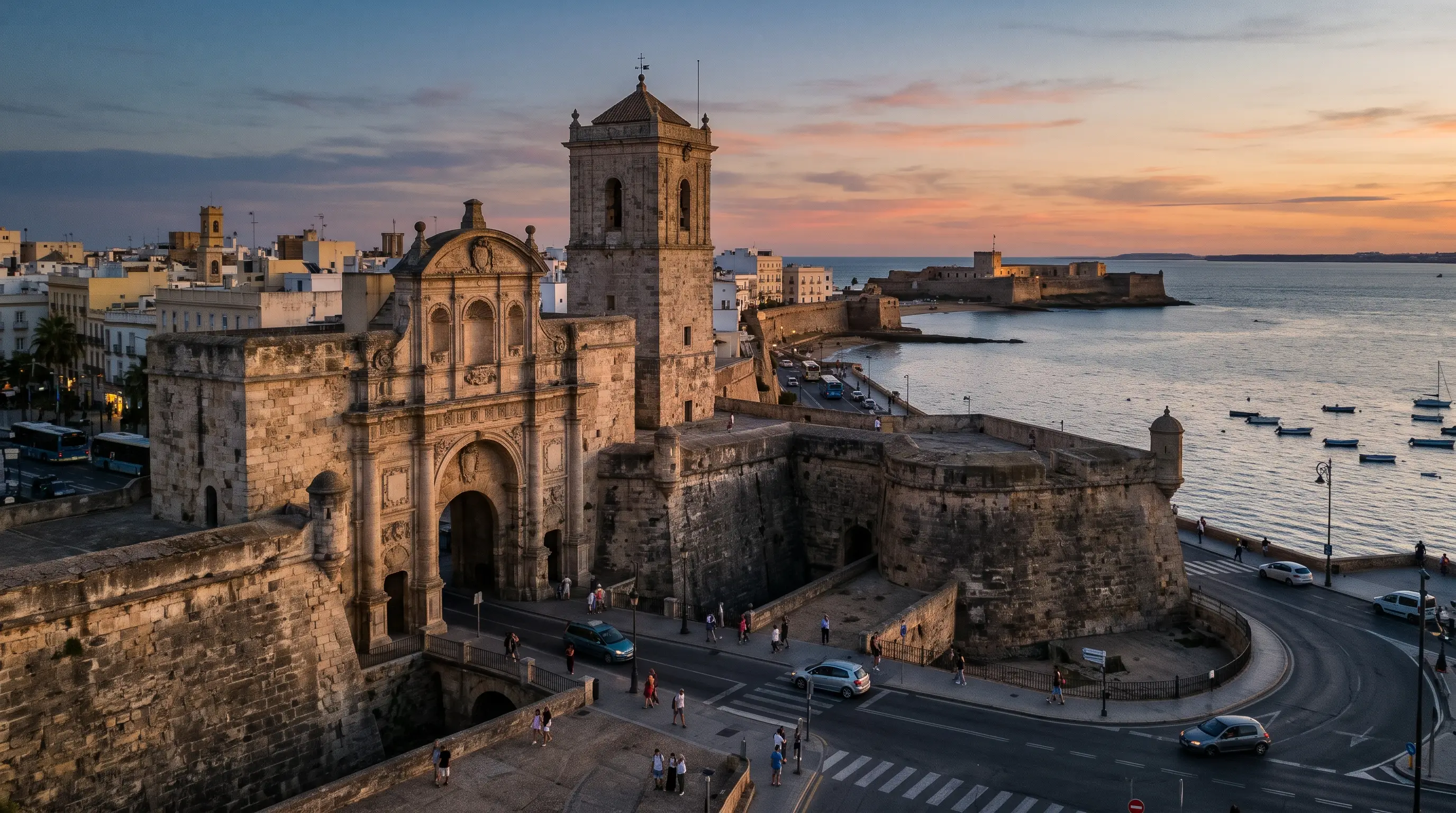
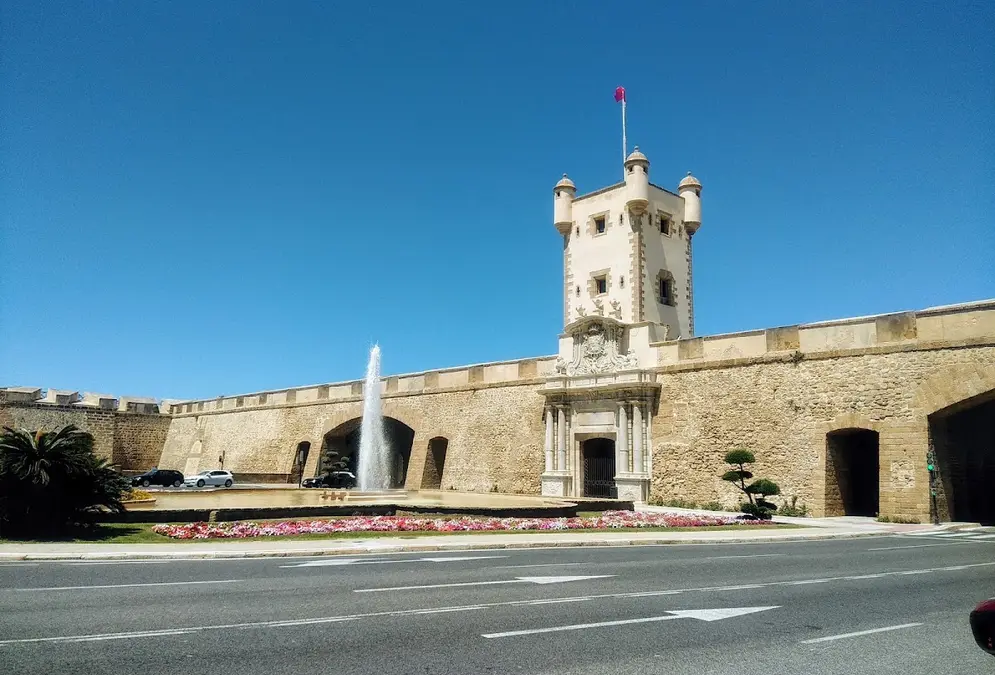
The historic quarter inside the walls survived because the submarine defence depot sat in a low hollow just 2 to 3 metres above sea level, flanked to the west by a natural cliff and to the east by the stone walls of Puerta de Tierra, which rose 21 metres higher than the blast pit.[3] Those ramparts acted as an unintentional blast wall. They deflected the main pressure wave upward over the rooftops of Intramuros instead of letting it sweep flat through the narrow streets.[3]
Recommended tours
Tours are selected for quality, not commission. We earn a small fee if you book, at no extra cost to you.
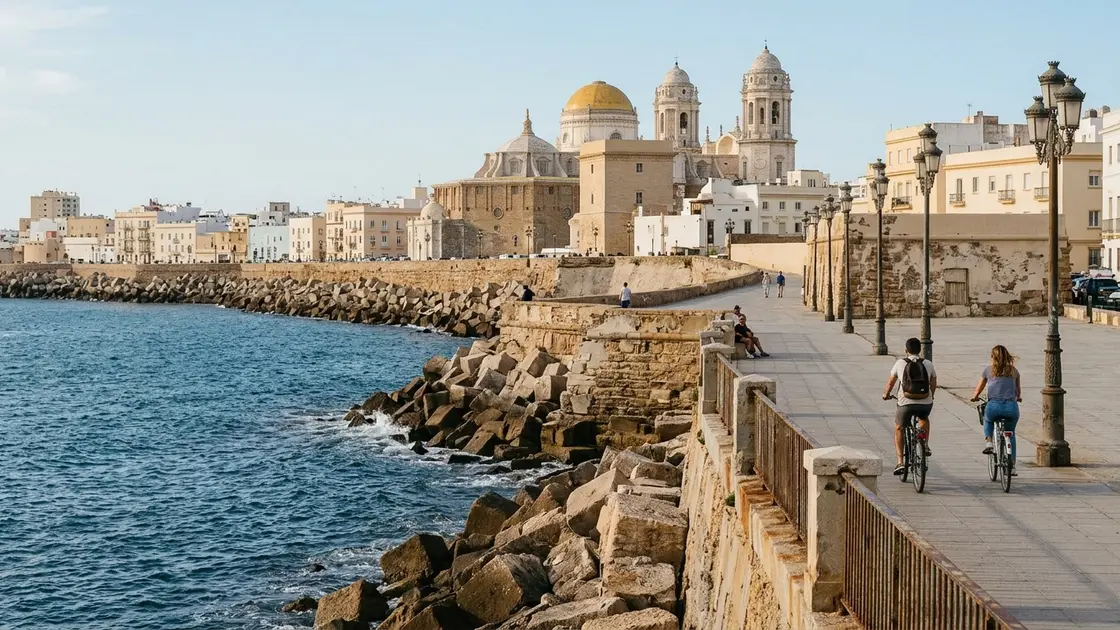
The old town still took a heavy battering from the overpressure, blowing doors and windows inward as far as Cádiz Cathedral and the older quarter around El Pópulo, while Puerta de Tierra remained the sharp dividing line between ancient Intramuros and modern Cádiz.[15]
Don't miss · Monument
Puerta de Tierra
Cádiz's surviving 18th-century land gate, with Cayón's 1756 marble portal, a walkable upper level and the Puppet and Lithography museums. C…
In the aftermath, the dictatorship moved quickly to control both the news and the mood of the ruined port. On 26 August 1947, state broadcaster Radio Nacional de España attacked BBC reporting on the disaster, contrasting what it called the BBC's deceitful hatred of Spain and its regime with the supposedly spotless record of Spanish radio.[16] The next year, to lift morale where the pre-war Carnival had been banned, the regime allowed the festival back under the censored name of "Fiestas Típicas Gaditanas", permitting locals to compose their coplas under strict censorship.[10]
Where to trace the 1947 explosion in Cádiz today
Four stops across Cádiz let you read the physical imprint of 18 August 1947, from the scale models by the beach to the rebuilt avenues outside the land gate.[15][17][18] Starting in 1949, post-explosion urban growth into Extramuros reshaped the threshold of the old city: workers dismantled the exterior defensive glacis in front of Puerta de Tierra and cut two lateral road arches through the curtain wall for road traffic.[18]
- Castillo de Santa Catalina (La Caleta): Inside the 16th-century sea fortress at the northern end of the beach, the permanent exhibition "La Explosión de Cádiz de 1947" displays scale models, archival photographs and press clippings on the disaster (check the city council page for current seasonal hours before visiting).[17]
- Puerta de Tierra walkway and lateral arches (Plaza de la Constitución): Stand on the Extramuros side to see the 21-metre height difference that deflected the 1947 shockwave, alongside the twin vehicular arches opened from 1949 onward; the central vault, turret and upper walkway reopened to the public in 2013.[3][18][19]
- San Severiano and Bahía Blanca (Extramuros): Walk ten minutes east of the land gate toward the inner bay where the Base de Defensas Submarinas, the Casa Cuna orphanage and the Echevarrieta shipyard stood before 18 August 1947.[1][7][13]
- Gran Teatro Falla (Plaza Fragela): The red-brick theatre in the old town anchors the Carnival tradition that returned under censorship after the blast as the Fiestas Típicas Gaditanas.[10]
Deep dive · Article
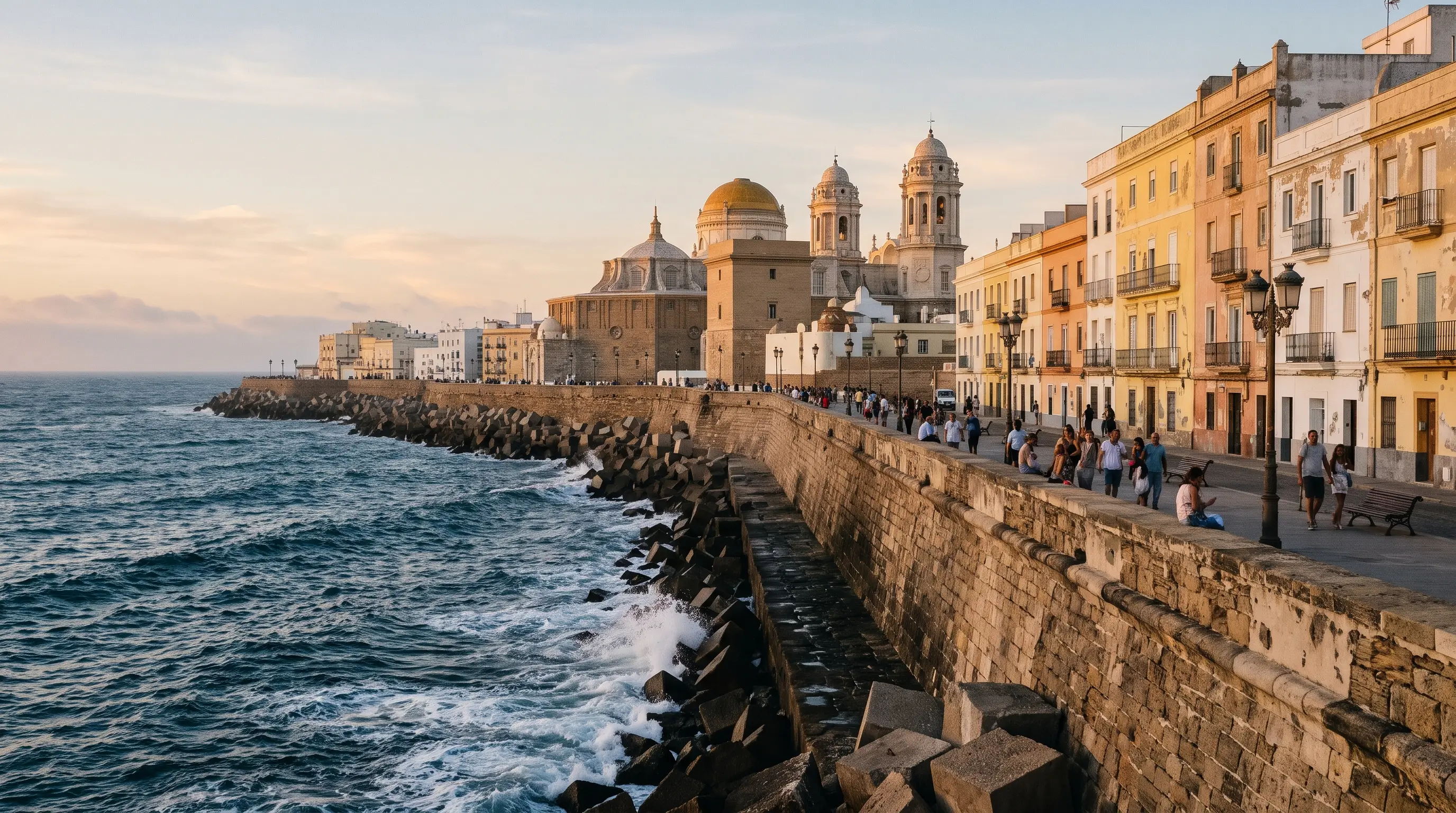
12 Interesting Facts About Cádiz: History, Towers & Secrets
Discover 12 interesting facts about Cádiz, from Phoenician houses buried under a puppet theatre and two marble sarcophagi to 134 watchtower…