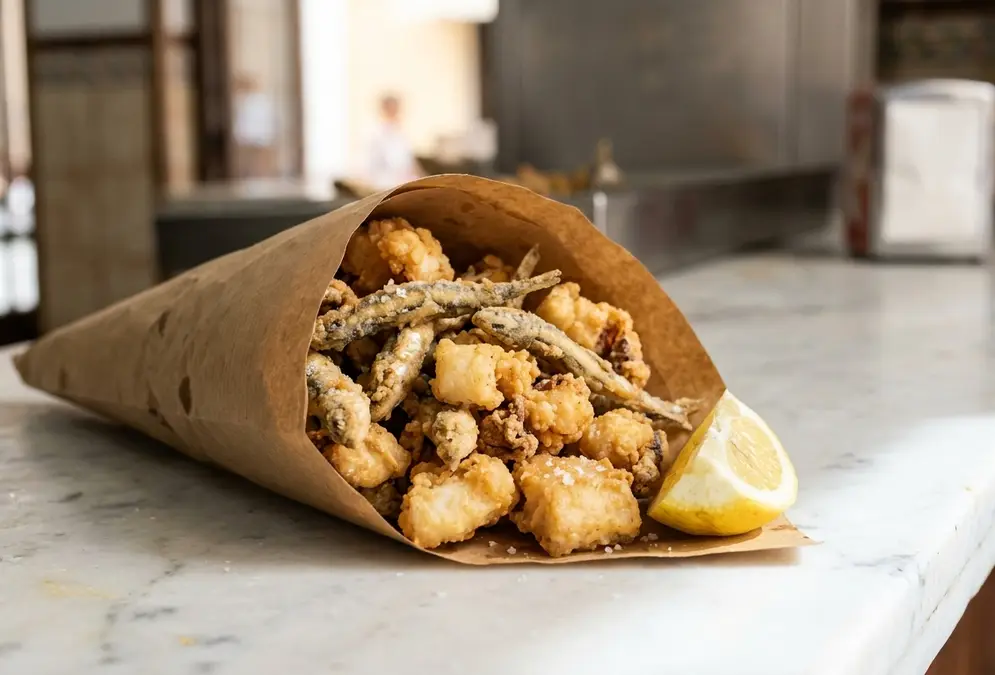

Pescaíto frito is what Cádiz eats when it wants lunch to be quick, cheap and hot. Small fish and cuts of larger ones are dusted in flour, dropped into very hot oil and handed over in a paper cone that is already going translucent. There is no egg and no breadcrumb. The result is a thin, brittle crust over white flesh, and it is the most Cádiz thing you can eat standing up. The city's name for it is frito gaditano, and the shops that make it are freidurías or freidores.
What a freiduría looks like
A traditional freidor is a counter, not a restaurant. The fish sits raw in a glass window, you point or ask, and it is fried while you wait. Fish is sold by weight, usually in cuartos of 250 g, and the proper way to order is by the cuarto or the cuarto y mitá, eaten hot. The paper matters: the cone is porous papel de estraza, because plastic or any sealed container would steam the crust soft within minutes. Eat it from the cone on a bench, not back at the hotel.
Many freidurías also run a bar, a dining room or a terrace, so you can sit down and have the same fry on a plate. Some, such as Casa Manteca in La Viña, are described by the city tourism office as freidores where you can eat in the taberna or take it away.
What to order
Three items define the counter: cazón en adobo, chocos and pescada. If you are unsure, order a mixed fry and see what the fryer likes that day.
- Cazón en adobo: dogfish cut into chunks and marinated for a set time in garlic, oregano and vinegar before flouring. It is tangy and firm. Next door in San Fernando the same idea is called bienmesabe and brings cumin.
- Chocos: cuttlefish strips, tender when the oil is right. In Cádiz the lemon wedge arrives alongside, though some cooks frown on it.
- Pescada or pescadilla: hake in slices on the bone, mild and flaky.
- Surtido gaditano: a mixed fry. Freiduría Las Flores offers one on its menu, and visiting food writers point newcomers to it.
- Smaller fish and extras: boquerones, acedías, huevas, puntillitas (baby squid) and, on many counters, tortillitas de camarones.
Oily fish such as salmon or tuna are not used: they do not fry well in this style, according to Spanish food writers. Fish is also cut thinner around Cádiz for a crunchier finish. In western Andalusia the plate often comes with small breadsticks called picos.
How it is made
The coating is flour and nothing else, typically wheat, sometimes with a little chickpea or maize. Fryers in Cádiz quote oil at around 160 to 170 °C, and they warn against overloading the pan, which cooks the fish instead of frying it. The cone then does the rest of the work by letting steam escape. Sources disagree on the exact temperature and the flour mix, so treat any single number as one cook's habit.
Where it comes from
The origin is argued over. Romans fried fish in olive oil but did not flour it. The floured style is often credited to the Sephardic Jews who lived in Spain until the end of the fifteenth century, and Cádiz, Málaga and Seville are sometimes called the fried-fish triangle. Phoenician frying is a popular claim with no support in the sources. What is documented is the trade: Cádiz's industry census of 1812 listed 108 bodegones y freidores, according to gastronome Manuel Ruiz Torres, and another source cites a lower figure, so the count is best held loosely. An anonymous manuscript of 1813 mentions a freiduría on Calle Veedor, and the Antigua Parra del Veedor on Calle La Plata is described as the oldest hospitality venue in the city, open since at least 1791. Cazón en adobo may be nearly five centuries old, if a sixteenth-century adobo recipe in La Cocina de los Jesuitas is any guide.
Where to eat it in Cádiz
The city tourism office lists the main freidurías, and these are the ones worth planning around:
- Freiduría Las Flores I, Plaza de Topete (Plaza de las Flores): an emblematic freiduría with bar, dining room and terrace, serving fried fish and shellfish since the late nineteenth century. A second branch, Las Flores II, sits near the beach.
- Freiduría Cervecería Europa, Hospital de Mujeres: a local classic since 1954 known for generous portions.
- Casa Manteca, Calle Corralón de los Carros 59 in La Viña: a traditional freidor. Its taberna side has its own page: Casa Manteca.
- El Freidor del Mercado, inside the Mercado Central de Abastos: the place for a fresh cone in a market setting.
- Bodeguita El Adobo, Calle Rosario 4: a bar specialising in bay pescaíto frito, cazón and morena en adobo.
- El Faro de Cádiz, San Félix 15: opened in 1964 as a small taberna selling pescaíto frito and is now a full restaurant known for its tortillitas.
Opening times and prices change, so check each venue's own page before you go. Around La Caleta and Santa María most old-town bars will also have a fried plate, but a dedicated freidor will usually fry fresher and faster.
What to drink with it
A cold beer is the default. Wine guides suggest a chilled manzanilla or fino, whose saline dryness cuts through hot fried batter, and you will see locals do the same. Cold tapas such as roasted peppers, ensaladilla or potatoes with alioli round out the table. Allergen note: this is fish, wheat flour, and sometimes molluscs or crustaceans, so it is not gluten free and rarely safe for shellfish allergies.