Cádiz Carnival for Visitors: What It Is and How to Join In

Written by
Lucía Barbera Quintero Historian specialising in Cádiz's ancient, colonial and constitutional heritage.
Published
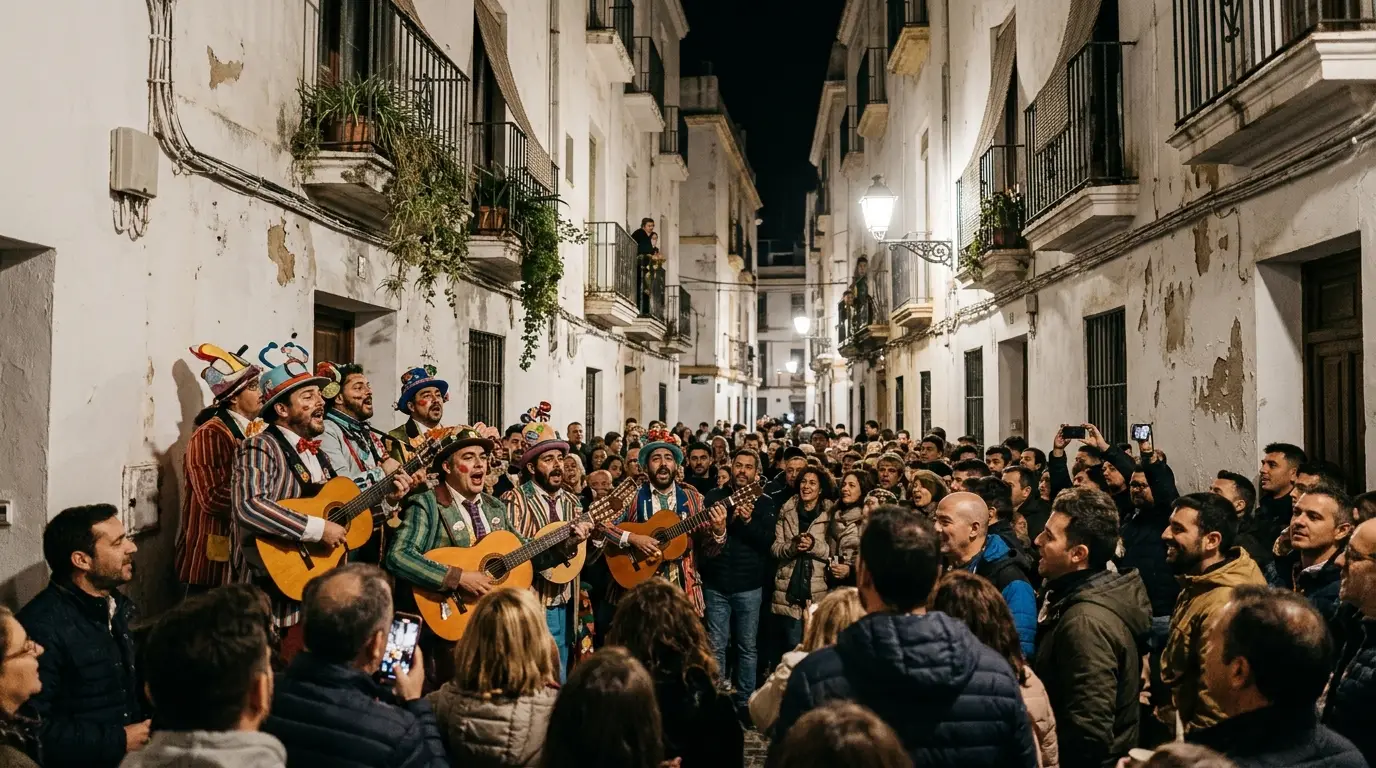
Cádiz Carnival is a street festival where neighbours dress up and sing satire about the year's news, and it asks for ears more than for a ticket. The Ayuntamiento describes it as a festival of International Tourist Interest with roots in the second half of the 15th century, when Ligurian merchants settled on the bay. It is less about floats than voices: the stars are the groups who sing in plazas and on corners, for free, to anyone who stops.
For 2027 the Ayuntamiento de Cádiz gives Thursday 4 to Sunday 14 February. Its listing puts the Gran Final of the COAC contest at the Gran Teatro Falla on Friday 5, the Pregón that opens the street party in Plaza de San Antonio on Saturday 6, the Gran Cabalgata Magna on Sunday 7, and the Lunes de Coros on Monday 8, a local holiday. The Bruja Piti is burned on Sunday 14 to close the festival, and the Carnaval Chiquito follows a week later on Sunday 21. The council still calls this a planned programme, so stages and start times are not confirmed. Check the Carnaval de Cádiz event page before you book anything.
Four kinds of group do the singing, and knowing them is most of the vocabulary you need. Chirigotas are about a dozen people and the funny ones, living on satire and double meaning. Comparsas look more serious, though their lyrics are just as critical. Coros are the largest, around 45 singers, and the tango is their signature. Cuartetos are three to five performers whose main piece is a parody. Each group dresses as a tipo, the local word for the costume that frames its whole act.
You can enjoy it with very little Spanish, as long as you stop trying to catch every joke. Much of the humour hangs on local news and wordplay that will pass you by. What does not need translating is the rhythm of a pasodoble, a coro's tango, a packed square singing along and the costumes, which the tourist board calls almost obligatory on the first Saturday. Dress up, stay on your feet and let the places below do the work.
Where Carnival happens
-
No. 1
Neighborhood
La Viña
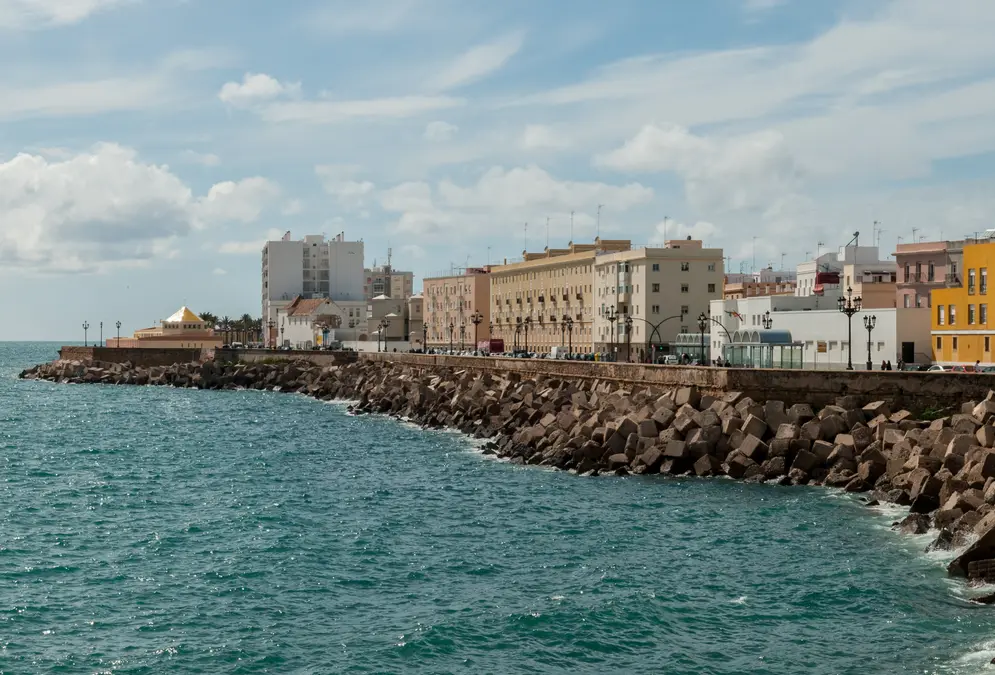
La Viña is Cádiz's fishermen's quarter and the heart of its Carnival: narrow streets, fresh-fish bars, the Palma church and La Caleta beach…
The council lists La Viña among the places to be for the real Carnival atmosphere, and its erizada is one of the January gatherings it names as the warm-up for the season. The council's yearly pattern also puts a carrusel de coros with concerts here on the second Saturday, so check the 2027 programme to see whether it runs. Go on foot in the early evening and drift between bars. A group can start singing on any corner, and the unofficial ones keep no timetable. -
No. 2
Monument
Gran Teatro Falla
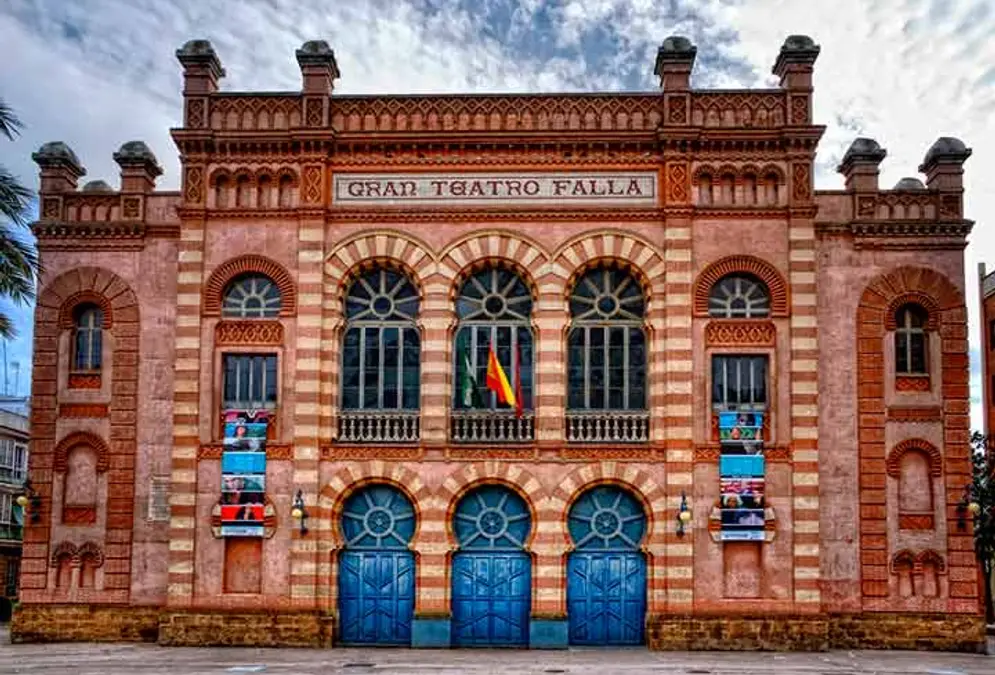
Cádiz's Neo-Mudéjar municipal theatre in Plaza Fragela, built 1884-1905 and home to the February Carnival contest. Interior opens only for…
This is where the COAC contest chooses the year's winners, and the council puts the 2027 Gran Final here on Friday 5 February. For a visitor with little Spanish it is the hardest part of Carnival: long sets of dense wordplay, indoors. Treat it as optional, since everything else is free in the street. If you do want a seat, the theatre's own page explains how tickets work.- Address:
- Pl. Fragela, s/n, 11003 Cádiz, Spain
- Admission:
- No general admission: tickets are sold per performance. Prices vary by event; check the official programme or the box office on 956 22 08 34.
-
No. 3
Neighborhood
Barrio del Mentidero
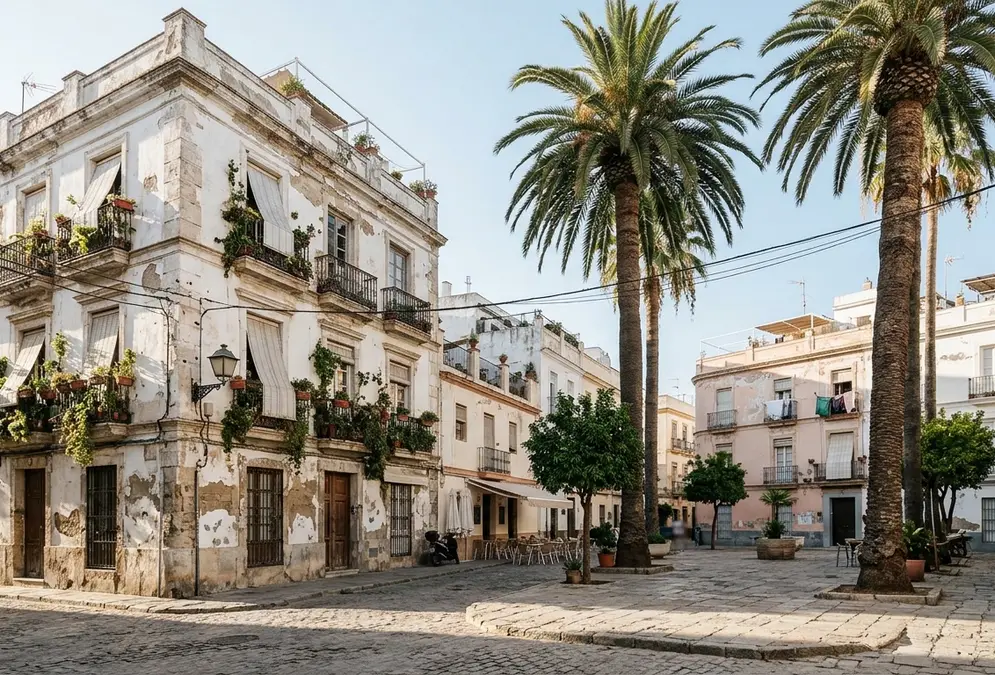
El Mentidero is Cádiz's gossip quarter, planned in the 18th century around a rumour-trading square, with Torre Tavira and Carnival's Casa d…
Its square is described as closely tied to Carnival, and the quarter shares the north-western corner of the old town with La Viña, which makes it a calmer place to regroup. Come here in the morning, before the singing starts, to see the streets before the costumes fill them. -
No. 4
Monument
Torre Tavira
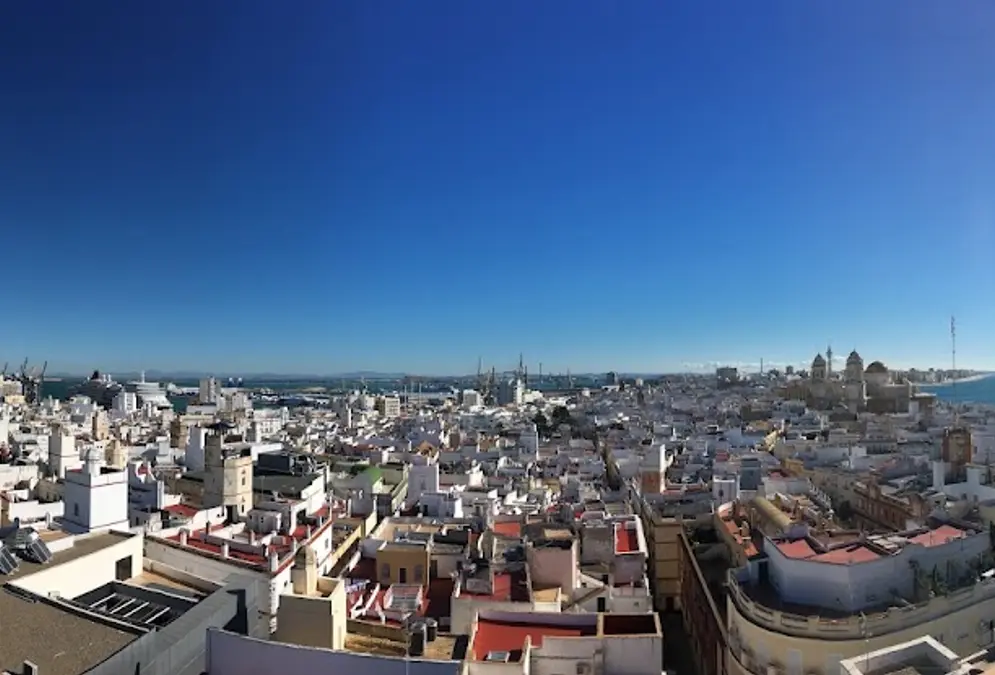
Torre Tavira is Cádiz's 1778 watchtower, 45 m above sea level, with Spain's first camera obscura. Tickets are €8; allow 45 minutes and arri…
The palace around the tower has housed the Casa del Carnaval since spring 2023, when the council converted it. A visit pairs the camera obscura with some Carnival background on a day you want a break from the crowds. Check opening times on the tower's page before you go.- Address:
- C. Marqués del Real Tesoro, 10, 11001 Cádiz, Spain
- Admission:
- General €8 / reduced €6 (over 65s, students with valid ID, large or single-parent families, groups of more than 10, people with disabilities); official page undated, confirm before you go
Streets, plazas and the carrusel route
-
No. 5
Monument
Puerta de Tierra
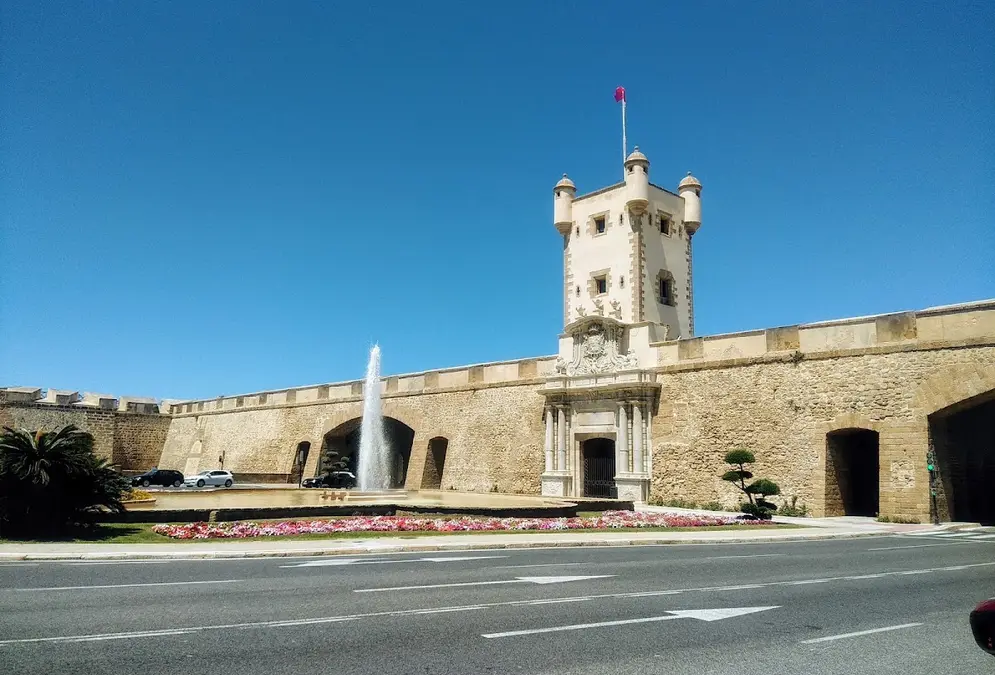
Cádiz's surviving 18th-century land gate, with Cayón's 1756 marble portal, a walkable upper level and the Puppet and Lithography museums. C…
The council's recurring pattern opens the first Saturday with a carrusel de coros at Puerta Tierra, where the old town ends. In a carrusel the coros sing their tangos from platforms called bateas to a crowd packed into the square. Confirm the 2027 location in the programme, and arrive early.- Address:
- Puertas de Tierra, Cádiz, Spain
- Admission:
- Viewing the gate from outside is free. Entry prices for the upper walkway and museums are not confirmed; check with Cádiz City Council.
-
No. 6
Neighborhood
El Pópulo
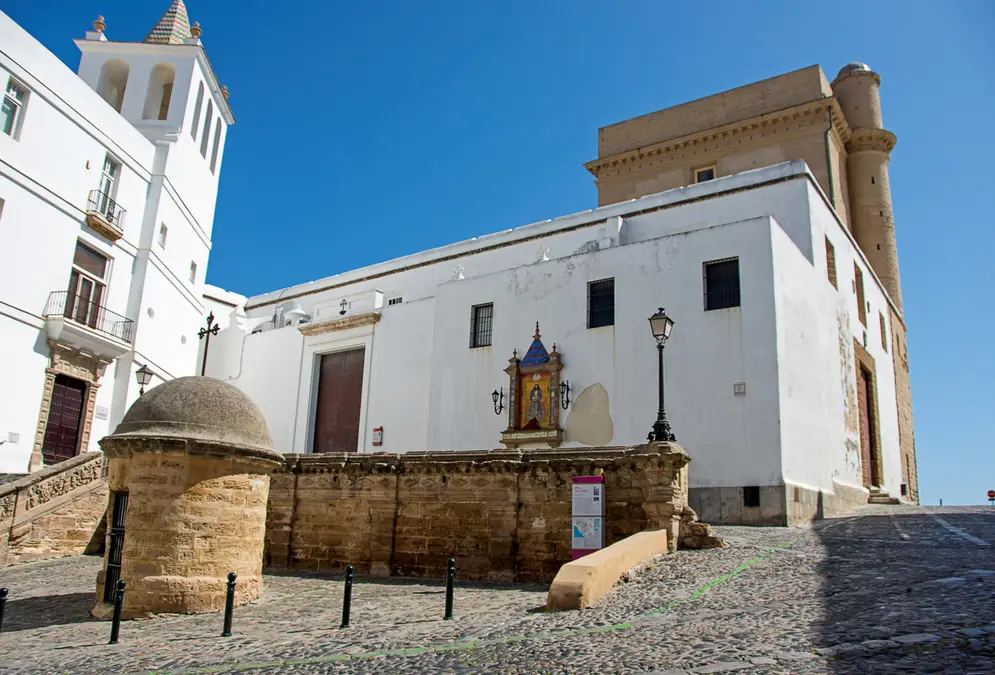
El Pópulo is the medieval core of Cádiz: a quarter of narrow lanes above a Roman theatre, with the Arco del Pópulo and the Old Cathedral of…
The council names El Pópulo with La Viña, Plaza de San Antonio, Plaza de Candelaria, the Mercado Central and Plaza de San Agustín as essential spots for the Carnival atmosphere. It is also the easiest quarter to combine with daytime sightseeing, since the cathedral and the Roman theatre sit within a few lanes. See the sights first and listen for groups as the lanes fill. -
No. 7
Neighborhood
La Caleta
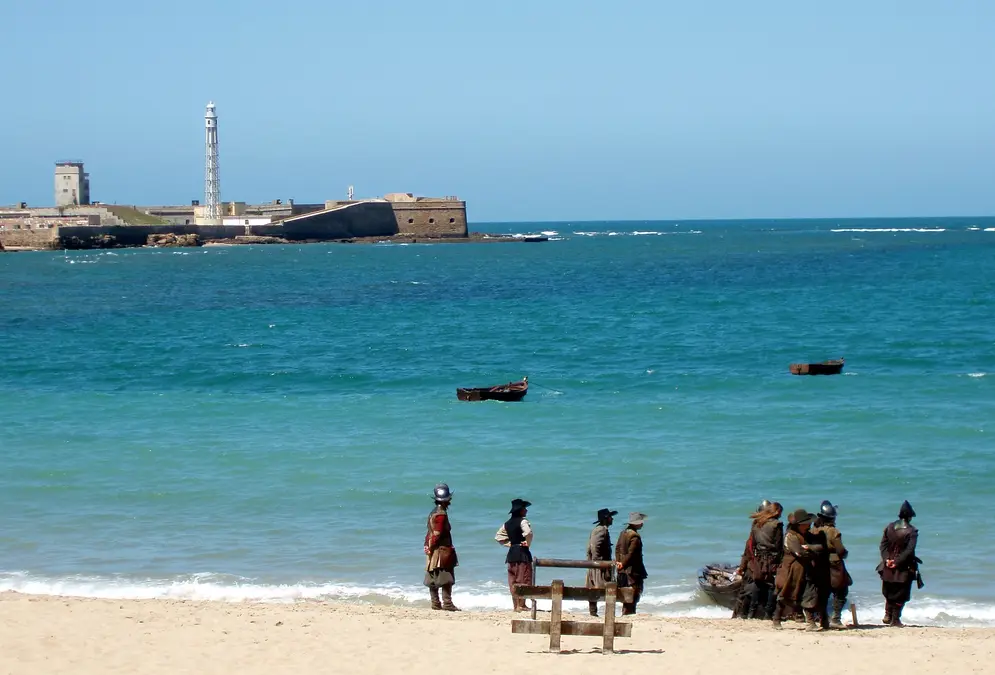
La Caleta is Cádiz's small walled-city beach, closed at each end by a castle. Where Phoenician Gadir met the sea, with practical beach and…
The council's recurring pattern lists fireworks over La Caleta on the first Sunday and again on the Sunday of the Bruja Piti, which is 14 February in 2027, the closing night. The fireworks are not yet in the 2027 listing, so treat them as probable until the programme says so. Either way the bay is where you step out of the crush and breathe.
Eating between the songs
-
No. 8
Bar
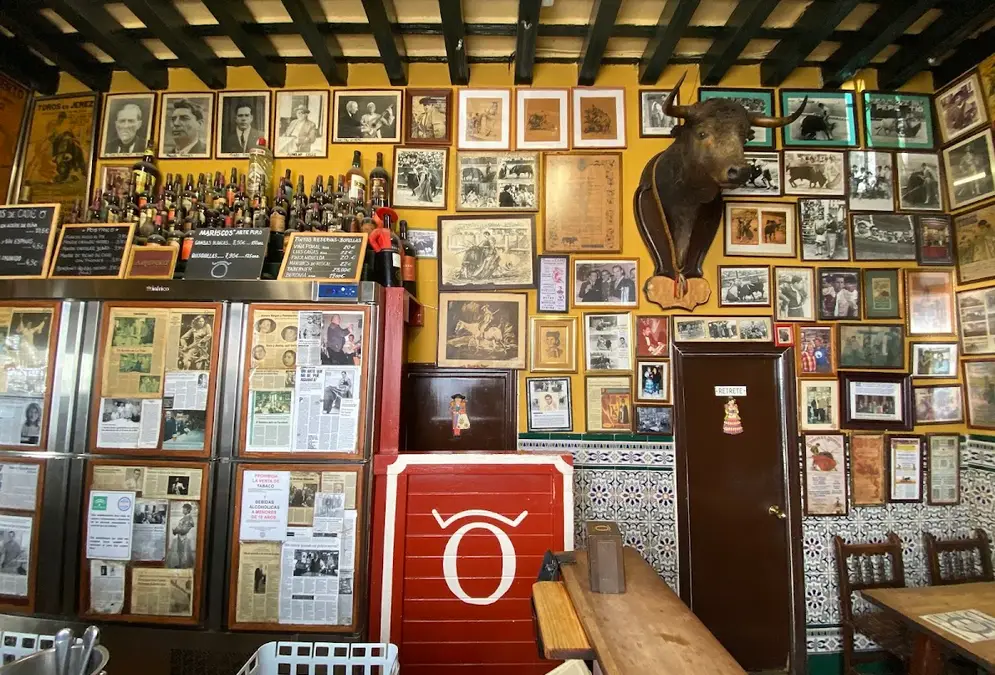
Taberna Casa Manteca
Casa Manteca, a 1953 cold-tapas standing bar on Calle Corralón de los Carros in La Viña, Cádiz: chicharrones, cured meats, no bookings and…
Cold tapas make this a fast stop between sets, with no kitchen queue and no table to hold. The entry says it takes no bookings and that the crowd spills onto the pavement, so go early. Order chicharrones or papas aliñás at the counter and point if your Spanish fails.- Address:
- Calle Corralón de los Carros 66, 11002 Cádiz
- Average price:
- Check prices on the day
-
No. 9
Bar
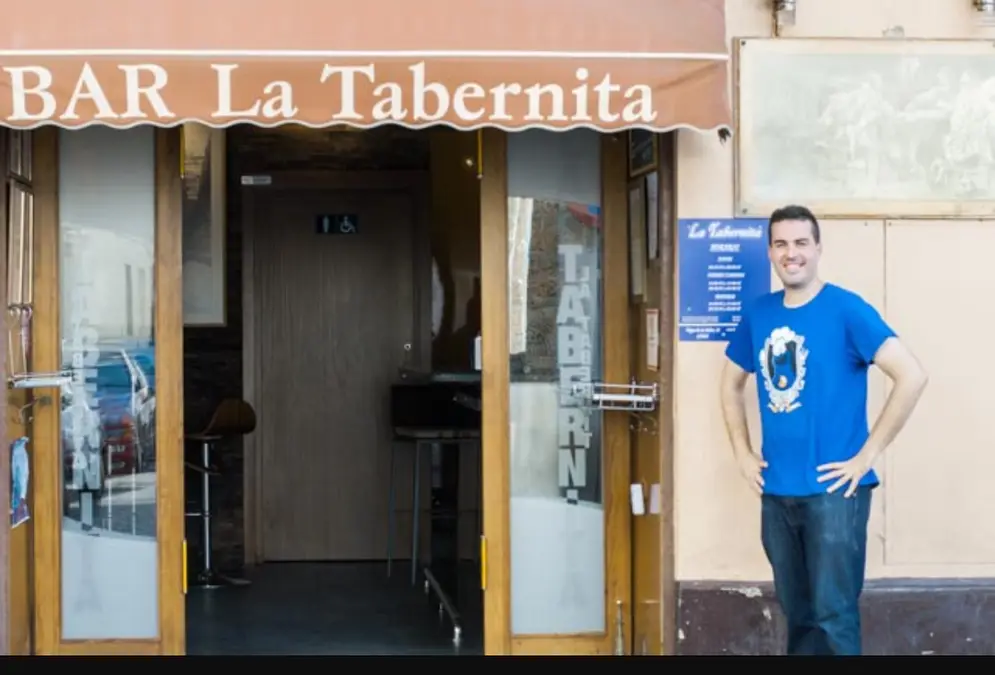
Bar La Tabernita
Bar La Tabernita, Calle Virgen de la Palma 32 in La Viña, Cádiz: a family tapas bar with outdoor wine-barrel tables, home cooking and a wai…
In a crowded week plan to eat in shifts rather than sit down. The bar is small enough that standing outside with a drink is part of the evening. Chocos fritos and albóndigas de choco en tinta are the dishes visitors report, and both are easy to order by name.- Address:
- Calle Virgen de la Palma 32, 11003 Cádiz
- Average price:
- Chocos fritos about €8 (one guide)
-
No. 10
Bar
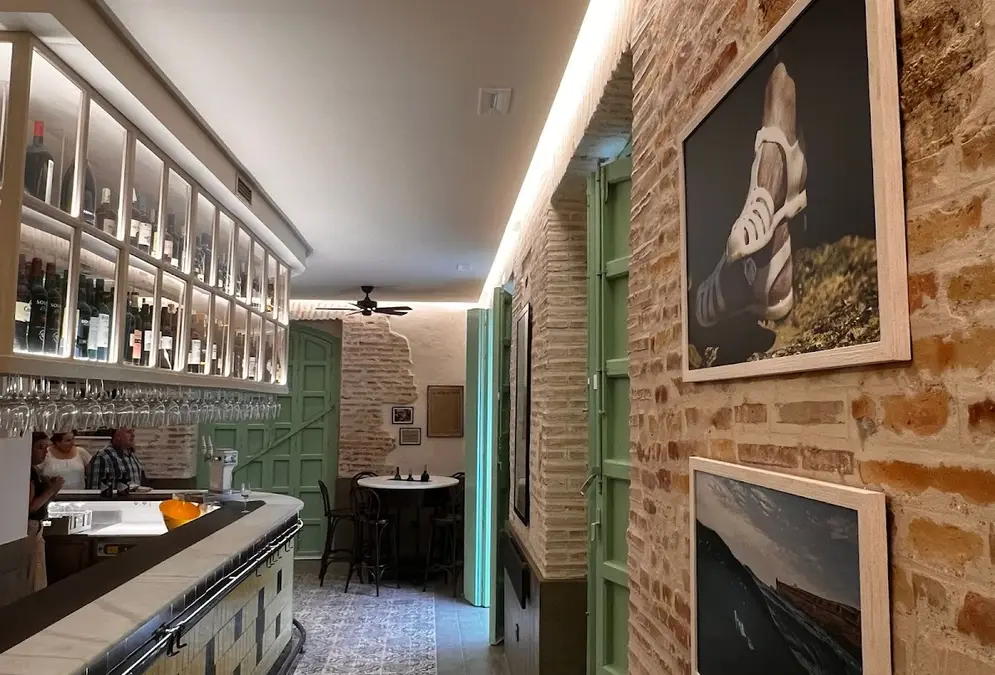
Taberna Las Banderas
Taberna Las Banderas, Calle Virgen de las Penas 1 in La Viña, Cádiz: a revived 19th-century taberna for ensaladilla, cured meats, tinned fi…
More seated and sherry-led than the standing bars nearby. Its page advises booking for weekends and Carnaval and mentions coplas performances, so ask about the calendar when you reserve. A table is a good reset after hours on your feet.- Address:
- Calle Virgen de las Penas, 1, 11002 Cádiz, Spain
- Average price:
- Prices not confirmed; check the current menu
-
No. 11
Bar
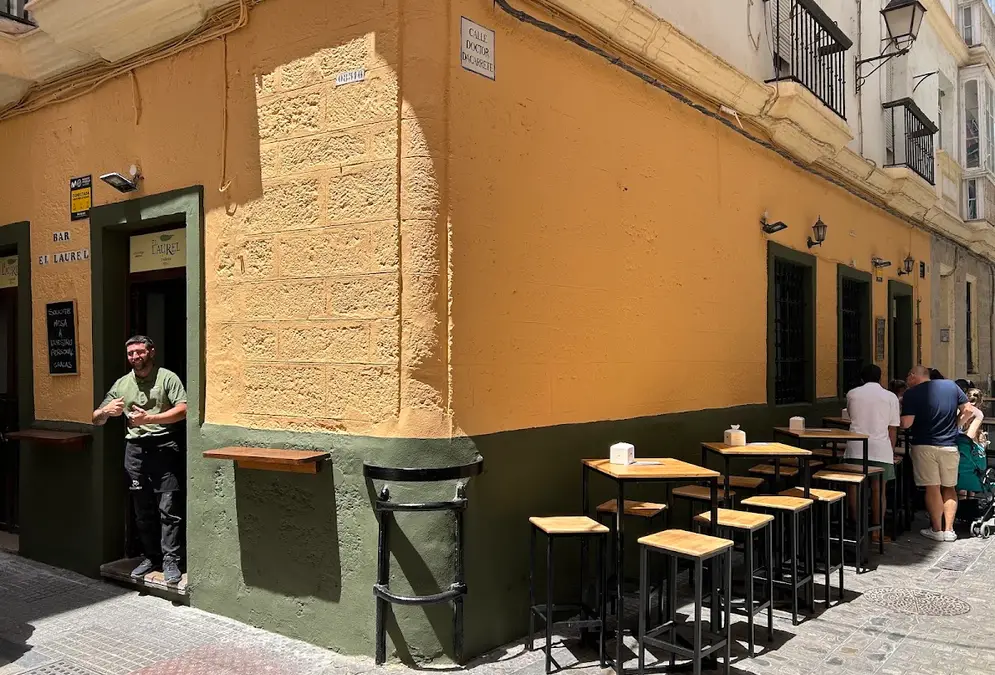
Bar El Laurel
Bar El Laurel, Calle Obispo Urquinaona 3, Cádiz: a tiny traditional old-town tasca known for homemade stews and blackboard tapas, near the…
It stands near Plaza de la Candelaria and the Mercado Central, two of the council's named hotspots, and the provincial tourist board places the Sunday carruseles de coros traditionally around the plaza de abastos. The menu is chalked on the wall, which suits a visitor: point at a stew and sit down for twenty minutes.- Address:
- Calle Obispo Urquinaona 3, Cádiz, Spain
- Average price:
- Budget tasca; no prices confirmed
-
No. 12

Dish
Ostiones de Cádiz
Ostiones are cupped oysters, part of the shellfish side of Cádiz menus: what the word means, how to order them raw and what to ask at the c…
Ostiones are the cold, raw end of the bay's food, and the ostionada is one of the gatherings the council lists as the warm-up before Carnival. Ask for them al natural and check the price per piece before you order, since bars charge by the unit. -
No. 13
Dish
Pescaíto frito
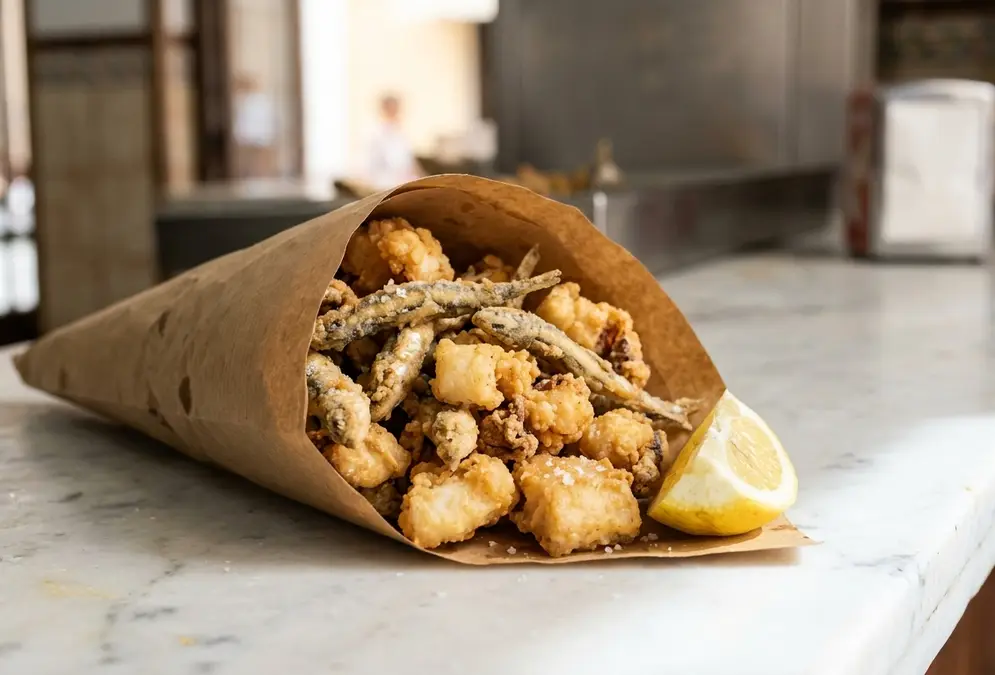
Cádiz's fried fish, floured and fried to order, then sold by weight in paper cones. What to order at a freiduría, how it is made, and where…
Carnival days run long, and fried fish by the cuarto in a paper cone is the practical lunch: quick, hot and eaten standing. A cuarto is 250 g. Point at the fish in the window, say a cuarto and stay near the counter while it fries. -
No. 14
Dish
Tortillitas de camarones
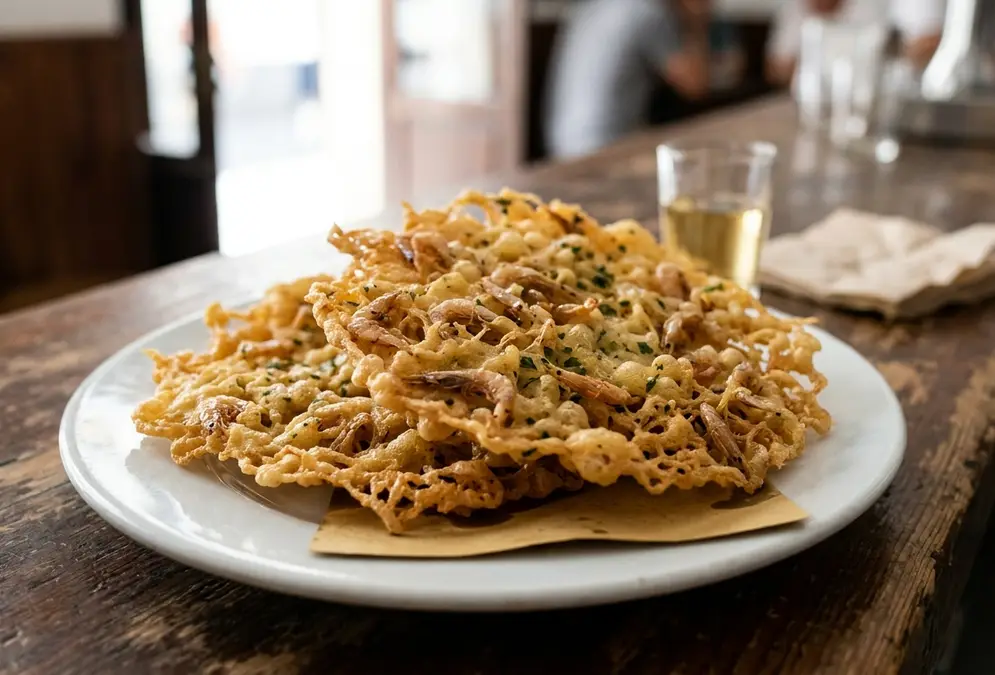
Cádiz's crisp shrimp fritters, made with chickpea flour and tiny whole camarones. Origins, what makes a good one, and how to order them wit…
Crisp, shrimp-heavy and gone in a few bites, tortillitas are the easy order when you cannot read the board. The dish page notes that consumption rises at Carnival, when the city eats and sings through the streets. Pair them with a manzanilla.
With one day, make it the first Saturday, 6 February in 2027: wear a costume, spend the afternoon in La Viña and the old-town plazas, eat standing up, and leave the contest at the Falla for another evening. The unofficial groups have no fixed times or stages, so wandering is the strategy and a schedule is not.
With thousands of people arriving for the festival, book your stay early and expect crowds everywhere the council names. Before you commit, open the Ayuntamiento de Cádiz event page again in January: it is the one place the dates, the Pregón and the carruseles are confirmed.
Frequently asked questions
What is Cádiz Carnival?
A festival in which neighbours dress in costume and sing satire about current events in the streets and plazas of the old town. The council calls it a festival of International Tourist Interest and traces its precedents to the second half of the 15th century. Most of the singing is free.
When is Cádiz Carnival 2027?
The Ayuntamiento de Cádiz lists Thursday 4 to Sunday 14 February 2027, with the COAC Gran Final on 5 February, the Pregón on 6 February, the Gran Cabalgata Magna on 7 February and the Carnaval Chiquito on 21 February. The council still labels the programme as planned, so confirm stages and times on its event page before you book.
Do I need Spanish to enjoy Cádiz Carnival?
No, but expect to miss many jokes, because the lyrics lean on local news and wordplay. The music, the costumes and the crowd carry the rest. Learn the four group names (chirigota, comparsa, coro, cuarteto) and you can follow the structure of any act.
What is the difference between a chirigota, a comparsa, a coro and a cuarteto?
Chirigotas are about 12 singers and the funniest, built on satire and double meaning. Comparsas look more serious but are just as critical. Coros are the biggest groups, about 45 people, known for tangos. Cuartetos have three to five performers and are known for their parody.
Do I need a ticket for Cádiz Carnival?
Not for the street performances, which the council describes as free. Only the contest at the Gran Teatro Falla is a ticketed performance, and its page explains how those tickets are sold.
Should I wear a costume?
It helps. The tourist board calls dressing up almost obligatory, above all on the first Saturday of Carnival, and the local word for a costume is tipo. A simple, comfortable one is enough for a day on your feet.
Further reading
Sources
15 references Show Hide
- Turismo de Cádiz — Carnaval de cádiz 2027 (opens in a new tab)
“El Carnaval de Cádiz 2027 se celebrará del jueves 4 al domingo 14 de febrero.”
- Turismo de Cádiz — Carnaval de cádiz 2027 (opens in a new tab)
“Viernes 5 de febrero: Gran Final del COAC 2027 en el Gran Teatro Falla.”
- Turismo de Cádiz — Carnaval de cádiz 2027 (opens in a new tab)
“Sábado 6 de febrero: Pregón oficial del Carnaval en la Plaza de San Antonio.”
- Turismo de Cádiz — Carnaval de cádiz 2027 (opens in a new tab)
“Lunes 8 de febrero: Lunes de Coros, festivo local en Cádiz.”
- Turismo de Cádiz — Carnaval de cádiz 2027 (opens in a new tab)
“Domingo 21 de febrero: Carnaval Chiquito o Carnaval de los Jartibles.”
- Turismo de Cádiz — Carnaval de cádiz 2027 (opens in a new tab)
“Uno de los grandes atractivos es la convivencia entre las agrupaciones oficiales, que participan en el COAC, y las conocidas como agrupaciones ilegales o callejeras. Estas últimas actúan sin horarios ni escenarios fijos”
- Turismo de Cádiz — Carnaval de cádiz 2027 (opens in a new tab)
“Barrios como La Viña, El Pópulo, la Plaza de San Antonio, la Plaza de Candelaria, el Mercado Central o la Plaza de San Agustín se convierten en algunos de los puntos imprescindibles para disfrutar del auténtico ambiente carnavalesco.”
- institucional.cadiz.es (opens in a new tab)
“Domingo 14 de febrero: Quema de la Bruja Piti y clausura oficial del Carnaval.”
- Turismo de Cádiz — Carnaval de cádiz (opens in a new tab)
“se remontan a la segunda mitad del siglo XV, época de la llegada de los comerciantes ligures”
- Turismo de Cádiz — Carnaval de cádiz (opens in a new tab)
“Domingo de carnaval: Carrusel de coros. Cabalgata. Fuegos artificiales en La Caleta”
- Turismo de Cádiz — Carnaval de cadiz (opens in a new tab)
“Suelen ser las agrupaciones más divertidas pues utilizan con frecuencia la sátira y el doble sentido.”
- Turismo de Cádiz — Carnaval de cadiz (opens in a new tab)
“El Coro es la agrupación que cuenta con más miembros, aproximadamente cuarenta y cinco personas.”
- Turismo de Cádiz — Carnaval de cadiz (opens in a new tab)
“El plato fuerte de los cuartetos es la Parodia”
- Turismo de Cádiz — Carnaval de cadiz (opens in a new tab)
“disfrazarse es casi obligado, sobre todo el primer sábado de carnaval”
- en.andalucia.org (opens in a new tab)
“In every corner, little alley or square, there are improvised performances where the Carnival bands: chirigotas, comparsas, quartets and choirs, hold their own with words full of wit”