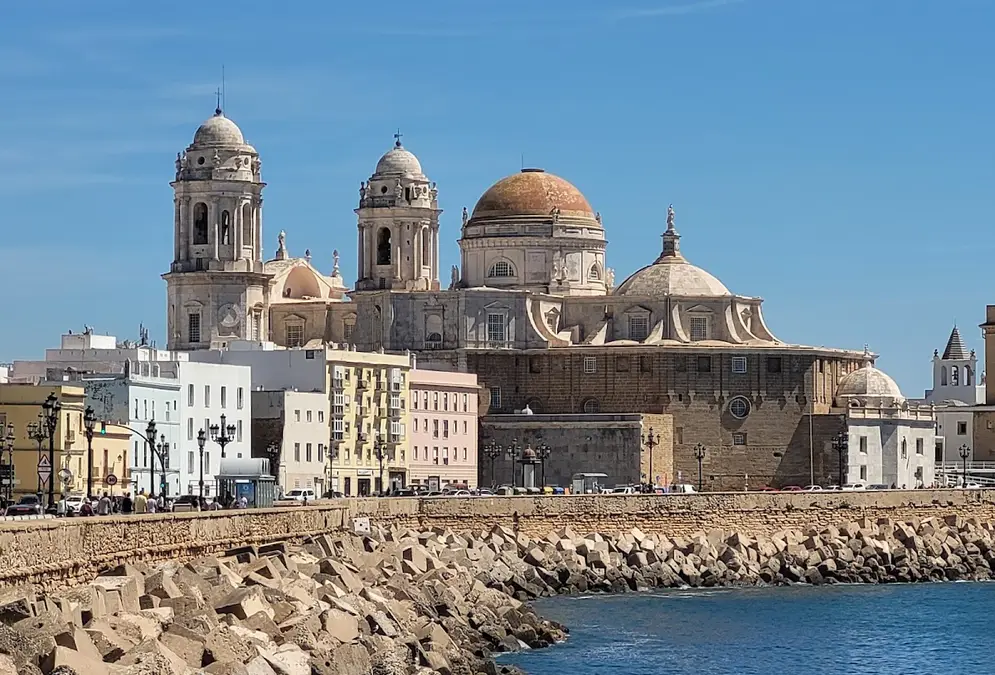

Golden tiled dome of Cádiz Cathedral rising above the Atlantic seawall of Campo del Sur
1-Day Walking Loop · 6.5 km

One Day in Cádiz: Hour-by-Hour Walking Itinerary

A realistic, chronologically sequenced loop across Cádiz’s 3,000-year-old historic peninsula, from morning churros and El Pópulo’s Roman Theatre to the Central Market, watchtowers, and an Atlantic sunset at La Caleta.

Portrait of Lucía Barbera Quintero
Written by

Historian specialising in Cádiz's ancient, colonial and constitutional heritage.

Published

Founded around 3,000 years ago by Phoenician sailors, Cádiz is the oldest continuously inhabited city in Western Europe, and its geography makes it one of the most rewarding one-day walks in Spain. Once you cross north of the Puerta de Tierra land walls, the entire historic centre occupies a flat limestone peninsula just 1.8 kilometres from the harbour gates to the western castles.

Whether you step off a morning Renfe train from Seville or Jerez at Plaza de Sevilla or walk through the cruise port gates at Muelle Alfonso XIII, you are already standing at the threshold of the old town. This hour-by-hour sequence covers 6.5 kilometres on foot without a single bus or taxi, timed around the 10:00 monument openings, the 15:00 fish-stall close at the Mercado Central de Abastos, and sunset between the castles of La Caleta.

1-Day Cádiz Route at a Glance

Total walking distance: 6.5 km across the flat 1.8 km Casco Antiguo peninsula (zero buses or taxis needed)
Best days of the week: Tuesday to Saturday (avoids Monday closures at Mercado Central fish stalls, Gadir & Museo de Cádiz)
Critical time window: Reach Mercado Central before 15:00 (open Mon–Sat 09:00–15:00) while fishmonger counters are active
Book or collect ahead: Reserve Torre Tavira Camera Obscura online; pick up your timed Gadir pass next door on arrival

On this page

Jump to a section
Route Summary

Hour-by-Hour Schedule & Neighborhood Flow

Every stop on this route sits inside the pedestrianised Casco Antiguo. Steep stairs appear only if you choose to climb the optional watchtowers.

Time Window Quarter / Area Key Stops & Dishes Booking / Timing Rule
09:00 – 09:45 San Juan de Dios & Market Ayuntamiento (1865), paper cone of churros at La Guapa Arrive early while churro oil is hot
09:45 – 11:00 Barrio del Pópulo Arco del Pópulo, Casa del Almirante (1685), Roman Theatre Roman Theatre opens 10:00 (free entry)
11:00 – 12:30 Plaza de la Catedral Cádiz Cathedral, Manuel de Falla crypt, Torre del Reloj Combined Cathedral & tower ticket
12:30 – 13:45 Upper Centre Torre Tavira (Camera Obscura) & Phoenician Gadir ruins Pre-book Torre Tavira; timed pass at Gadir
13:45 – 15:15 Plaza de la Libertad & Flores Mercado Central stalls, Taberna La Manzanilla, Freiduría Las Flores Market fish stalls close at 15:00 Mon–Sat
15:15 – 17:30 Calle Ancha to Alameda Oratorio de San Felipe Neri, Alameda Apodaca, Parque Genovés Shaded afternoon garden & seawall walk
17:30 – 21:00 La Caleta & La Viña Castillo de Santa Catalina, Balneario, Casa Manteca, El Faro Queue at Casa Manteca around 20:00
01
09:00 – 12:30 · Southern Core

Morning: San Juan de Dios, Churros, El Pópulo & the Cathedral

09:00 – 09:45 · Harbour Gate & Breakfast 45 min · Flat walk
1

Plaza de San Juan de Dios & Morning Churros at La Guapa

Step out of Cádiz station or the port gate directly into Plaza de San Juan de Dios. Already an active urban square facing the harbour in the 16th century, this palm-lined esplanade grew into the city’s commercial nerve centre as trade with the Americas expanded. Pause before the Neoclassical Ayuntamiento, designed by Pedro Ángel Albisu and Torcuato Benjumeda and finished in 1865 by Manuel García del Álamo.

Before the monuments open at 10:00, walk eight minutes west through Plaza de las Flores to the outer corner of the Mercado Central de Abastos on Plaza de la Libertad. Join the local queue at the Churrería La Guapa kiosk, named after its tall, striking founder who once won a Manila shawl contest. More than 60 kilos of hand-worked dough are fried here every day; carry your warm paper cone to a terrace table at a neighbouring bar for your morning coffee.
09:45 – 11:00 · Medieval Quarter & Roman Gades 75 min · Free entry at 10:00
2

Barrio del Pópulo , Casa del Almirante & the Roman Theatre

Walk five minutes south into El Pópulo, Cádiz’s oldest medieval quarter, ducking beneath the vaulted stone passage of the Arco del Pópulo (the original Puerta del Mar). Inside Plaza de San Martín, look up at the red Genoese marble doorway and twin watchtowers of the Casa del Almirante, built in 1685 by Don Diego de Barrios, admiral of the Indies fleet, and preserved as one of the finest mansions of the Cargadores a Indias merchant elite.

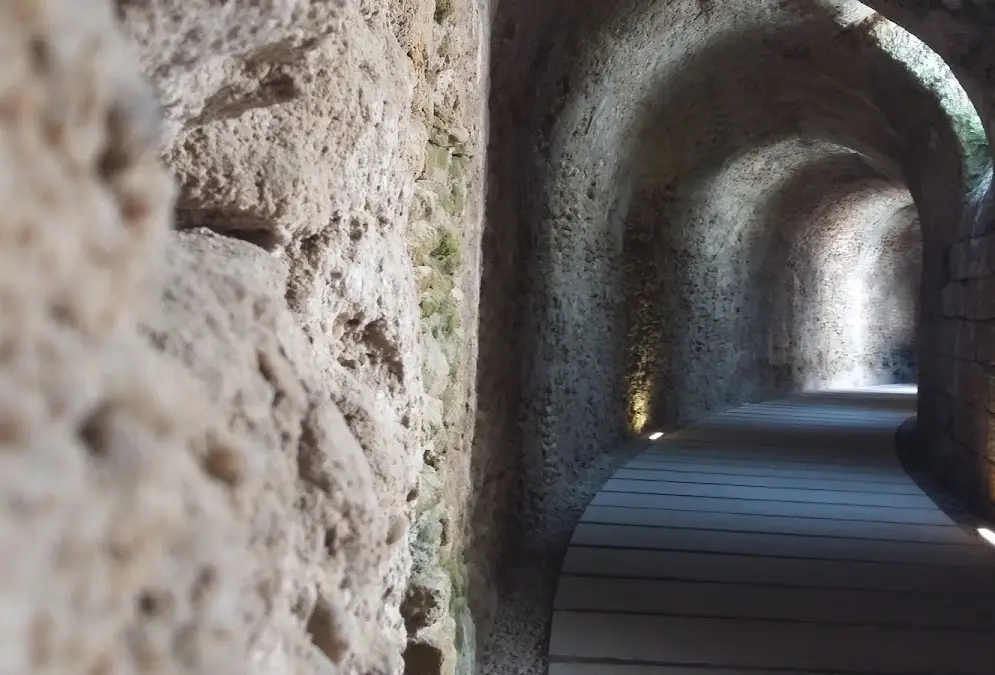
At 10:00 sharp, enter the Roman Theatre via the Posada del Mesón. Sitting directly alongside the Old Cathedral (Iglesia de Santa Cruz) and looking toward the Atlantic, the theatre reveals the monumental scale of Roman Gades under the Balbus family before you cross into the Baroque city.

Roman Theatre entry: Free Opening rule: Opens 10:00 (closed first Monday of month)
Excavated stone seating tiers and vaulted galleries of the Roman Theatre of Cádiz in Barrio del Pópulo

The 1st-century BC Roman Theatre of Cádiz sits tucked beneath the medieval lanes of El Pópulo, steps from the Old Cathedral.

11:00 – 12:30 · Baroque Waterfront 90 min · Combined ticket
3

Cádiz Cathedral , Crypt of Manuel de Falla & Torre del Reloj

Two minutes from the theatre exit, the yellow-tiled dome of Cádiz Cathedral rises above the Atlantic seawall of Campo del Sur. Built in a blend of Baroque and Neoclassical styles, the cathedral rewards a full 90-minute visit: walk the nave, descend into the resonant stone crypt that holds the remains of composer Manuel de Falla, and take the Cádiz Cathedral tower climb up the broad interior ramps of the clock tower for a 360-degree view over the whitewashed peninsula.

02
12:30 – 15:15 · Upper Centre & Market

Midday: Torre Tavira, Phoenician Gadir & Central Market Lunch

12:30 – 13:45 · Watchtowers & Phoenician Streets 75 min · Pre-book Camera Obscura
4

Torre Tavira & Yacimiento Arqueológico Gadir

Climb six minutes uphill from the Cathedral to the highest point of the old town for Torre Tavira, the flagship 18th-century merchant watchtower where a live Camera Obscura projects moving optical views of the bay and rooftops onto a concave table.

Immediately around the corner at Calle San Miguel 15, step underground into the Yacimiento Arqueológico Gadir. Arranged across multiple occupation layers, the excavation preserves a 9th-century BC Phoenician settlement with eight clay-built dwellings set across two terraces around two paved streets, alongside household utensils and later Roman fish-salting vats.

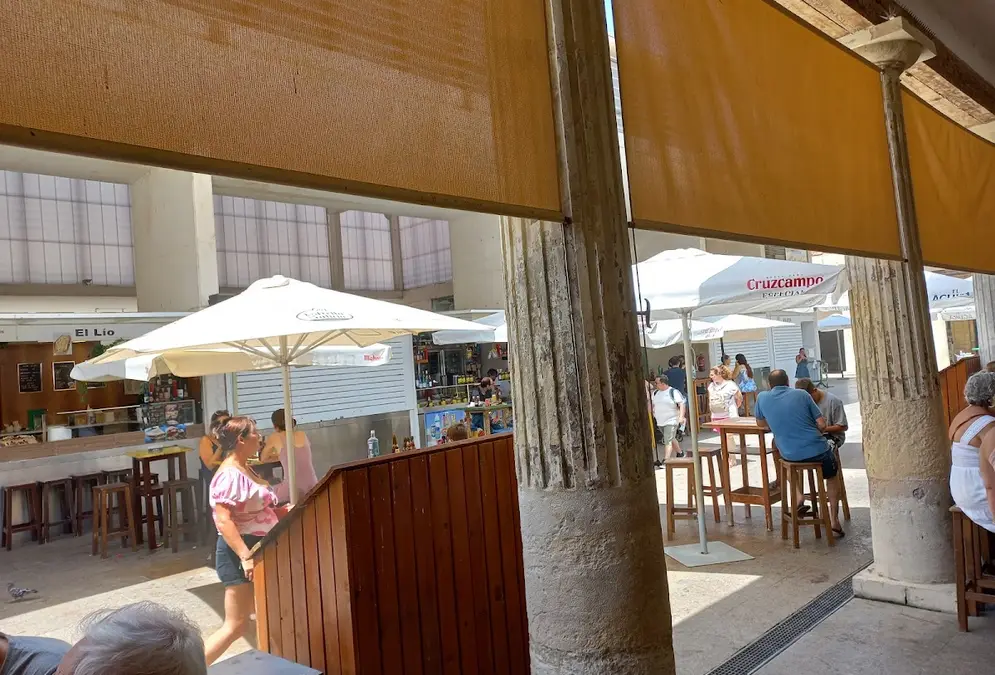
Neoclassical Doric colonnade and fresh market stalls at the Mercado Central de Abastos in Cádiz

Inaugurated in 1838 on Plaza de la Libertad, the Mercado Central de Abastos runs its traditional fish and produce stalls Monday to Saturday until 15:00.

13:45 – 15:15 · Midday Tapas & Freidor Stop
Fish stalls close at 15:00
5

Mercado Central de Abastos , Taberna La Manzanilla & Freiduría Las Flores

Descend three minutes west to Plaza de la Libertad before the traditional market closes at 15:00. Designed by Torcuato Benjumeda as a Neoclassical quadrangle enclosed by a Doric portico on land expropriated from the Descalzos convent in the 1830s, the Mercado Central de Abastos was inaugurated in 1838 and runs Monday to Saturday from 09:00 to 15:00.

Before ordering food, stop one street away at Taberna La Manzanilla (Calle Feduchy 19). Inaugurated in 1932, this historic wine dispatch serves only Sanlúcar wines aged in its own wooden butts and remains one of the very few bars in Cádiz to place a complimentary saucer of olives beside your glass. Then return to the market’s Rincón Gastronómico or cross to Plaza de las Flores to visit Freiduría Las Flores. Traditional Cádiz freidores sell pescaíto frito and cazón en adobo by weight wrapped in cones of porous brown paper (cartuchos de papel de estraza), which wickedly absorbs excess oil so the batter stays crisp while you walk.

“Walk the walled peninsula in the morning light, reach the Central Market before the fish stalls close, and let the Atlantic breeze carry you out to La Caleta by sunset.”
— Cádiz One-Day Route Rhythm
03
15:15 – 17:30 · Northern Seawall & Gardens

Afternoon: 1812 Constitutional Sites, Alameda Apodaca & Parque Genovés

15:15 – 16:15 · Liberal Cádiz of 1812 60 min · Shaded historic spine
6

Calle Ancha, Oratorio de San Felipe Neri & Plaza de Mina

After lunch, follow the shaded bourgeois spine of Calle Ancha to the Oratorio de San Felipe Neri, the National Monument where deputies debated Spain’s liberal Constitution of 1812 while French artillery besieged the bay, and the adjacent Museo de las Cortes de Cádiz. Continue north through leafy Plaza de Mina (home to the Museo de Cádiz) toward the bayfront walls.

16:15 – 17:30 · Bay Promenade & Botanical Canopy 75 min · Free coastal gardens
7

Alameda Apodaca, Baluarte de la Candelaria & Parque Genovés

Step onto the bay-side sea wall along the Alameda Apodaca. Used by citizens since the 17th century as a sheltered promenade and given its current regionalist tilework and wrought-iron look in the 1926 reform, the walkway passes the Iglesia del Carmen and the 1672 bastion of Baluarte de la Candelaria.

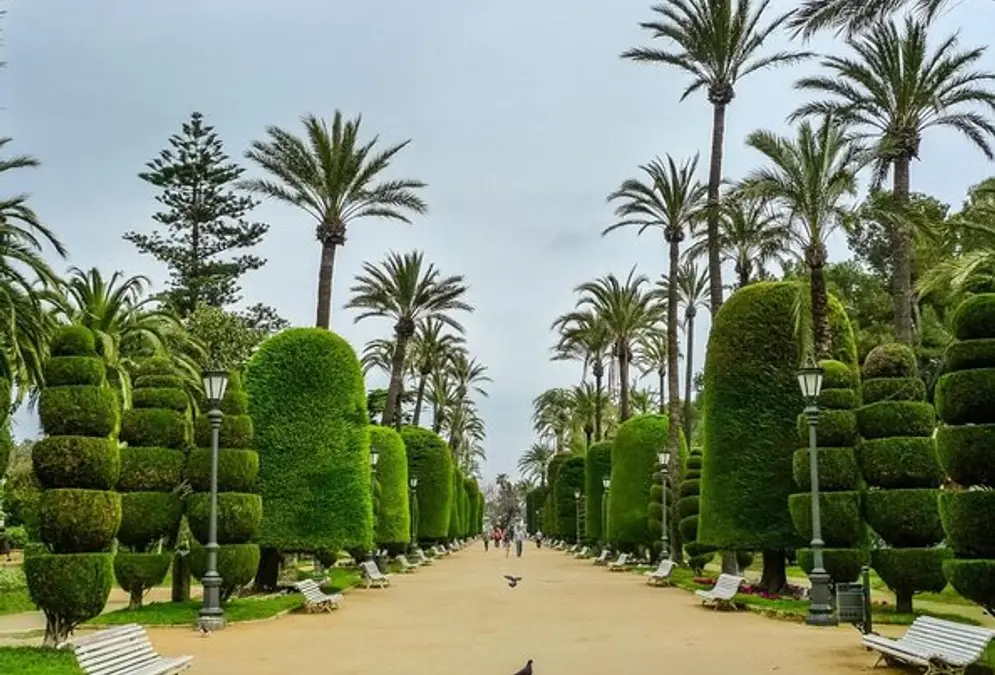
At the western end of the Alameda, enter Parque Genovés. Declared a Bien de Interés Cultural by the Junta de Andalucía, it preserves its 19th-century romantic botanical garden layout, offering a cool afternoon canopy before you step out onto the open Atlantic coast.

Trimmed cypress topiary, palm avenues, and botanical walkways inside Parque Genovés in Cádiz

Declared a Bien de Interés Cultural, Parque Genovés provides a shaded 19th-century botanical promenade between the Alameda seawall and La Caleta.

04
17:30 – 21:00 · Atlantic Sunset & Tapas Crawl

Sunset at Playa de La Caleta & Evening Tapas in Barrio de La Viña

17:30 – 19:45 · Sea Castles & Golden Hour
Free ramparts & causeway
8

Castillo de Santa Catalina & Sunset on Playa de La Caleta

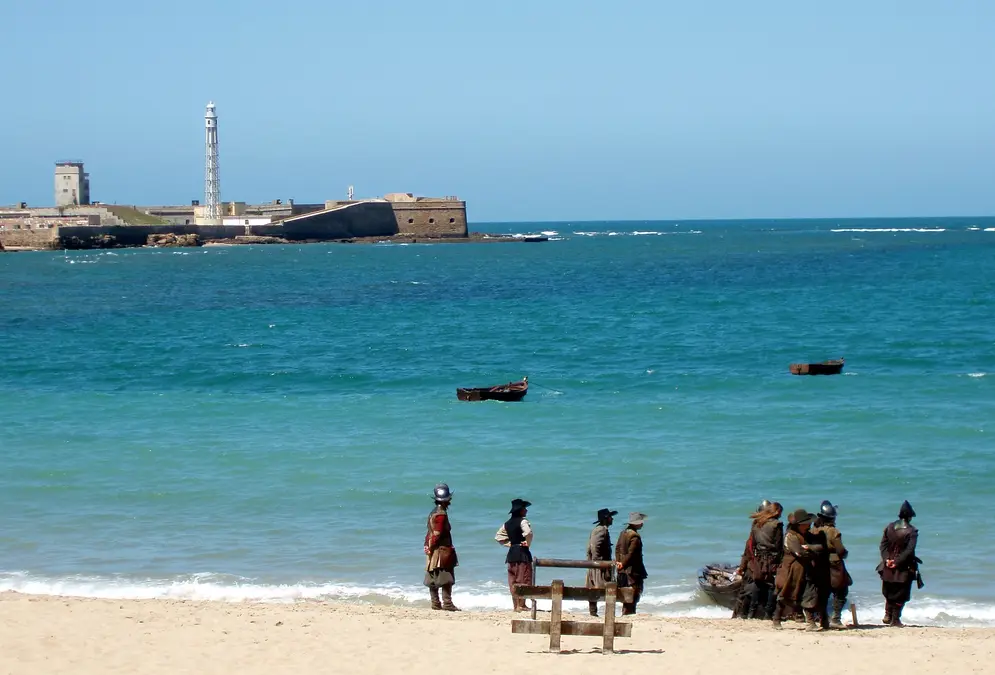
Exit Parque Genovés past the star-shaped ramparts of Castillo de Santa Catalina onto Playa de La Caleta. The only beach in the historic old town, La Caleta sits framed between the castles of Santa Catalina and Castillo de San Sebastián, where the white piers of the Balneario de la Palma y del Real step straight onto the sand. Walk the Cádiz seafront walk along the causeway as the sun drops into the Atlantic.

Traditional fishing boats, white Balneario de la Palma pavilions, and Atlantic sunset light at Playa de La Caleta in Cádiz

Framed by twin sea castles, Playa de La Caleta is the only beach inside the historic centre and the natural sunset anchor of a one-day route.

19:45 – 21:00 · Three-Stop Tapas Crawl
20 min flat walk back to station
9

Standing Tapas in Barrio de La Viña : Casa Manteca, La Barra del Faro & El Palillo

As twilight settles around 20:00, walk three minutes inland into Barrio de La Viña for a three-stop standing tapas crawl:

  • Casa Manteca (Calle Corralón de los Carros 66): Cold tapas are the house signature here, led by paper-thin slices of chicharrones de Cádiz dressed with lemon and black pepper on greaseproof paper, Payoya goat cheese with asparagus jam, cured meats, select tinned seafood, and warm revuelto de tagarninas.
  • La Barra del Faro & El Faro de Cádiz (Calle San Félix 15): Enter through the lively bar counter where Gonzalo and Pepa began serving fish from wooden boxes in the street in 1964; order lacy, crisp tortillitas de camarones.
  • El Palillo (Calle San Félix 10): Opened in 1952 and run by Jesús Galán right across the lane, this tiny fryer bar is the local go-to for a dish rarely found elsewhere: crisp morena en adobo (marinated moray eel).

From Calle San Félix, it is a flat 20-minute walk back along the seafront or through Calle Ancha to Cádiz railway station for late evening trains to Jerez and Seville.

Flexible Adjustments

Cruise Port 5-Hour Express & Windy-Day Indoor Adjustments

Cruise Passengers (5 to 6 Hours Ashore)

If your ship docks at Muelle Alfonso XIII with an early afternoon all-aboard time, compress the loop by skipping indoor timed tours: walk off the gangway into Plaza de San Juan de Dios at 10:00, visit the free Roman Theatre and Cádiz Cathedral (10:15–12:15), cut through the Mercado Central to La Caleta, eat a 13:30 lunch at Casa Manteca, and return via Calle Ancha in 20 minutes. See our full Cádiz Cruise Port Day Guide.

Strong Levante Wind or Rainy-Day Swap

When easterly Levante gusts or Atlantic squalls lash the exposed Campo del Sur and La Caleta seawalls, trade the outdoor garden and castle causeway for the three-floor Museo de Cádiz on Plaza de Mina, the Neoclassical Casa de Iberoamérica, and the gilded Belle Époque dining room of Café Royalty or Bar El Laurel around Plaza Candelaria.

Staying overnight instead of leaving tonight?

If you decide to add a night or two, our Cádiz 2-Day Itinerary, Friday-to-Sunday Weekend Plan, and 3-Day Bay of Cádiz Itinerary split these sights across unhurried mornings and add Playa de la Victoria and the El Puerto catamaran.

Local correspondent notes

One-day route tips from the ground

Best time

Reach Mercado Central before the 15:00 fish-stall close

Traditional fruit, vegetable, meat, and fishmonger stalls inside the 1838 Doric quadrangle operate Monday to Saturday from 09:00 to 15:00. Time your morning monument loop so you walk into the market by 13:30 while the seafood counters are still open and the Rincón Gastronómico is serving.

Booking tip

Reserve Torre Tavira and pick up your Gadir pass together

Torre Tavira and the underground Yacimiento Arqueológico Gadir sit next door to each other in the upper centre. Book your Camera Obscura time slot online ahead of your trip, then step round the corner to Calle San Miguel 15 to secure one of the 25 spaces on the next guided pass through the 9th-century BC Phoenician streets.

What to order

Order tapas and medias raciones, never full plates for two

Unlike eastern Andalusia, bars in Cádiz charge separately for tapas rather than serving them free with a drink (save for a saucer of olives with your barrel-aged wine at Taberna La Manzanilla on Calle Feduchy 19). Full raciones are generous, so stick to tapas, paper cones from a freidor, and cold sliced chicharrones de Cádiz on butcher paper.

Crowd tip

Skip Mondays if you want the full market and Phoenician ruins

Tuesday through Saturday is the strongest window for a one-day visit. On Mondays the fish stalls at Mercado Central, the underground Phoenician site at Gadir, and the Museo de Cádiz on Plaza de Mina are closed, and the Roman Theatre closes on the first Monday of every month.

Common Questions

Frequently Asked Questions About Spending 1 Day in Cádiz

Is one day enough to see Cádiz?

One full day of 10 to 12 hours on foot is enough to cover the historic peninsula (Casco Antiguo): Plaza de San Juan de Dios, El Pópulo, the Roman Theatre, Cádiz Cathedral, Torre Tavira, Yacimiento Arqueológico Gadir, lunch at the Mercado Central de Abastos, Parque Genovés, sunset at La Caleta, and evening tapas in La Viña. A single day does not leave time for the modern Extramuros beaches or a bay ferry to El Puerto de Santa María; for those, follow our Cádiz Weekend Itinerary or Cádiz in 3 Days route.

How far is Cádiz old town from the train station and cruise port?

Both Cádiz railway station on Plaza de Sevilla and the Alfonso XIII cruise terminal sit directly outside the historic walls at Plaza de San Juan de Dios. You walk flat across the pedestrianised square into El Pópulo in under five minutes and reach Cádiz Cathedral in about seven minutes without needing a bus or taxi.

What is the best day of the week for a day trip to Cádiz?

Plan your visit between Tuesday and Saturday. During those five days, the traditional fish and produce stalls at Mercado Central de Abastos (09:00 to 15:00), the underground Phoenician site at Yacimiento Arqueológico Gadir, and the Museo de Cádiz on Plaza de Mina are all open.

Do you need a car or public bus for one day in Cádiz?

No. The entire historic peninsula from Plaza de San Juan de Dios to Castillo de Santa Catalina at La Caleta measures roughly 1.8 km end to end, and this complete hour-by-hour loop covers about 6.5 km on flat flagstones and seafront promenades. If you arrive by car, leave it in a perimeter underground car park before entering the narrow one-way lanes of the Casco Antiguo.

Are tapas free with a drink in Cádiz?

No. In western Andalusia, tapas, medias raciones, and raciones are ordered from the menu or blackboard and priced separately from your drink. One traditional exception is Taberna La Manzanilla on Calle Feduchy 19 (founded in 1932), which still accompanies its barrel-aged Sanlúcar wines with a complimentary saucer of olives.

Further reading

Sources

20 references Show
  1. Spain.info: Cádiz Tourist Guide (opens in a new tab)

    “Fundada hace unos 3.000 años por los fenicios, Cádiz es la ciudad más antigua de Occidente.”

  2. Spain.info: Cádiz Tourist Guide (opens in a new tab)

    “La visita puede empezar en Puerta Tierra, entrada a las murallas y línea divisoria entre la Cádiz moderna y la antigua.”

  3. Spain.info: Cádiz Tourist Guide (opens in a new tab)

    “En la fachada atlántica se alza la cúpula de azulejos amarillos de la Catedral, que mira al Campo del Sur. De corte barroco y neoclásico, su cripta guarda los restos del compositor Manuel de Falla. A su lado se encuentran el antiguo teatro romano y la catedral vieja.”

  4. Spain.info: Cádiz Tourist Guide (opens in a new tab)

    “Esta playa es la única del casco antiguo y se enmarca entre los castillos de Santa Catalina y San Sebastián. Sus arenas nos dan paso al Balneario de la Palma y del Real.”

  5. Spain.info: Cádiz Tourist Guide (opens in a new tab)

    “En pleno centro de Cádiz podemos visitar el Museo Histórico Municipal de Cádiz, la Torre Tavira, una de las más emblemáticas de la ciudad, y el Oratorio de San Felipe Neri, Monumento Nacional en el que se debatió la Constitución liberal de 1812.”

  6. Ayuntamiento de Cádiz: Plaza de San Juan de Dios (opens in a new tab)

    “En el siglo XVI ya se utilizaba como centro de actividad urbana, abierto al puerto y presidido por el ayuntamiento. La función comercial tradicional que lo caracterizó se incrementó gracias al desarrollo del comercio con América.”

  7. Ayuntamiento de Cádiz: City Hall (opens in a new tab)

    “La obra es el resultado de los proyectos de Pedro Ángel Albisu y Torcuato Bejumedo y sigue la estética académica imperante en ese momento. Las obras fueron terminadas en 1865 por Manuel García del Álamo.”

  8. Ayuntamiento de Cádiz: Casa del Almirante (opens in a new tab)

    “Construido en 1685 por Don Diego de Barrios, almirante de la flota de Indias, es uno de los ejemplos más importantes de las casas de los cargadores de Indias que se conservan en la ciudad.”

  9. Ruta Bética Romana: Yacimiento Arqueológico Gadir (opens in a new tab)

    “El yacimiento se estructura en diferentes planos que se corresponden a las distintas épocas de ocupación del asentamiento, destacando el trazado de calles, viviendas y utensilios correspondientes al siglo IX a.C. Se conservan un total de ocho viviendas distribuidas en dos terrazas y organizadas en torno a dos calles pavimentadas.”

  10. Ayuntamiento de Cádiz: Mercado Central (opens in a new tab)

    “El proyecto del Mercado Central de Cádiz fue obra de Torcuato Bejumeda, quien propuso una plaza cuadrilátera de estilo neoclásico encerrada por el pórtico dórico, ubicada en los terrenos del convento de los Descalzos, hoy Plaza de la Libertad, expropiada en el década de 1830. El histórico mercado ubicado en la Plaza de la Libertad fue inaugurado en 1838”

  11. Ayuntamiento de Cádiz: Mercado Central Hours (opens in a new tab)

    “De lunes a sábado de 09.00 h a 15.00 h”

  12. Guía Repsol: Mercado Central de Abastos de Cádiz (opens in a new tab)

    “Los más populares son los de los churros, como el de 'La Guapa', que se quedó con este nombre porque su fundadora, una mujer alta y bien plantá ganó un concurso de mantones de manila. Más de 60 kilos de masa trabajada a mano se venden cada día en este puesto.”

  13. Directo al Paladar: Cádiz Gastronomy Guide (opens in a new tab)

    “Recuerda que, a diferencia de lo que ocurre en Andalucía Oriental, en Andalucía Occidental no es típico poner tapa con la consumición: hay que pedirla siempre aparte.”

  14. Directo al Paladar: Taberna La Manzanilla (opens in a new tab)

    “Esta taberna es uno de los despachos de vino más emblemáticos de la ciudad. Inaugurada en 1932 es uno de los pocos ejemplos de bares que han sabido modernizarse sin perder ni un ápice de su identidad. No es un sitio para ir a comer. Solo se sirven vinos de Sanlúcar envejecidos en sus propias botas.”

  15. Cosas de Comé: Traditional Cádiz Freidores (opens in a new tab)

    “Los freidores (ver que son y su historia aquí) suelen vender el pescado frito en cartuchos de papel de estraza. Se hace un cono con este papel, que además tiene la virtud de absorber el aceite sobrante y en su interior se pone el pescado.”

  16. Ayuntamiento de Cádiz: Alameda Apodaca (opens in a new tab)

    “Esta avenida, utilizada para resguardarse de las tormentas, se encuentra en la muralla cercana a la bahía y ha sido uno de los lugares más concurridos de la ciudad desde el siglo XVII. A lo largo de la historia ha sufrido varias reformas, pero la que le dio su aspecto actual se llevó a cabo en 1926.”

  17. Ayuntamiento de Cádiz: Parque Genovés (opens in a new tab)

    “El Parque Genovés fue declarado por la Junta de Andalucía como Bien de Interés Cultural y se encuentra incluido en el Catálogo General del Patrimonio Histórico de Andalucía. Conserva su imagen de Jardín Botánico de estilo romántico del siglo XIX.”

  18. elDiario.es: Casa Manteca (opens in a new tab)

    “Su especialidad son las tapas frías, con los chicharrones de Cádiz como plato estrella. Queso de cabra payoya con confitura de espárrago o el revuelto de tagarninas (uno de las pocas propuestas calientes de la casa) componen una carta protagonizada por las chacinas y las conservas selectas.”

  19. elDiario.es: El Faro de Cádiz & La Barra del Faro (opens in a new tab)

    “Se encuentra en el corazón del barrio de La Viña y, quizás, lo más recomendable es acceder a él a través de La Barra del Faro, ubicado a su lado y donde Gonzalo y Pepa comenzaron este negocio: era 1964 y el pescado se servía en cajas de madera en la calle.”

  20. elDiario.es: El Palillo (opens in a new tab)

    “Abierto en 1952, desde hace seis años es Jesús Galán el responsable de un local al que muchos acuden para degustar un plato nada fácil de encontrar: la morena en adobo.”