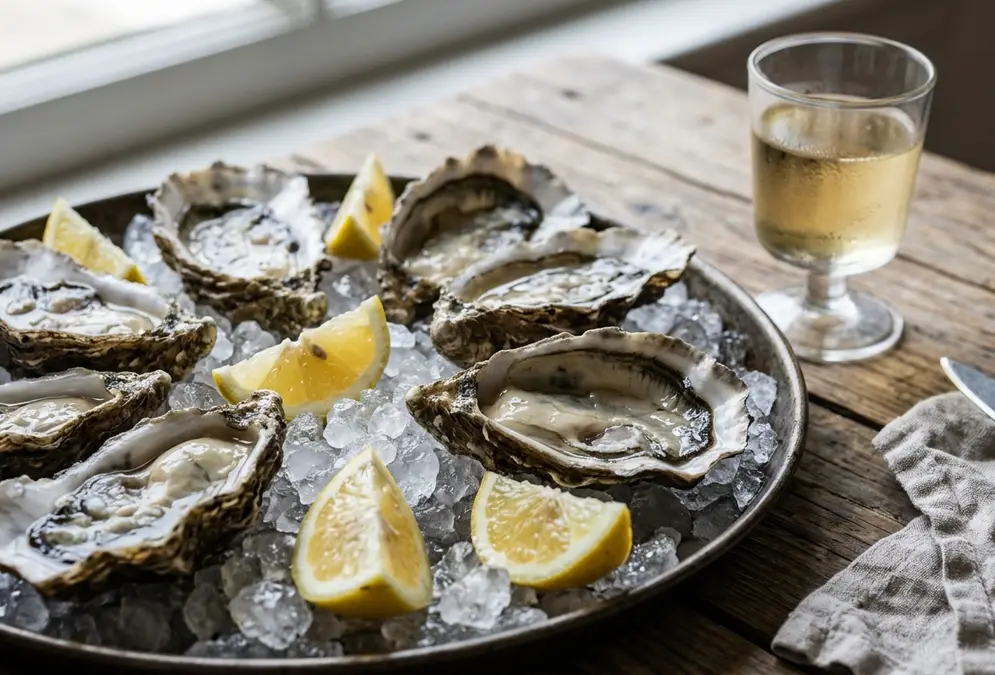

An ostión is a cupped oyster: rough, deep-shelled, briny and cold, opened to order and eaten with a squeeze of lemon. In Cádiz it belongs to the shellfish side of the menu, in the company of prawns, clams and coquinas rather than the fried fish that gets all the attention. Local cooking writers list ostiones among the shellfish that are genuinely popular in the city.
If you arrive expecting a Paris-style oyster bar, adjust. Here the ostión turns up in a market stall, a seafood counter or on a bar's list of mariscos, usually without ceremony. Order a few, eat them straight away and move on to the next thing.
What an ostión actually is
Three oyster species have been cultivated in Europe: the Portuguese oyster (Crassostrea angulata), the Pacific oyster (C. gigas) and the flat European oyster (Ostrea edulis). The first two are cupped oysters and are so close genetically that a study found 99% similarity across 24 loci, although they differ in growth, reproduction and disease resistance. The Portuguese oyster is native to the south-west of the Iberian Peninsula, in river mouths and estuaries, which is exactly the kind of coast the Bay of Cádiz offers.
That is the useful frame for the word. Ostión points to the cupped kind, the rugged, deep-bowled shell, as opposed to the flat, rounded oyster that menus elsewhere sell as ostra plana. Which species ends up on your plate depends on the supplier, so ask the person opening it if the species matters to you.
How to order and eat them
- Ask for them al natural, raw, with lemon and nothing else, at least for the first half-dozen.
- Eat them as soon as they are opened; an oyster that has sat on the counter is not worth the money.
- Ask whether they are served raw or cooked that day, since kitchens differ.
- Check the price per piece before you order, because bars price by the unit and the total mounts quickly.
A glass of chilled manzanilla or fino is the obvious partner, and the dry, salty edge suits the oyster far better than a heavy white does.
Where to look
Start with the market and the seafood counters of the old town, then the bars that list mariscos on a chalkboard. Fish and shellfish stalls open in the morning and close early, so go before lunch rather than after. Opening hours and what is on offer change by day, so check the venue's own page or ask at the counter before you plan a meal around ostiones.