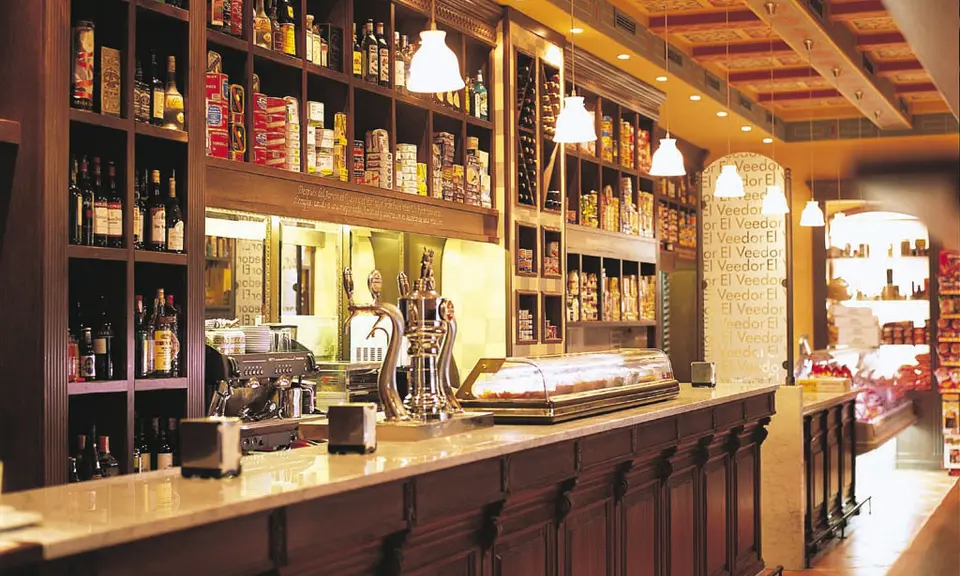

Shelves of bottles and cured provisions inside historic colmado Ultramarinos El Veedor in Cádiz
Markets, Colmados & Crafts

Cádiz Shopping Guide: Edible Souvenirs, Colmados & Ubrique Leather

Skip the plastic magnets. In Cádiz, the real treasures are salt-cured IGP Mojama de Barbate, Sierra de Cádiz Payoyo cheeses, Sanlúcar Manzanilla poured from the butt, and artisan leather from the mountain workshops of Ubrique.

Portrait of Andrés Villanueva Rondón
Written by

Food and drink writer covering Cádiz tapas, seafood and the sherry triangle.

Published

If you want to bring the flavour of Cádiz home in your suitcase, look to the pantry rather than the souvenir rack. Between the Atlantic tuna traps of Barbate, the limestone grazing pastures of the Sierra de Cádiz, and the salt-breeze bodegas of the Sherry Triangle, this province produces some of the most distinctive cured foods, wines, and leatherwork in Spain.

Better still, the places where locals buy them inside the Old Town are historic monuments in their own right: an 1838 Neoclassical market hall on Plaza de la Libertad, wood-shelved colmados (grocery-bars) that have nearly vanished elsewhere in Andalusia, and neighbourhood abacerías where everything is served on brown butcher paper before you pick a bottle off the wall.

On this page

Jump to a section
At a Glance

What to Buy in Cádiz & Exact Addresses

Every food item below can be bought within a 10-minute walk of Plaza de las Flores and the Central Market.

Directory of local products to buy in Cádiz and exact addresses
Local Product What Makes It Special Where to Buy in Cádiz
IGP Mojama de Barbate Salt-cured, wind-dried wild tuna loins (Extra & Primera grades) Mercado Central fish/salazón counters, Ultramarinos El Veedor, Gorrión Wine Bar
Almadraba Tuna & Laterío Wild red Atlantic bluefin tuna & artisan tinned seafood Puesto de Fernando Coucheiro (Mercado Central, est. 1961), Gorrión Wine Bar
Payoyo Cheese & Chacinas Sierra de Cádiz goat/sheep cheeses & mountain Iberian embutidos Mercado Central charcuterías, Ultramarinos El Veedor (Calle Veedor 10)
Chicharrones & Manteca Colorá Slow-rendered pork rinds & paprika-spiced lard in clay bowls Stalls of Iván & Isaías (sons of Curro) inside Mercado Central
Stuffed Olives & Sourdough Hand-stuffed tuna/anchovy olives & ecological sourdough loaves Puesto de Matías (olives) & Pan de Aida (bakery), Mercado Central
Sanlúcar Manzanilla & Cádiz Wines Cask sherries sold by the litre & 300+ provincial wine bottles Taberna La Manzanilla (Calle Feduchy 19) & Gorrión Wine Bar (Calle Fabio Rufino 6)
Ubrique Leather (Marroquinería) Sierra de Cádiz artisan leather workshops supplying 100+ luxury houses Old Town leather boutiques & Ubrique workshops (Convento de Capuchinos / Leather Museum)
Stop 1 · Plaza de la Libertad

Shopping the 173 Stalls of the Mercado Central de Abastos

Every serious food shopping walk in Cádiz begins at the Mercado Central de Abastos on Plaza de la Libertad, open Monday to Saturday from 09:00 to 15:00. Following its comprehensive renovation, which preserved the original 1838 Neoclassical layout, the market houses 173 sales points: 57 fruit and vegetable stalls, 54 fish, crustacean and mollusc stalls, 44 meat stalls, 7 frozen stalls, 4 bread and pastry stalls, 1 specialist olive stall, 1 bags and paper stall, 1 fishing tackle stall, and a first-floor café.

Here the whole geography of the province converges under one roof: fruit and market-garden vegetables from the countryside, meats, cheeses, and cured chacinas from the Sierra de Cádiz, and fresh fish landed from the Bay of Cádiz. Four individual stalls deserve a dedicated stop on your morning circuit:

  • Fernando Coucheiro (Fish & Almadraba Tuna, est. 1961): Operating inside the market since 1961, Fernando Coucheiro specialises in wild red tuna and supplies the finest restaurants in Cádiz.
  • The Sons of Curro (Iván and Isaías): Both brothers run their own production workshops right inside the market, turning out warm chicharrones de Cádiz, freshly made chorizos and morcillas, and traditional clay bowls (lebrillos) filled with white lard and orange-red manteca colorá.
  • El Puesto de Matías (The Market’s Sole Olive Specialist): Matías and his team hand-stuff olives one by one with tuna, anchovy, or boquerón. Shopping at Matías’s counter is a guided tasting in itself, because he encourages customers to sample everything before deciding.
  • Pan de Aida (Ecological Sourdough Bakery): Run by bakers Aida and Jill inside the market, this artisan bakery crafts organic loaves on site using ecological flours and natural sourdough starters.

For a deeper look at the building’s architecture and evening tapas bars, read our dedicated Mercado Central de Cádiz food market guide.

Ocean Salazones

IGP Mojama de Barbate, Salted Tuna Roe & Premium Conservas

Often called the jamón ibérico of the ocean, mojama and salted tuna roe are the easiest coastal delicacies to pack in your luggage. Down the Atlantic coast from the capital, Barbate is the artisanal salt-curing and wind-drying capital of southwestern Andalusia, where traditional factories harness the steady sea winds to cure fish loins using techniques rooted in Phoenician and Roman Gadir.

When buying vacuum-sealed blocks in Cádiz, look for the official Protected Geographical Indication (IGP) Mojama de Barbate seal. Under Junta de Andalucía regulations, authentic IGP Mojama de Barbate is elaborated exclusively within the municipalities of Barbate and Vejer de la Frontera from wild tuna loins and classified into two quality tiers:

  • Categoría Extra: Cut from the lean, compact inner part of the tuna loin that sits directly against the backbone.
  • Categoría Primera: Cut from the contiguous outer section of the loin, slightly more marbled and intense.

Alongside cured blocks of mojama and compressed salted tuna roe (hueva de atún), pick up tins of atún de almadraba (such as ventresca belly, tarantelo, or mormo packed in olive oil), which travel effortlessly without refrigeration.

“In Cádiz, the best souvenir shops have sawdust or tiles on the floor, a chalk-marked mahogany bar on one side, and walls stacked to the ceiling with Sierra cheeses, Barbate salazones, and Sanlúcar butts.”
— Shopping the Casco Antiguo
Mountain Larder

Sierra de Cádiz Payoyo Cheese & Interior Iberian Embutidos

While the coastline supplies tuna and sea salt, the interior mountain ranges (sierras) of the province supply Cádiz’s cured meats and cheeses. As Spain’s national tourism board notes, the prized Iberian ham and cured embutidos sold in Cádiz always come from the interior sierras of the province.

At market charcuterías and historic grocery counters, ask for wedges of Payoyo cheese (crafted in the Sierra de Grazalema from indigenous Payoya goat’s milk, Grazalema sheep’s milk, or a blend of both, often aged in olive oil, lard, or wheat bran). Pair a vacuum-packed wedge with spicy mountain chorizo, caña de lomo, or a tub of manteca colorá to spread on warm toast at home.

Historic Grocery-Bars & Wine Dispatches

Where to Buy Sherry, Manzanilla & Gourmet Tins: 3 Essential Addresses

Cádiz was once famous for its colmados, hybrid neighbourhood shops that combined a stacked grocery store (tienda de ultramarinos) with a standing wooden bar. Very few authentic examples survive today, making these three Old Town stops essential for both tasting and bottle shopping:

  • Ultramarinos El Veedor (Calle Veedor 10, corner of Calle Vea Murguía): One of the last true Cádiz colmados with both a traditional grocery counter and a bar. Browse the floor-to-ceiling shelves for cured hams, Sierra cheeses, house-cooked carne mechada, conservas, and sherries.
  • Taberna La Manzanilla (Calle Feduchy 19): Inaugurated in 1932 just off Plaza de las Flores, this venerable despacho de vinos serves only Sanlúcar wines aged in its own wooden butts and keeps the old dispatch tradition alive with prices listed by the litre.
  • Gorrión Wine Bar (Calle Fabio Rufino 6, El Pópulo): Winner of the 2024 Premio Solera, Gorrión revives the spirit of the old abacerías where cured meats, salazones, Payoyo cheese, and dried salted tuna are served on brown paper alongside premium tinned seafood (laterío premium). Its cellar holds more than 300 wine references focused on Cádiz province, and you can buy bottles to take away.
Non-Food Craftsmanship

Ubrique Leather (Marroquinería): The Luxury Craft of the Sierra de Cádiz

Beyond food and wine, the signature craft of Cádiz province is artisan leatherworking (marroquinería) from the white mountain town of Ubrique in the Sierra de Cádiz. Internationally recognised for high-precision leather goods, Ubrique’s family-run and specialist workshops manufacture handbags, wallets, and small leather goods for more than 100 international luxury fashion houses, including Dior, Loewe, Chanel, Carolina Herrera, and Palomo Spain.

You will spot Ubrique-made wallets, belts, and handbags in leather shops along the pedestrian shopping streets of the Casco Antiguo, or you can visit the source on an inland drive along the Ruta de los Pueblos Blancos, where Ubrique’s 17th-century Convento de Capuchinos houses the Museo de la Piel de Ubrique (Leather Museum).

Want a guided tasting through the Central Market stalls?

If you want help navigating the 54 fish counters, olive tastings, and Sierra cheese stalls, pair your morning shopping run with a Mercado Central food tour or an evening Cádiz sherry tasting.

Local correspondent notes

How to shop Cádiz’s market stalls and colmados

Best time

Shop the 173 stalls of Mercado Central before the 15:00 close

The traditional fish, meat, cheese, bread, and olive counters inside the Mercado Central de Abastos on Plaza de la Libertad open Monday to Saturday from 09:00 to 15:00 and close on Sundays. Arrive between 09:30 and 12:30 so you have unhurried time to taste at Matías’s olive stall and pick up warm sourdough at Pan de Aida.

What to order

Taste before you buy at Matías’s olive stall and Gorrión Wine Bar

At the Mercado Central’s single specialist olive counter, Matías hand-stuffs olives with tuna, anchovy, or boquerón and encourages every shopper to taste before choosing. In El Pópulo, Gorrión Wine Bar (Calle Fabio Rufino 6) lets you sample Payoyo cheese, mojama, premium tinned seafood (laterío premium), and over 300 provincial wine references on brown paper before buying bottles to take home.

Pairing tip

Look for the IGP Mojama de Barbate seal and Extra or Primera grade

True Mojama de Barbate holds Protected Geographical Indication (IGP) status and is salt-cured and wind-dried solely in Barbate and Vejer de la Frontera from wild tuna loins. Check the label for either Extra (the lean interior loin) or Primera (the contiguous loin cut) and pair thin slices at home with a chilled bottle of Manzanilla from Taberna La Manzanilla.

Common Questions

Frequently Asked Questions About Shopping in Cádiz

What is Cádiz famous for buying?

The best things to buy in Cádiz are edible and drinkable specialities from the coast and interior mountains: IGP Mojama de Barbate and salted tuna roe, wild red almadraba bluefin tuna preserves, cured Payoyo cheese and Iberian chacinas from the Sierra de Cádiz, freshly rendered chicharrones de Cádiz and manteca colorá, cask-aged Sanlúcar Manzanilla and Jerez sherries, and artisan leather goods (marroquinería) crafted in Ubrique.

What food souvenirs should I buy at Cádiz Central Market?

Inside the Mercado Central de Abastos on Plaza de la Libertad (open Monday to Saturday 09:00 to 15:00), head to Fernando Coucheiro’s stall (established 1961) for wild red almadraba tuna and salazones, the workshops of Curro’s sons Iván and Isaías for warm chicharrones and clay bowls (lebrillos) of white lard and manteca colorá, Matías’s olive stall for hand-stuffed tuna and anchovy olives, and Pan de Aida for organic sourdough bread.

Where can I buy Sherry, Manzanilla, and Payoyo cheese in Cádiz?

Three addresses in the Casco Antiguo stand out: Ultramarinos El Veedor (Calle Veedor 10), one of the city’s last surviving traditional colmados with both a grocery counter and a bar selling cheeses, cured hams, carne mechada, and sherries; Taberna La Manzanilla (Calle Feduchy 19), which lists its cask-aged Sanlúcar wines by the litre; and Gorrión Wine Bar (Calle Fabio Rufino 6 in El Pópulo), which stocks over 300 wine references alongside Payoyo cheese, mojama, and premium tinned fish (laterío premium).

Why is Cádiz province famous for Ubrique leather?

The mountain town of Ubrique in the Sierra de Cádiz is the historic cradle of Andalusian leatherworking (marroquinería) and houses the Museo de la Piel inside its 17th-century Convento de Capuchinos. Today, artisan workshops in Ubrique manufacture leather handbags and accessories for more than 100 international luxury fashion houses, including Loewe, Dior, Chanel, and Carolina Herrera.

When is the Mercado Central de Abastos open for shopping?

The 173 stalls of the Mercado Central de Abastos (comprising 57 fruit and vegetable stalls, 54 fish and shellfish stalls, 44 meat stalls, 7 frozen stalls, 4 bread and pastry stalls, and 1 specialist olive stall) open Monday to Saturday from 09:00 to 15:00 with free admission.

Further reading

Sources

15 references Show
  1. Mercado Central de Cádiz: Provincial Produce & Sierra Cheeses (opens in a new tab)

    “Frutas y hortalizas de la provincia, las carnes, quesos y chacinas provenientes de la Sierra de Cádiz, el pescado fresco de la Bahía.”

  2. Ayuntamiento de Cádiz: Mercado Central Stalls Breakdown (opens in a new tab)

    “El mercado, tras la reforma, que ha conservado el diseño original del complejo, cuenta con 57 puestos de frutas y verduras, 54 de pescados, crustáceos y moluscos, 44 de carnes, 7 de congelados, 4 de pan y bollería, 1 de aceitunas , 1 de bolsas y papel, 1 de artículos de pesca y una cafetería en el primer piso.”

  3. Junta de Andalucía: IGP Mojama de Barbate Specification (opens in a new tab)

    “La zona de elaboración son los términos municipales de Barbate y Vejer de la Frontera, ambos de la provincia de Cádiz.”

  4. Foods and Wines from Spain: Barbate Salazones (opens in a new tab)

    “Barbate, in Cádiz, is the capital where artisanal salt-curing and wind-drying factories exploit their breezy location in southwestern Andalucía.”

  5. Guía Repsol: Classic Stalls of Mercado Central de Cádiz (opens in a new tab)

    “Los churros de 'La Guapa', el chicharrón de los hijos de Curro o el puesto de pescado de Coucheiro son algunos de los clásicos que resisten en el Mercado Central de Abastos de Cádiz”

  6. Guía Repsol: Matías Olive Stall Tasting (opens in a new tab)

    “Porque la compra en el puesto de Matías es también una cata. Anima la compra dando a probar todo.”

  7. Guía Repsol: Pan de Aida Organic Bakery (opens in a new tab)

    “Uno de los mejores obradores de Cádiz es el 'Pan de Aida' y está en este mercado. Pan ecológico y de masa madre que hacen Aida y Jill, dos artistas, y no solo por cómo trabajan la masa.”

  8. Directo al Paladar: Ultramarinos El Veedor (opens in a new tab)

    “En Cádiz eran muy típicos los colmados con tienda de ultramarinos y barra de los que hoy quedan muy pocos ejemplos. El Veedor es uno de ellos.”

  9. Australian Bartender: Taberna La Manzanilla Prices by the Litre (opens in a new tab)

    “La Manzanilla keeps this tradition alive, with prices listed by the litre.”

  10. The Objective: Gorrión Wine Bar & Laterío Premium (opens in a new tab)

    “el estilo de las antiguas abacerías en papel de estraza donde salen chacinas, salazones, quesos… y oferta que completan con laterío premium”

  11. Everybody Hates a Tourist: Payoyo Cheese & Mojama at Gorrión (opens in a new tab)

    “I enjoyed two beloved local foods from Cádiz: local Payoyo cheese and dried salted tuna, along with warm bread.”

  12. Spain.info: Sierra Iberian Embutidos (opens in a new tab)

    “Los embutidos de jamón ibérico, siempre de las sierras del interior.”

  13. Wikipedia: Ubrique Artisan Leather Production (opens in a new tab)

    “Ubrique es reconocido internacionalmente por su producción artesanal de marroquinería de alta calidad, abasteciendo a numerosas firmas de moda de lujo.”

  14. Wikipedia: Luxury Fashion Houses Supplied by Ubrique (opens in a new tab)

    “Hoy en día, en Ubrique, se realizan bolsos para más de 100 firmas de lujo, entra las que destacan marcas como Dior, Loewe, Carolina Herrera, Palomo Spain o Chanel.”

  15. Wikipedia: Museo de la Piel de Ubrique (opens in a new tab)

    “Convento de Capuchinos, siglo XVII. Actualmente alberga la sede del Museo de la Piel de Ubrique.”