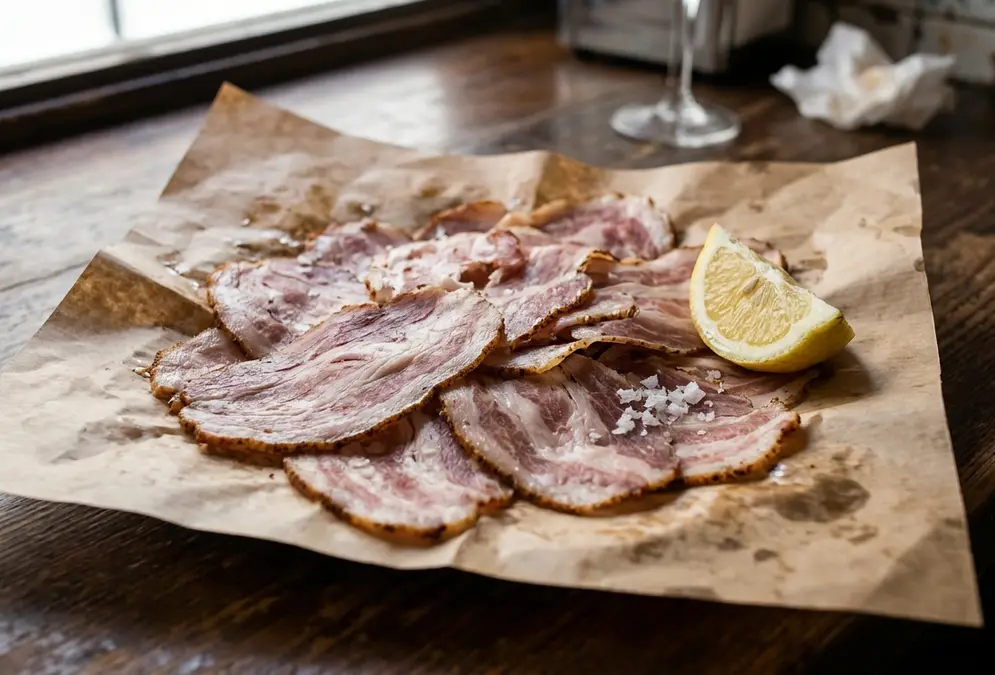

Order chicharrones in Cádiz and you could be handed two very different things. Ask for chicharrones de Cádiz or chicharrones especiales at an old-town tavern and you get cold, wafer-thin slices of pork belly slow-cooked in spiced lard, laid straight onto brown wax paper with coarse salt and a squeeze of lemon. Ask for chicharrones fritos, or follow the smell of hot lard to a butcher's stall in the market, and you get crunchy, bite-sized cubes tossed in cumin, paprika and oregano while still hot. Both come from the same cut of pork and the same Bay of Cádiz and Chiclana butchery tradition, and both belong beside a glass of dry sherry or a cold caña.
Two Cádiz styles: especiales vs fritos
Outside Cádiz province, the word chicharrón often means a pressed pork-byproduct loaf or a puffed rind. Around the Bay of Cádiz, Chiclana de la Frontera and Jerez de la Frontera, it means pork belly (panceta de cerdo, ideally Iberian) cooked in rendered pork lard (manteca) and sold either from dedicated chicharronerías or across tavern counters.
| Style | How it is cooked | How it arrives | Key spices |
|---|---|---|---|
| Chicharrones especiales (de Cádiz / Bay style) | Whole piece slow-cooked in lard, then chilled until firm | Cold, sliced paper-thin on papel de estraza with lemon | Garlic, dried oregano, sweet pimentón, bay leaf, black pepper |
| Chicharrones fritos (tradicionales) | Cubed, poached in lard for 30–40 mins, then fried over high heat | Hot or warm in a paper cone or dish, closer to a Castilian torrezno | Ground cumin, sweet pimentón, dried oregano, bay leaf |
The cold Bay style is cooked much like carne mechada, another gaditano classic. Once the pork belly comes out of the oven or pot, it is left to cool completely in its seasoned fat so the butcher or barman can shave it into translucent ribbons that start to melt the moment they touch your fingers.
What goes into the pot
Both versions start with fresh pork belly (cooks prefer Iberian panceta for its streaking of fat and deeper flavour) and plenty of white pork lard. For the cold chicharrones de Cádiz, a standard home or tavern batch for ten aperitif portions uses 500 g of pork belly and 350 g of pork lard, seasoned with crushed garlic cloves, bay leaves, dried oregano and sweet paprika (pimentón dulce). Roasted in a dish with the spiced fat for 45 minutes at 180 °C, the meat stays juicy inside while taking on the red tint and aroma of the paprika and herbs.
For chicharrones fritos a la gaditana, the belly is cut into bite-sized pieces first. The cubes simmer gently in lard with bay leaf over medium heat for 30 to 40 minutes — poaching rather than frying so the meat turns tender — before the heat goes up to crisp the outside. As soon as the cubes are lifted out and drained in a colander, they are tossed hot with salt, ground cumin, sweet paprika and oregano so the spices cling to the glistening crust.
The wax-paper ritual: how to eat them
At traditional taverns, cold chicharrones especiales never see a china plate. The barman slices the chilled slab to order, lays the ribbons onto a square of greaseproof brown butcher's paper (papel de estraza, known locally as a papelón), and finishes them with flaky or coarse salt, a twist of black pepper, a pinch of sweet paprika or a thread of olive oil, and lemon wedges. You squeeze the lemon over the fat, pick the slices up with your fingers, and chase them with crunchy breadsticks (picos). They also make a classic filling for a crusty bocadillo.
Drink something dry and cold enough to cut through pork fat. A chilled glass of vino de Jerez (Fino or Manzanilla) is the classic match, though a small draft beer (caña) is just as common at the counter.
Where to try them in Cádiz
You do not need a sit-down restaurant for chicharrones; the best ones are eaten standing at a bar or straight from a market stall.
- Casa Manteca (Calle Corralón de los Carros 66, in La Viña): opened in 1953, this bullfighting-and-flamenco tavern is the city's benchmark for papelones of thin-sliced Chiclana chicharrón dressed with pepper and lemon alongside aged cheese. In October 2024, a portion of chicharrones with a caña of beer here cost €4.90.
- Mercado Central de Abastos (Plaza de la Libertad): inside the 1838 market's Carnicería y Recova ring, follow your nose to the butcher stalls run by los hijos de Curro (brothers Iván and Isaías). Both have their own on-site workshop (trabajadero) right at the stall, turning out freshly made hot chicharrones alongside manteca blanca, manteca colorá, chorizos and morcillas.
- Old-town tapas bars and ultramarinos: if you are putting together a wider tapeo around the historic centre, pair your stop at Casa Manteca with papas aliñás, cazón en adobo, and traditional counters such as Taberna Las Banderas, Taberna La Manzanilla, El Laurel, Ultramarinos El Veedor, or La Casapuerta de Luisa.
Prices at market counters and bars move with pork costs and portion size (from a small papelón to a ¼ kg bag to take away), so check the chalkboard before ordering.