couplesphotographers
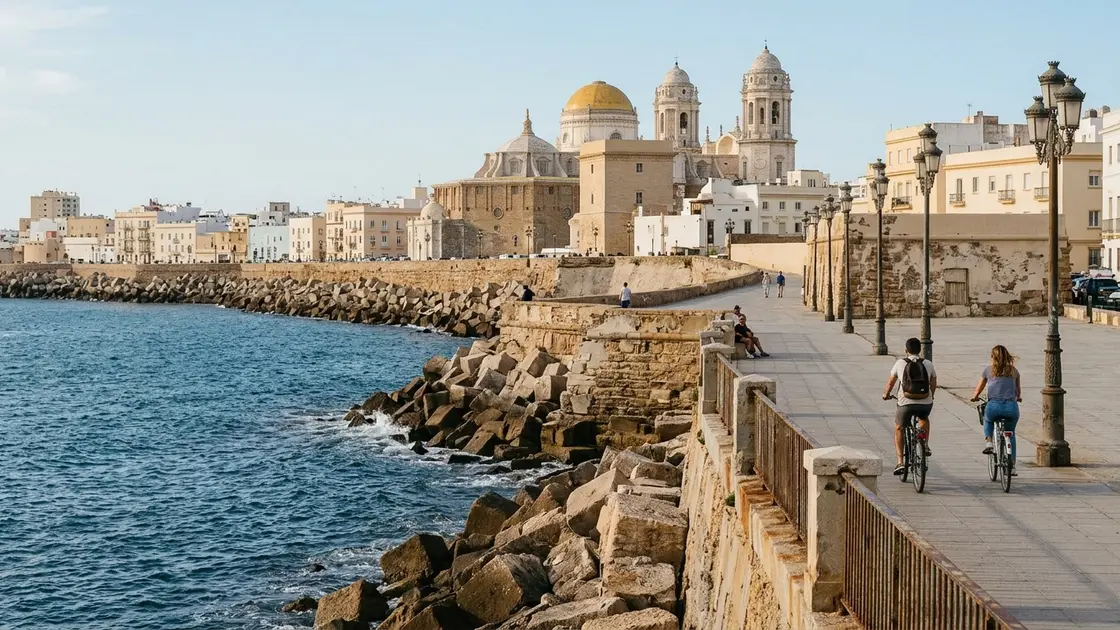
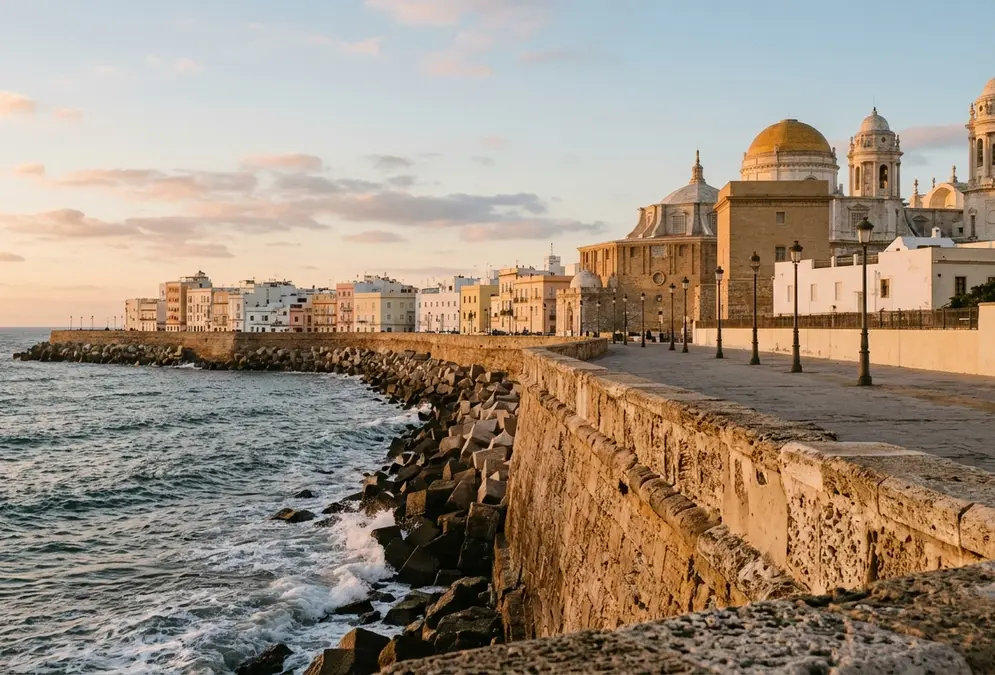
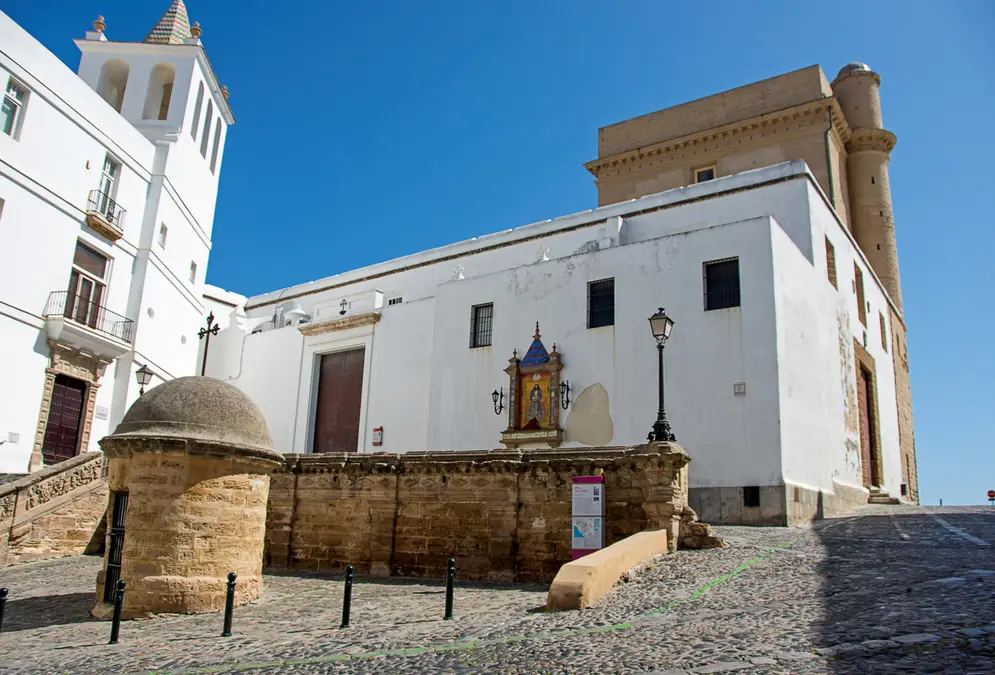
Panoramic view of the El Pópulo neighbourhood
Neighbourhood of Cádiz

El Pópulo: Cádiz's Medieval Quarter Above the Roman Theatre

A quiet medieval quarter of short shaded lanes, an old gate, the Old Cathedral and a Roman theatre underneath

El Pópulo is the medieval core of Cádiz: a quarter of narrow lanes above a Roman theatre, with the Arco del Pópulo and the Old Cathedral of Santa Cruz.

Portrait of Lucía Barbera Quintero
Written by

Historian specialising in Cádiz's ancient, colonial and constitutional heritage.

Updated

Is El Pópulo your base?

Suits history lovers and photographers who want Cádiz's oldest layers in a compact walk. Check the Roman Theatre's current access before you go.

  • Couples
  • Photographers
  • History
  • Architecture
  • 0.1 km from the Cádiz Cathedral
  • No hotels on our list yet
  • 6 monuments
  • Open the map

El Pópulo is the medieval core of Cádiz, the part of the old town that took shape after Alfonso X conquered and repopulated the city in 1262. It sits between the Cathedral and the Town Hall, and it is the quarter where the layers of Cádiz are easiest to read: a Roman theatre underneath, a Castilian village built on top of it, and a working neighbourhood of tall, tired houses living in the result. The lanes are short, shaded and quiet compared with the squares around them, and the best way to see the quarter is to walk it slowly with the theatre and the old church as fixed points.

Why El Pópulo is the oldest quarter you can walk

After the 1262 conquest Alfonso X turned the site of the old mosque into the city's first cathedral, and Cádiz received the title of city in 1265. The Santa Cruz church, known popularly as the "Catedral Vieja", stands in the quarter and is the direct descendant of that foundation: see Iglesia de Santa Cruz. The quarter's name has a more specific origin. From 1587 an image of Our Lady carrying the invocation Ave María, ora por Pópulo was set on the towers of the gate now called the Arco del Pópulo, and the neighbourhood took its name from the prayer. The image was desecrated in 1596 when the Anglo-Dutch force under the Earl of Essex invaded Cádiz.

Treat "oldest" with some care. The Arco del Pópulo was the original Puerta del Mar, the gate to the port, and it is thought to predate the Alfonsine village. Describing El Pópulo as the medieval core is safer than giving it a founding date.

The Roman Theatre underneath

The quarter was built on top of the Roman Theatre of Cádiz, commissioned by Lucius Cornelius Balbus the Younger in the 1st century BC. At almost 120 metres across it is the oldest Roman theatre in the Iberian Peninsula and the second largest, with an estimated capacity of more than 10,000 spectators. A fortress was built over its ruins in the 13th century, and the theatre was only rediscovered in 1980, when it was partially excavated. That layering is why the street plan around Calle Mesón looks the way it does.

The Interpretation Centre at Calle Mesón 11-13 explains how the theatre shaped the medieval city and today's quarter. At the time of research the excavation itself was temporarily restricted because of expansion works, so check the Junta de Andalucía page before building a morning around it. See Roman Theatre of Cádiz for the full visiting picture.

Walking the quarter

A loop takes about an hour with a stop at the theatre centre:

  • start at the Cádiz Cathedral and drop into the lanes behind it
  • find the Arco del Pópulo, the old Puerta del Mar
  • visit Santa Cruz, the Old Cathedral
  • pass the Calle Mesón entrance to the Roman Theatre Interpretation Centre
  • finish towards the seafront or on to La Viña for fried fish

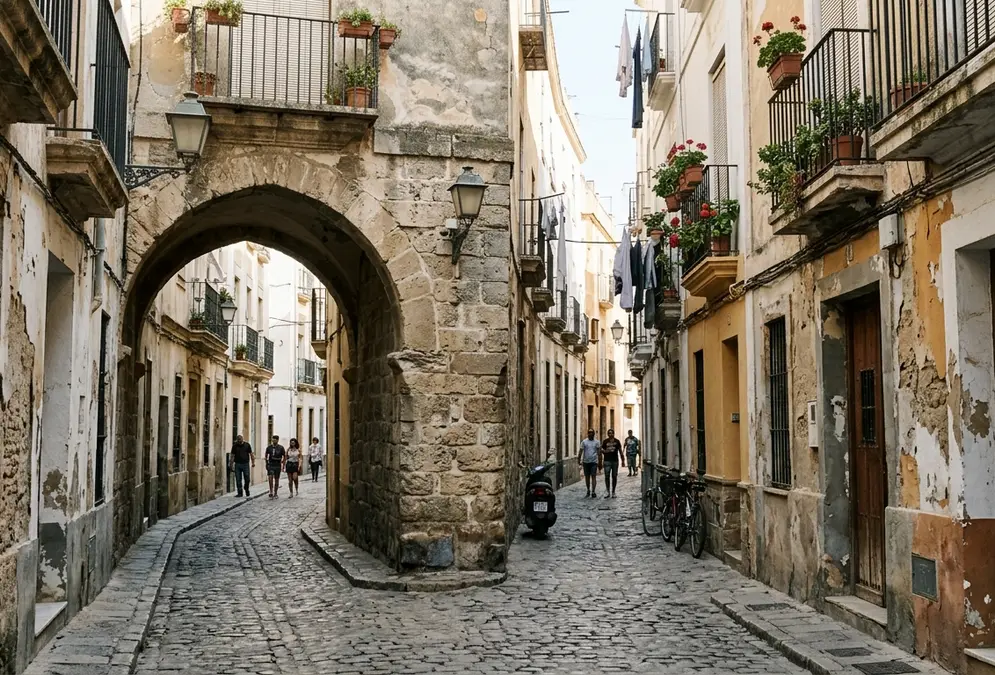
This is a residential neighbourhood. Houses are lived in, balconies carry washing, and the quarter has seen rehabilitation work on 18th-century casa-palacios that once housed a dozen families each. Be quiet in the evenings and do not photograph through open doors.

Where El Pópulo fits in a Cádiz day

El Pópulo is the historical anchor of a day in the old town. Pair it with La Caleta and the castles at the seafront in the afternoon, or climb Torre Tavira for the rooftop view over the grid of streets you have just walked. For Santa María's lanes next door, see Santa María.
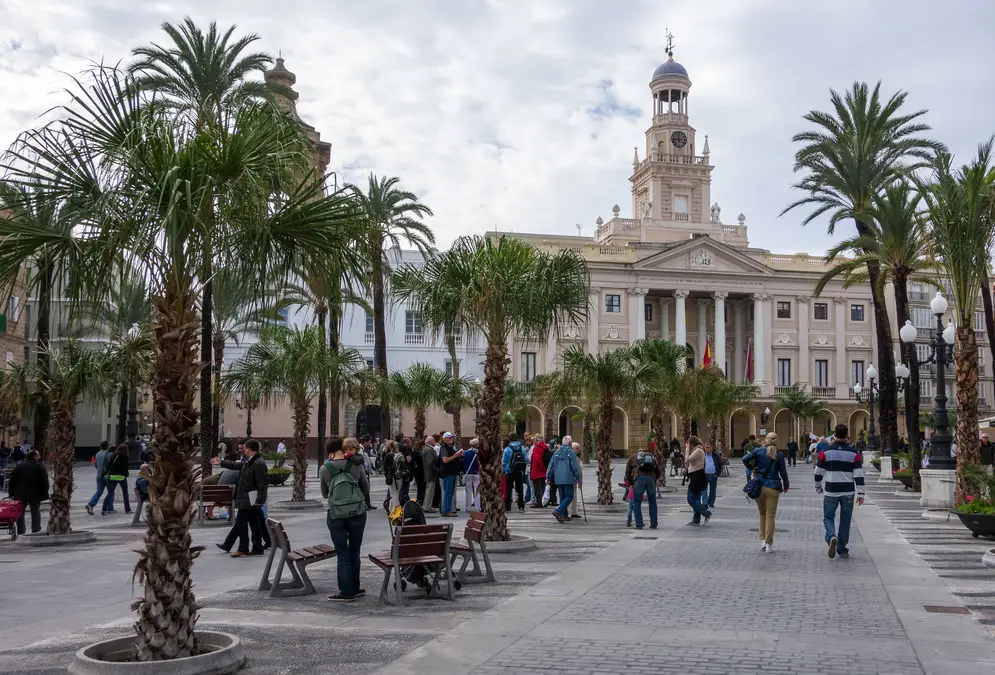
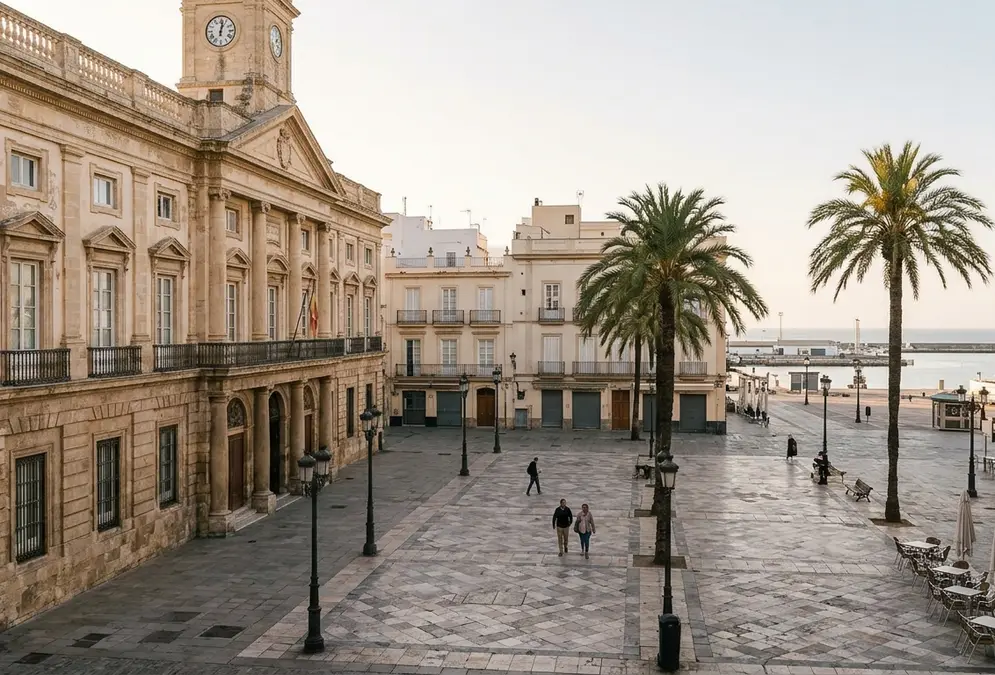
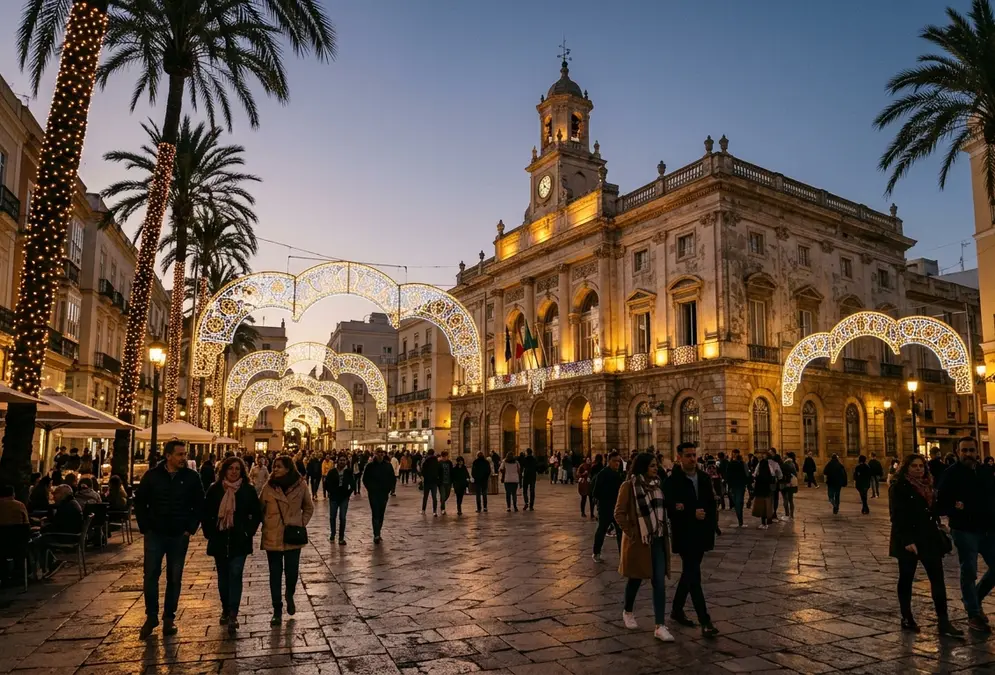
White neoclassical facade and clock tower of the Ayuntamiento de Cádiz facing the palm-lined Plaza de San Juan de Dios
Plaza de San Juan de Dios and Ayuntamiento de Cádiz

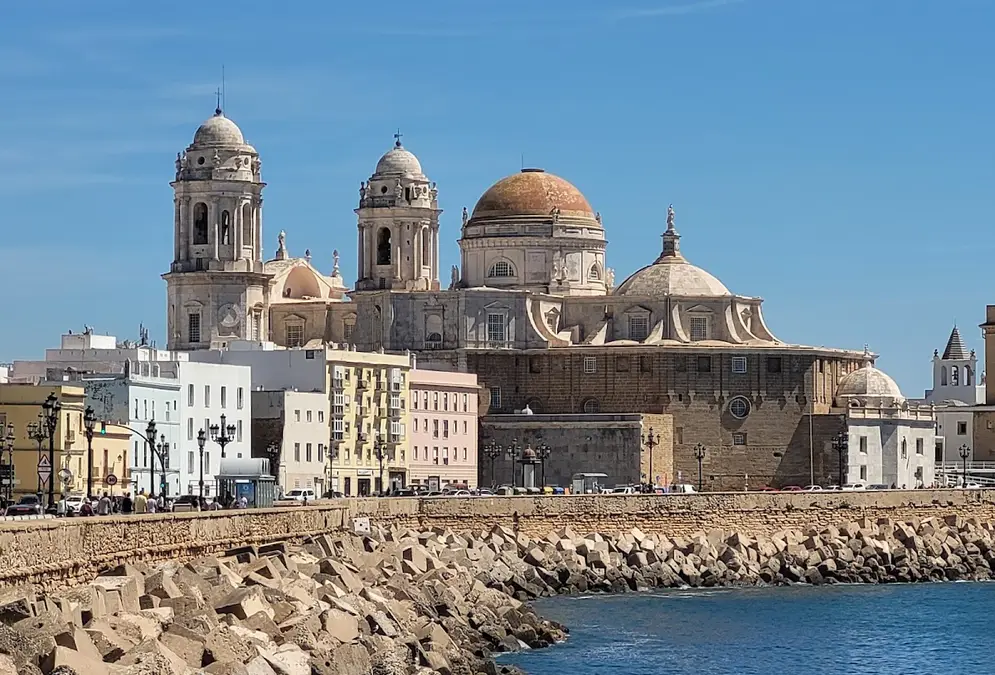
El Pópulo's heritage is layered: a Roman theatre, the Old Cathedral of Santa Cruz and the medieval gate that gave the quarter its name.

Drink

Insider tips

  • Walk it in the morning The lanes are shaded and quiet early in the day, and the Interpretation Centre opens at 10:00 from October to March. Go before the Cathedral crowds arrive.
  • Frame the Arco del Pópulo The old gate is best photographed from the lane side, where the narrow passageway shows its form. Keep clear of doorways and balconies: people live here.
  • Check Roman Theatre access before you plan Expansion works have temporarily restricted the excavation itself. Confirm what is open on the Junta de Andalucía page and use the Calle Mesón centre as your starting point.
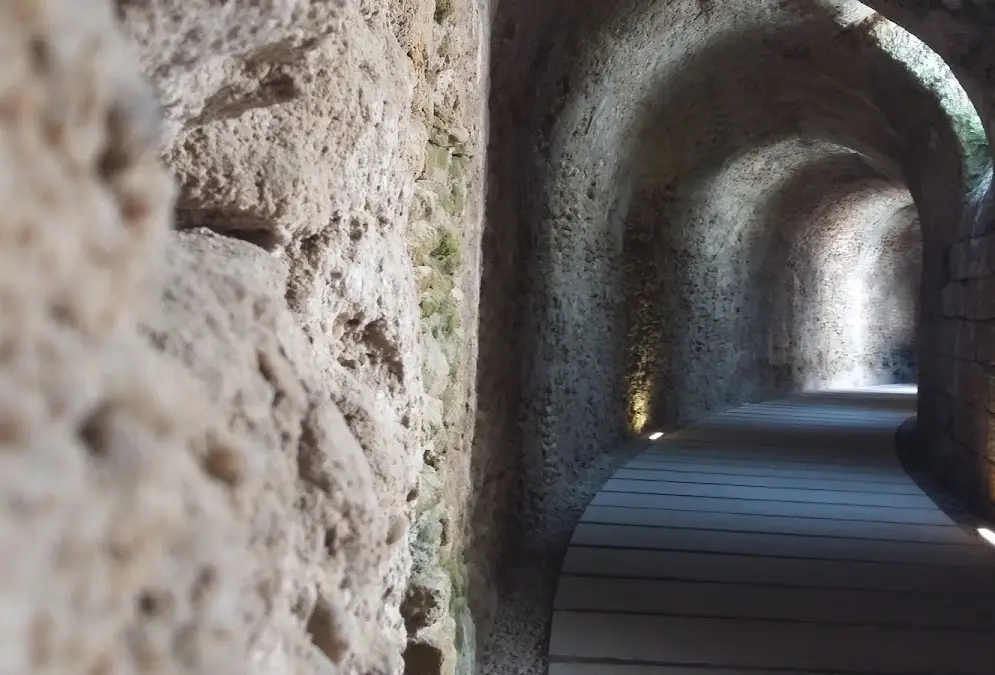
Excavated stone seating and curved vaulted gallery of the Roman Theatre of Cádiz beneath the houses of El Pópulo in afternoon light
Roman Theatre of Cádiz (Theatrum Balbi)

Frequently asked questions

Is El Pópulo the oldest neighbourhood in Cádiz?

It is the medieval core of the city, the area of the Alfonsine village after the 1262 conquest. The Arco del Pópulo, the old Puerta del Mar, may be older, so call the quarter the medieval core rather than giving it one founding date.

What is the Roman Theatre in Cádiz and can you visit it?

It is a 1st-century BC theatre built for Lucius Cornelius Balbus the Younger, with a diameter of nearly 120 metres. The Interpretation Centre at Calle Mesón 11-13 is open, but access to the excavation was temporarily restricted by expansion works, so check the Junta de Andalucía page first.

How much time do you need in the Barrio del Pópulo?

About an hour for the lanes, the arch and Santa Cruz. Add time for the Roman Theatre Interpretation Centre, and combine the quarter with the Cathedral next door.

Where is the Arco del Pópulo and what is it?

It stands at the edge of the quarter and is the primitive Puerta del Mar, the gate that gave access to the port. A chapel was later built before it, which gave the passageway its present form.

What are the Roman Theatre opening hours?

From 1 October to 31 March the Interpretation Centre opens Monday to Saturday 10:00 to 16:30 and Sunday 10:00 to 14:00. It closes on the first Monday of each month and on 1 and 6 January, 1 May, 15 August, and 1 and 2 November. Always confirm on the Junta de Andalucía page.

What is the Old Cathedral (Santa Cruz) in Cádiz?

Santa Cruz is the church in the Pópulo quarter popularly known as the Catedral Vieja. It stands on the foundation Alfonso X made after the 1262 conquest, when he turned the site of the old mosque into the first cathedral.

Why is it called El Pópulo?

From 1587 an image of Our Lady with the invocation Ave María, ora por Pópulo was placed on the towers of the gate, and the neighbourhood came to be known simply as El Pópulo.

Cádiz Cathedral Extramuros 1 El Pópulo 2 Santa María 3 Barrio del Mentidero 4 La Caleta 5
Where El Pópulo sits. Not to scale. Open in Google Maps

Further reading

Sources

18 references Show
  1. Turismo de Cádiz (opens in a new tab)

    “el rey castellano Alfonso X el sabio conquista y repuebla Cádiz en 1262, y convierte el solar de la antigua mezquita árabe de la villa en el primer templo catedralicio.”

  2. Turismo de Cádiz (opens in a new tab)

    “Cádiz recibe el título de ciudad en 1265”

  3. Junta de Andalucía — Cadiz 07 gabinete pedagogico.pdf (opens in a new tab)

    “la actual iglesia de Santa Cruz, situada en el barrio del Pópulo y conocida popularmente como "Catedral Vieja".”

  4. Junta de Andalucía — Enclave arqueologico teatro romano de cadiz (opens in a new tab)

    “El Teatro Romano de Cádiz, mandado edificar por Lucio Cornelio Balbo el Menor, fue construido en el siglo I a.n.e.”

  5. Junta de Andalucía — Enclave arqueologico teatro romano de cadiz (opens in a new tab)

    “Su fecha de construcción y sus casi 120 metros de diámetro lo convierten en el más antiguo y en el segundo en tamaño de la Península Ibérica.”

  6. Junta de Andalucía — Enclave arqueologico teatro romano de cadiz (opens in a new tab)

    “Se le calcula una capacidad de más de 10.000 espectadores.”

  7. Junta de Andalucía — Enclave arqueologico teatro romano de cadiz (opens in a new tab)

    “su trascendencia en la formación de la ciudad medieval y el actual Barrio del Pópulo.”

  8. Junta de Andalucía — Enclave arqueologico teatro romano de cadiz (opens in a new tab)

    “Las obras de ampliación que se ejecutan actualmente en el enclave afectan al yacimiento arqueológico, cuyo acceso se encuentra temporalmente restringido.”

  9. Junta de Andalucía — Enclave arqueologico teatro romano de cadiz (opens in a new tab)

    “Del 1 de octubre al 31 de marzo: De lunes a sábados de 10:00 a 16:30 horas. Domingos de 10:00 a 14:00 horas.”

  10. Junta de Andalucía — Enclave arqueologico teatro romano de cadiz (opens in a new tab)

    “Cerrado: El primer lunes de cada mes, 1 y 6 de enero, 1 de mayo, 15 de agosto, 1 y 2 de noviembre”

  11. Wikipedia — Roman Theatre of Cádiz (opens in a new tab)

    “The remains (only partially excavated) were discovered in 1980.”

  12. Wikipedia — Roman Theatre of Cádiz (opens in a new tab)

    “in the 13th century, a fortress was built on its ruins by order of King Alfonso X of Castile.”

  13. Wikipedia — Arco del Pópulo (opens in a new tab)

    “is the primitive Puerta del Mar, because it accessed the port area, and was flanked by two cubes.”

  14. Wikipedia — Arco del Pópulo (opens in a new tab)

    “The arrangement of its voussoirs makes it possible to situate it in the 12th century, in the Almohad period, like the entire original perimeter wall.”

  15. Wikipedia — Arco del Pópulo (opens in a new tab)

    “From 1587, its towers had an image of Our Lady that had the Latin invocation of "Ave María, ora por Pópulo", which popularly came to be known simply as "El Pópulo".”

  16. Wikipedia — Arco del Pópulo (opens in a new tab)

    “This image was desecrated by the Anglo-Dutch invaders who invaded the city of Cádiz back in 1596, commanded by the Earl of Essex.”

  17. coam.org (opens in a new tab)

    “Se actúa en una antigua casa-palacio colmatada por once familias que buscan su espacio entre las viejas paredes de la trama del popular barrio Pópulo de Cádiz.”