From Phoenician Gadir to Roman Gades
Cádiz sits on a narrow peninsula pushed out into the Atlantic, and its history follows from that position. The Phoenician name Gadir means a closed enclosure, which suits a town almost surrounded by water[5]. Classical writers dated the foundation of Gadir to 1100 BCE, while modern archaeology puts the arrival of the first Phoenician sailors nearer 800 BCE[5]. Phoenician sarcophagi found at two separate sites, in 1980 and earlier, gave the Phoenician origin real physical support[6]. The two dates sit three centuries apart, which is why 'about three millennia' is the safe way to state the city's age.
Under Rome the city became Gades and grew rich. Its peak came in the last days of the Republic and the early years of Augustus' rule, a period of economic and political splendour reflected in its urban planning and monumental buildings[7]. The theatre, commissioned by Lucius Cornelius Balbus the Younger in the 1st century BCE, measures almost 120 metres across and is the oldest Roman theatre in the Iberian Peninsula and the second largest[8].
120 m
The theatre's patron had a famous uncle. Lucio Cornelio Balbo, born in Gades around 100 BCE, rose through Julius Caesar's circle and in 40 BCE became the first naturalized Roman to hold a consulship[9]. A second native of Gades, Columela, took a quieter road: he left the army for farming and wrote De re rustica, twelve books on agriculture that have survived[10].
The 1812 Constitution and the liberal habit
From 1810 to 1812 the French besieged Cádiz, and the city served as the capital of all of Spain not under Napoleon's control[4]. The Cortes, the emergency parliament, held its first session on the Isla de León in September 1810 and from February 1811 met inside Cádiz, in the Oratorio de San Felipe Neri[11].
- 24 Sep 1810
First session of the Cortes
On the Isla de León, now San Fernando.
- 24 Feb 1811
Cortes move to Cádiz
They meet in the Oratorio de San Felipe Neri.
- 19 Mar 1812
Constitution promulgated
Known as La Pepa.
- 1814
Ferdinand VII repeals it
- 1820 to 1823
In force again
The Trienio Liberal.
The Constitution they wrote was promulgated on 19 March 1812[2]. Ferdinand VII repealed it in 1814, and it returned during the Trienio Liberal of 1820 to 1823[2]. Despite that short life it became a reference for later constitutions, influencing constitutional ideas in Portugal, the rise of the Italian state and several American countries[12].
Cádiz was a receptive host because eighteenth-century trade had produced a merchant class open to free trade and constitutional monarchy. Politicians fleeing the Napoleonic armies arrived in a city that already thought as they did[13].
After 1812: a financier and an anarchist
The city kept producing liberals and radicals. Juan Álvarez Mendizábal, born in Cádiz in 1790[14], headed the government in 1835[15] and sold off Church property in a disentailment that emptied numerous convents and monasteries[16]. Fermín Salvochea went further left: as mayor of Cádiz and president of its cantón during the First Republic, he became one of the main propagators of anarchist thought in the region[17].
The Atlantic port and its merchant towers
In the 16th century the port became the great commercial door to the newly found New World, and in 1717 the Casa de Contratación, the crown's office for American trade, moved from Seville to Cádiz because the Guadalquivir had become hard to navigate[18]. The city grew rich on that traffic.
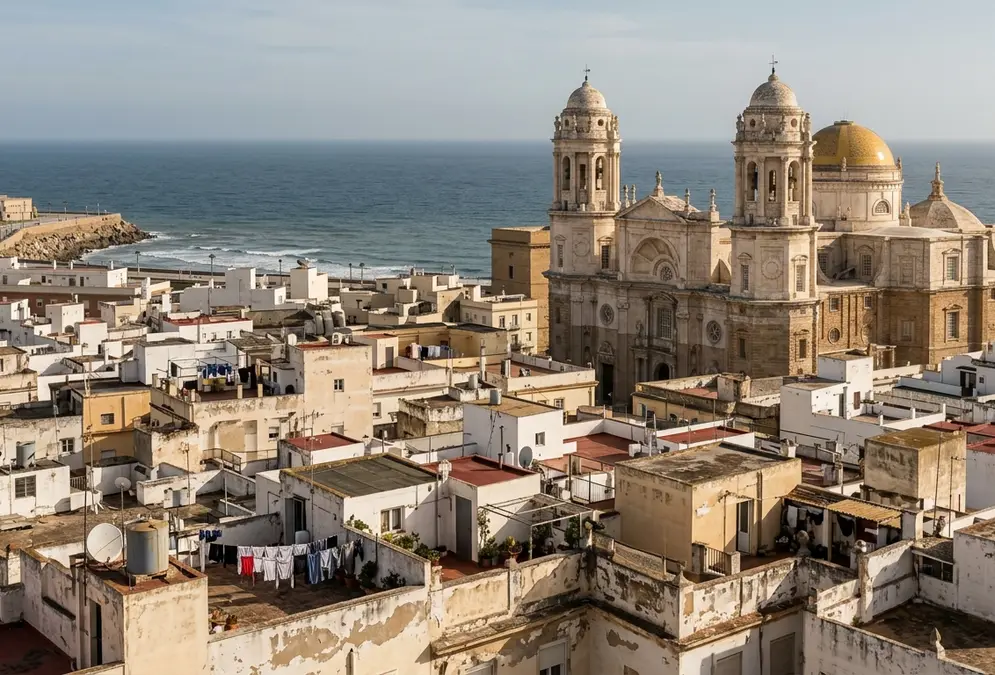
The money built the old town that visitors walk today, tower houses included. Torre Tavira, the lookout tower of the Marqués de Recaño's palace, watched the bay for incoming ships, and the marquis had earned his title by sailing with his own cargo in the Flota de Indias. Visitors now climb it for a camera obscura view of the whole city[19].
Don't miss · Activity
Cádiz Cathedral Tower Climb (Torre del Reloj)
Climb the Torre del Reloj at Cádiz Cathedral: what the ticket includes, the hours to check, and the view over the old town and the Atlantic…
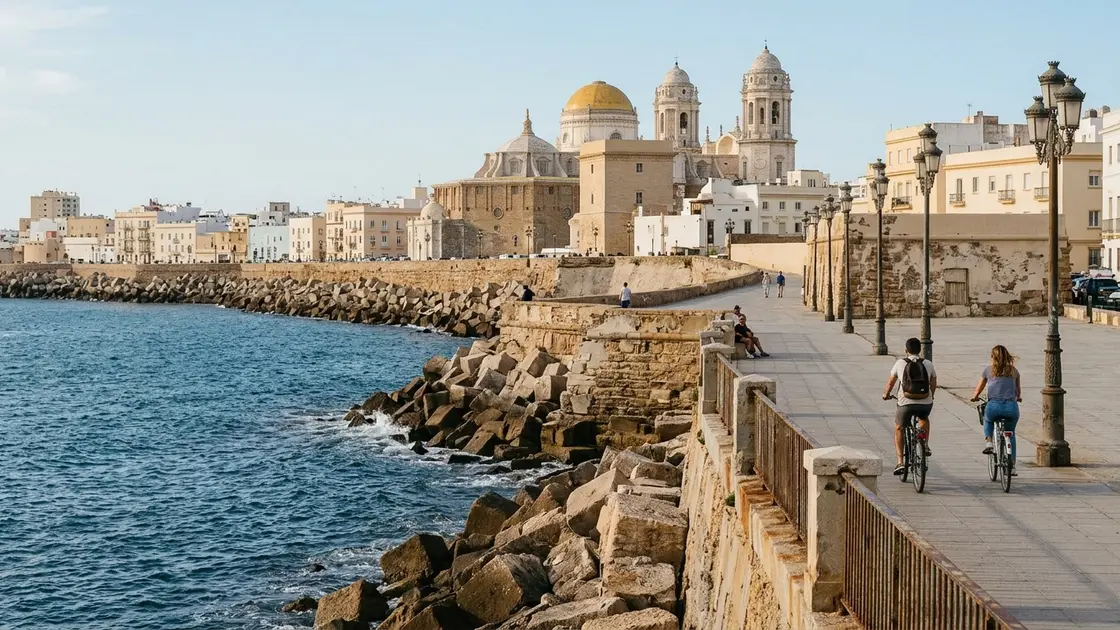
The street plan barely moved afterwards. A mahogany and ivory model of the city, made in 1777 at the request of Charles III and now in the Museo de las Cortes de Cádiz, shows that the 18th-century layout has survived practically unaltered[20]. Building went on for generations: the Baroque cathedral was begun in 1722 and completed only in 1838[21].
The same merchant world sent its sons far afield and into print. José Celestino Mutis, born in Cádiz in 1732, spent the last 48 years of his life in Bogotá[22] and directed the Royal Botanical Expedition to New Granada, authorised in 1783[23]. José Cadalso, the Cádiz-born son of a rich merchant who died in 1782 during the siege of Gibraltar, wrote Cartas marruecas, a satire in letters between two Moroccans and a Spaniard[24].
Carnival, Falla and a city that sings
Cádiz Carnival is the festival most visitors plan a trip around. Groups called chirigotas, comparsas, quartets and choirs fill every alley and square with improvised verse, and the wit is the point. The costumes, known as tipos, can be marvels of dressmaking in their own right[25].
The tradition goes back a long way. Documents point to Ligurian merchants settling around the bay in the second half of the 15th century and bringing their carnival customs with them[26]. Napoleon's siege did not stop it either: the festivities were not suspended even then[27].
Deep dive · Article
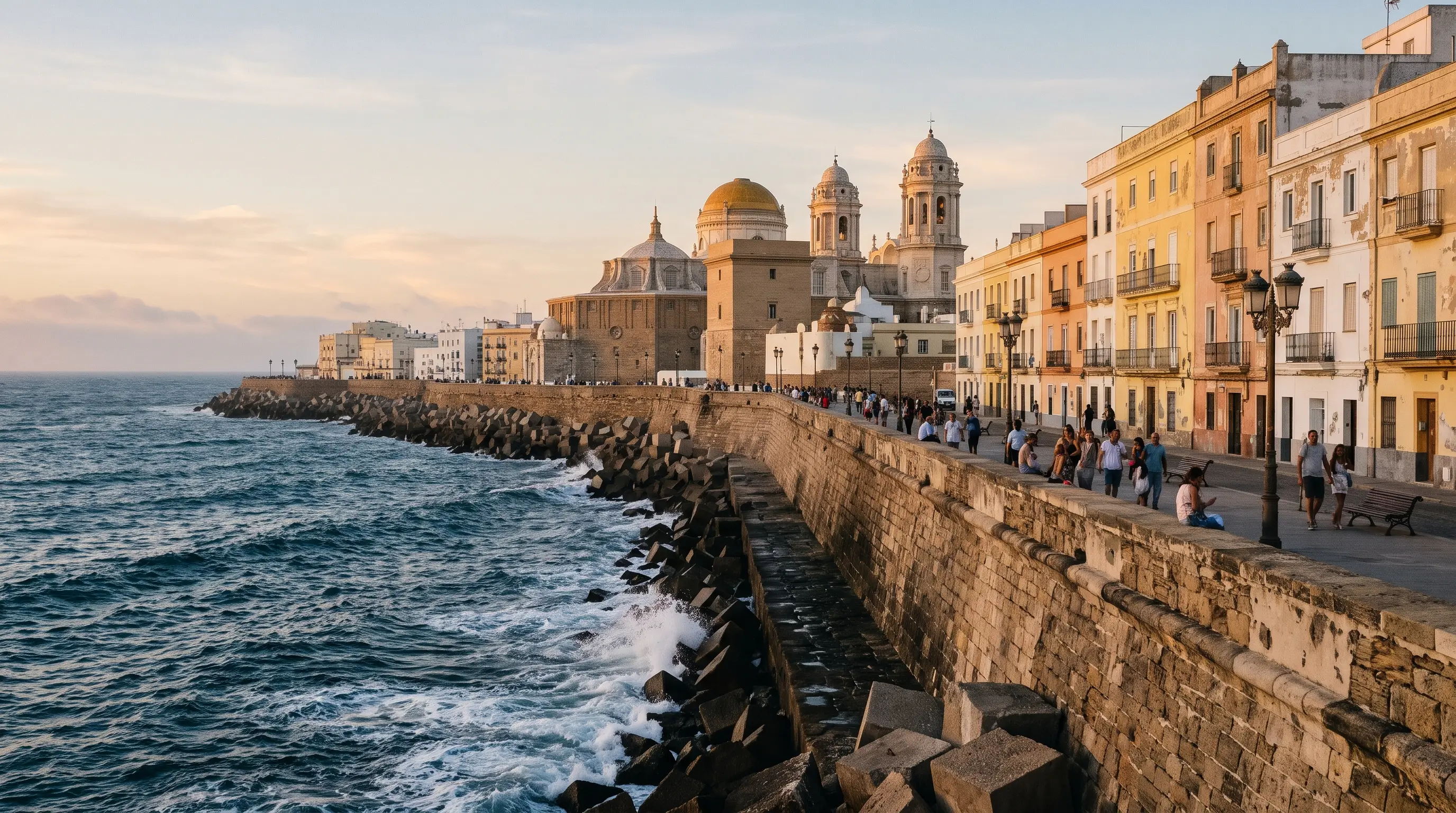
12 Interesting Facts About Cádiz: History, Towers & Secrets
Discover 12 interesting facts about Cádiz, from Phoenician houses buried under a puppet theatre and two marble sarcophagi to 134 watchtower…
The best-known stage is the Gran Teatro Falla, home of the official contest, which admits four kinds of group[28]:
Recommended tours
Tours are selected for quality, not commission. We earn a small fee if you book, at no extra cost to you.
- Coros, the large choirs
- Comparsas, the more serious singers
- Chirigotas, the satirical comic troupes
- Cuartetos, the small parody acts
Tuna, fried fish and the sea on the plate
The Atlantic is also why Cádiz eats the way it does. Local fishermen have caught wild red tuna in spring since Phoenician times, as the fish cross the Strait of Gibraltar into the Mediterranean and swim into the almadrabas, labyrinths of nets in a fishing art that goes back to the Phoenicians[31]. The fish's silhouette even appears on coins struck by the mint of Cádiz[31].
The Romans of Gades turned fish into an industry. A Roman fish-salting factory of 330 square metres has been excavated on Calle Sacramento, and a large part of the complex presumably lies under the surrounding streets[32]. Salt and salted fish remain on the list of what the port exports[33].
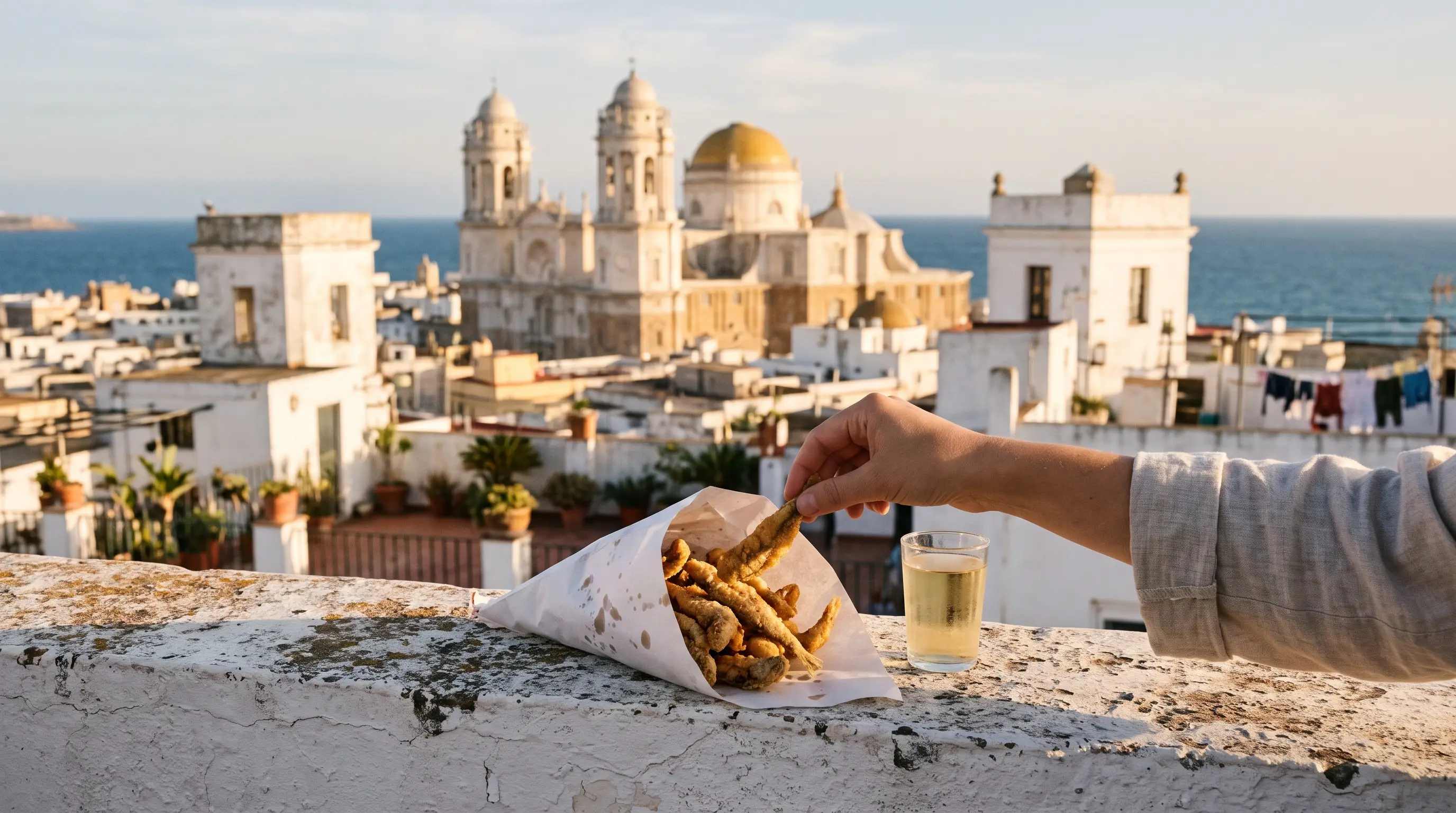
Fried fish is the everyday descendant. When the Cortes sat, one local food guide counts 108 bodegones and freidores in the city[3], and their successors still sell pescaíto frito by the paper cone, which makes it one of the easiest ways to taste the city's history.