
history-buffscouplesfamiliesoutdoorarchitecture
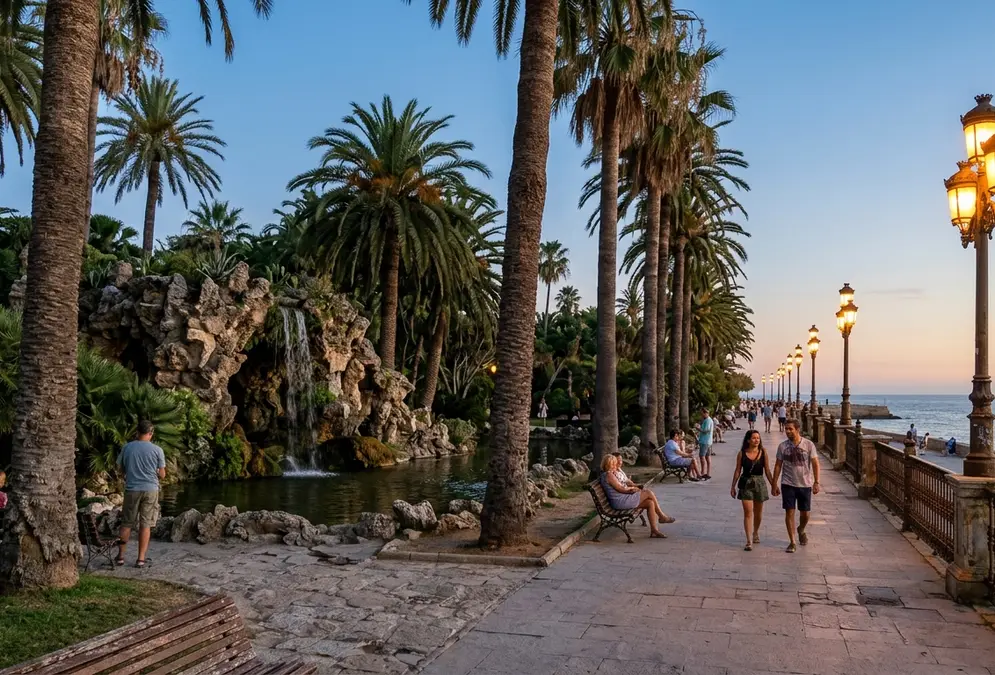
Evening summer promenade through the palm-lined avenues and waterfall grotto of Parque Genovés and the seafront lamps of Alameda Apodaca in Cádiz at dusk
Early August Free Traditional summer verbena

Velada de Nuestra Señora de los Ángeles in Cádiz

Velada de Nuestra Señora de los Ángeles

Cádiz's historic August verbena, moved in 1869 from Plaza de Isabel II to Parque Genovés. Explore its seafront setting, Eiffel theatre, and summer dates.

Early August 2027 (dates TBA)
First fortnight of August (dates TBA)
Parque Genovés, Alameda Apodaca, Baluarte de la Candelaria
All events
Portrait of Marta Jiménez Cossío
Written by

Outdoors and travel writer covering Cádiz beaches, coastal walks and day trips.

Updated
Districts Barrio del Mentidero centro-historico Santa María

On this page

Jump to a section

Every August, Cádiz's northwestern seafront recalls its oldest summer verbena: the Velada de Nuestra Señora de los Ángeles. Originally celebrated alongside Corpus Christi as the Velada del Corpus in the old Plaza de Isabel II and Calle de la Aduana (the former fish market), the festival was relocated in 1869 to the spacious Paseo de las Delicias (now Parque Genovés) and fixed in the first fortnight of August[1]. While the official 2027 municipal velada dates are TBA, the seafront gardens, bastions, and surviving 19th-century iron architecture remain open for evening summer walks.

7,000 lights on the Paseo de las Delicias

On the western sea edge at the Paseo de las Delicias, the 19th-century Ayuntamiento erected a long wooden gallery divided into compartments (casillas) allocated to civic authorities, corporations, casinos, clubs, and private families, interrupted at its midpoint by a slender-domed Arab-style pavilion (templete)[2]. Inside those compartments sat crystal chandeliers, candelabras, mirrors, carpets, pianos, and divans, while hundreds of Venetian lanterns hung along the outer gallery[3].

Historic Feature What Happened on the Promenade
7,000 outer lights & 5 music stages Illuminated the promenade at night while crowds danced to pianos and five bands on purpose-built stages (tablados)[5]
Cafés cantantes & neverías Occupied the first half of the fairground alongside ice-cream parlours, while stalls in the second half sold turrón, sweets, hazelnuts, buñuelos, and barquillos (wafers)[4]
Daytime & afternoon spectacles Afternoon acrobatics, fireworks, Bengal lights, and hot-air balloon ascents, plus holiday morning ribbon races (carreras de cintas) and greased poles (cucañas)[6]

Gustave Eiffel's summer theatre and Cortijo Los Rosales

As the Paseo de las Delicias evolved into the Parque Genovés, Catalan landscaper Ramón Oliva Bogunyá designed an asymmetric romantic garden filled with rare intercontinental trees, a waterfall grotto with a lake, a tea room, and a summer theatre whose metallic structure was built by Gustave Eiffel[7].

Two later chapters reshaped how Gaditanos spent August nights in the park:

  • The 1930s relocation to La Merced: In the 1930s, Eiffel's metallic summer-theatre frame was dismantled and moved across the old town to Plaza de la Merced (known locally as Plaza del Piojito for its street market) to roof the Mercado de la Merced[8]. Restored in recent years, that iron structure still stands inside the Centro Municipal de Arte Flamenco La Merced in Barrio de Santa María[8].
  • Cortijo Los Rosales (1942–1970): Beside the rose garden of Parque Genovés, on the exact spot later occupied by the Teatro José María Pemán, a municipal open-air nightspot with an orchestra called Cortijo Los Rosales opened in 1942, hosting summer evening performances until it closed in 1970[9].

Walking the seafront setting in early August

Even before the city council announces its 2027 August cultural schedule, you can walk the entire historical corridor along the bay wall on a summer evening:

  • Parque Genovés: Open free every day from 08:00 to sunset, with extended summer hours from 08:00 to 22:30[10].
  • Alameda Apodaca: Running along the northern sea wall just outside the park gates, the Alameda Apodaca has been one of Cádiz's busiest bayfront promenades since the 17th century and gained its current ceramic-and-ironwork layout in 1926[11].
  • Baluarte de la Candelaria: At the corner where the Alameda meets Paseo de Carlos III stands the Baluarte de la Candelaria, which houses the Tía Norica exhibition hall and a large palm-lined courtyard used for open-air concerts and summer theatre[12].

Highlights

  • Historic summer verbena relocated in 1869 from Plaza de Isabel II to Paseo de las Delicias (Parque Genovés)
  • 19th-century heritage of 7,000 lanterns, Arab-style templete, cafés cantantes, and five band stages
  • Surviving Gustave Eiffel metallic summer-theatre frame now integrated into Centro de Arte Flamenco La Merced
  • Extended summer opening hours in Parque Genovés until 22:30 daily
  • Adjoining 1926 Alameda Apodaca seafront walk and concerts at Baluarte de la Candelaria

Stages and venues

Parque Genovés (historic Paseo de las Delicias)

08:00 to 22:30 in summer

Home of the Velada since 1869 and site of the 1942–1970 Cortijo Los Rosales summer nightspot beside the rose garden.

Baluarte de la Candelaria

Summer evening programme

Coastal bastion with the Tía Norica exhibition hall and a large palm-lined patio hosting concerts and theatre.

Alameda Apodaca

Open 24 hours

Seafront promenade dating to the 17th century and remodelled in 1926, linking the park to the northern bastions.

Centro Municipal de Arte Flamenco La Merced

Check municipal cultural schedule

Preserves the restored Gustave Eiffel metallic structure originally built as the summer theatre of Parque Genovés.

Key moments

First fortnight of August (2027 dates TBA) Evening

Traditional window of the Velada de Nuestra Señora de los Ángeles on the northwestern seafront; check the municipal summer agenda for confirmed concerts.

Daily in summer 08:00 to 22:30

Extended summer hours at Parque Genovés allow evening walks past the waterfall lake, botanical collection, and former Cortijo Los Rosales site.

Festival gastronomy

Neverías (iced drinks and sorbets)

Traditional summer ice-cream parlours that occupied the first half of the historic Velada promenade alongside cafés cantantes.

Buñuelos, barquillos & turrón

Classic fairground sweets, rolled wafers, and nougat sold at stalls along the Paseo de las Delicias.

Practical information

Hours

Parque Genovés opens daily from 08:00 to sunset (08:00 to 22:30 in summer); Alameda Apodaca is open at all hours.

Best time

After 20:00 in early August, when the bay breeze cools the Alameda Apodaca and Parque Genovés stays open until 22:30.

Tips

Cross the old town to Plaza de la Merced to see the Gustave Eiffel iron structure that once stood as the summer theatre inside Parque Genovés.

Getting there

Walk 15 minutes along the northern sea wall from Plaza de España, or take urban bus lines 2 or 7 to Plaza de España / Gómez Ulla.

Price

Free (seafront gardens and public promenades)

Tags

august summer verbena free tradition history parque genoves

Reporter notebook

Insider tips

Best time

Use the 22:30 summer closing time at Parque Genovés

During the rest of the year Parque Genovés shuts at sunset, but in summer the gates stay open until 22:30. Walk in after 20:30 when the heat drops, then continue out onto the Alameda Apodaca above the bay wall.

Photo spot

Track down Eiffel's relocated summer theatre in Plaza de la Merced

Most visitors walk through Parque Genovés without knowing its 19th-century Gustave Eiffel summer theatre still exists across town. Head to Plaza de la Merced in Barrio de Santa María to see the restored iron frame inside the municipal flamenco centre.

Local custom

Check the Baluarte de la Candelaria patio for August nights

Right at the end of the Paseo de las Delicias corridor, the palm-lined courtyard of the Baluarte de la Candelaria carries on the summer open-air tradition with evening concerts, theatre, and exhibitions in the Tía Norica hall.

Frequently asked questions

When is the Velada de Nuestra Señora de los Ángeles in Cádiz in 2027?

Historically held during the first fortnight of August (primera quincena del mes de agosto), the Velada's official 2027 municipal cultural dates are TBA[1]. If you are visiting in early August, check the Ayuntamiento de Cádiz summer agenda for open-air concerts at the Baluarte de la Candelaria and Parque Genovés[10][12].

Why was the festival also called the Velada del Corpus?

Before 1869, the annual fair was known as the Velada del Corpus and took place in Plaza de Isabel II and Calle de la Aduana (the old fish market)[1]. In 1869 it was moved to the spacious Paseo de las Delicias (now Parque Genovés) and shifted to the first half of August as the Velada de Nuestra Señora de los Ángeles[1].

What did the historic 19th-century Velada in Parque Genovés look like?

The Ayuntamiento built a long gallery of compartments (casillas) for clubs, corporations, and families, centred on a domed Arab-style pavilion and lit by hundreds of Venetian lanterns and 7,000 promenade lights[2][3][5]. Five music bands and pianos played for dancers while cafés cantantes, ice-cream parlours (neverías), and stalls selling turrón, buñuelos, and barquillos lined the walk[4][5].

What happened to Gustave Eiffel's summer theatre from Parque Genovés?

When landscaper Ramón Oliva Bogunyá redesigned the park, it included a summer theatre with a metallic structure by Gustave Eiffel[7]. In the 1930s that iron frame was moved to Plaza de la Merced (known locally as Plaza del Piojito) to house the Mercado de la Merced, and it remains integrated into today's Centro Municipal de Arte Flamenco La Merced[8].

What was Cortijo Los Rosales in Parque Genovés?

Opened in 1942 next to the park's rose garden, where the Teatro José María Pemán was later built, Cortijo Los Rosales was a municipal open-air summer nightspot with a live orchestra that hosted evening performances until it closed in 1970[9].

Further reading

Sources

12 references Show
  1. Ayuntamiento de Cádiz — 1869 relocation of the Velada to Paseo de las Delicias (opens in a new tab)

    “En 1869, “ a causa de lo espacioso y bien urbanizado del parque”, se traslada al mismo la celebración anual de la Velada de Nuestra Señora de los Ángeles (Velada del Corpus), que hasta entonces tenía lugar en la Plaza de Isabel II y la Calle de la Aduana (antiguas Pescaderías), durante la primera quincena del mes de agosto.”

  2. Ayuntamiento de Cádiz — Casillas gallery & Arab-style templete (opens in a new tab)

    “En el paseo de las Delicias, situado orilla del mar al Oeste de la ciudad, se levanta una extensa galería, dividida en gran número de compartimientos o casillas, que el Ayuntamiento adjudica á las autoridades, corporaciones, casinos, círculos y familias particulares. La línea de aquella se encuentra interrumpida en su parte media por un gracioso templete de estilo árabe terminado por una esbelta cúpula.”

  3. Ayuntamiento de Cádiz — Chandeliers, pianos & Venetian lanterns (opens in a new tab)

    “Arañas de cristal, candelabros, caprichosos jarrones, alfombras, espejos, pianos, divanes, nada falta allí, mientras que de las líneas exteriores y superior de la galería penden centenares de farolillos venecianos , ó sirven de arranque á graciosas llámulas.”

  4. Ayuntamiento de Cádiz — Neverías, cafés cantantes & sweet stalls (opens in a new tab)

    “Multitud de estos mismos, así como de neverías, de cafés cantantes y otros establecimientos análogos ocupan la primera mitad del local de la Velada, y en el resto de él van colocados los puestos de turrón, dulces, avellanas, buñuelos y barquillos.”

  5. Ayuntamiento de Cádiz — 7,000 lights & five music bands (opens in a new tab)

    “Siete mil luces la rodean, sin contar los centenares de ellas que arden en las casillas y en las tiendas. Allí se baila al compás de los pianos o de las cinco bandas de música colocadas en tablados construidos al efecto”

  6. Ayuntamiento de Cádiz — Acrobatics, fireworks, balloons & cucañas (opens in a new tab)

    “Otros alicientes han contribuido además á dar mayor interés a la Velada, como ejercicios acrobáticos por las tardes, fuegos artificiales, luces de Bengala y elevación de globos. Los días festivos por la mañana se corrían cintas y se disponían cucañas de varias especies.”

  7. Ayuntamiento de Cádiz — Ramón Oliva redesign & Gustave Eiffel summer theatre (opens in a new tab)

    “Oliva y sus colaboradores idean un parque más grande, de planta asimétrica, con hermosos y espaciosos jardines que incluyen una amplia variedad de especies botánicas procedentes de todos los continentes, algunas de ellas de gran rareza y espectacularidad, fuentes, una cascada con lago, un salón de té e incluso un teatro de verano, cuya estructura metálica fue obra de Gustave Eiffel.”

  8. Ayuntamiento de Cádiz — 1930s relocation of Eiffel structure to Plaza de la Merced (opens in a new tab)

    “En los años 30 esta estructura fue destinada a albergar el mercado de la Merced, en la plaza del mismo nombre y conocida por los gaditanos como «Del Piojito», debido al mercadillo que comenzó a situarse allí en las afueras del edificio que albergaba al mercado de abastos. Dicha estructura se ha sometido recientemente a una restauración y sigue integrada en lo que actualmente es el Centro Municipal de Arte Flamenco.”

  9. Ayuntamiento de Cádiz — Cortijo Los Rosales (1942–1970) (opens in a new tab)

    “En 1942 se abre un rústico merendero con orquesta junto a la rosaleda del Parque Genovés, de propiedad municipal, justo donde luego se levantará el Teatro José María Pemán. Es el Cortijo Los Rosales, célebre sala de fiestas gaditana que ofrecía actuaciones nocturnas durante el verano y que estuvo en candelero hasta el año 1970, fecha en que cerró sus puertas.”

  10. Turismo de Cádiz — Parque Genovés opening hours (opens in a new tab)

    “Horario: Todos los días de 8.00 hasta la puesta de sol Verano de 8.00 a 22.30h”

  11. Turismo de Cádiz — Alameda Apodaca history & 1926 reform (opens in a new tab)

    “Esta avenida, utilizada para resguardarse de las tormentas, se encuentra en la muralla cercana a la bahía y ha sido uno de los lugares más concurridos de la ciudad desde el siglo XVII. A lo largo de la historia ha sufrido varias reformas, pero la que le dio su aspecto actual se llevó a cabo en 1926.”

  12. Ayuntamiento de Cádiz — Baluarte de la Candelaria (opens in a new tab)

    “Posee una Sala denominada "Tia Norica" habilitada para exposiciones, así como un gran patio con palmeras donde se celebran conciertos, obras de teatro y carnaval.”