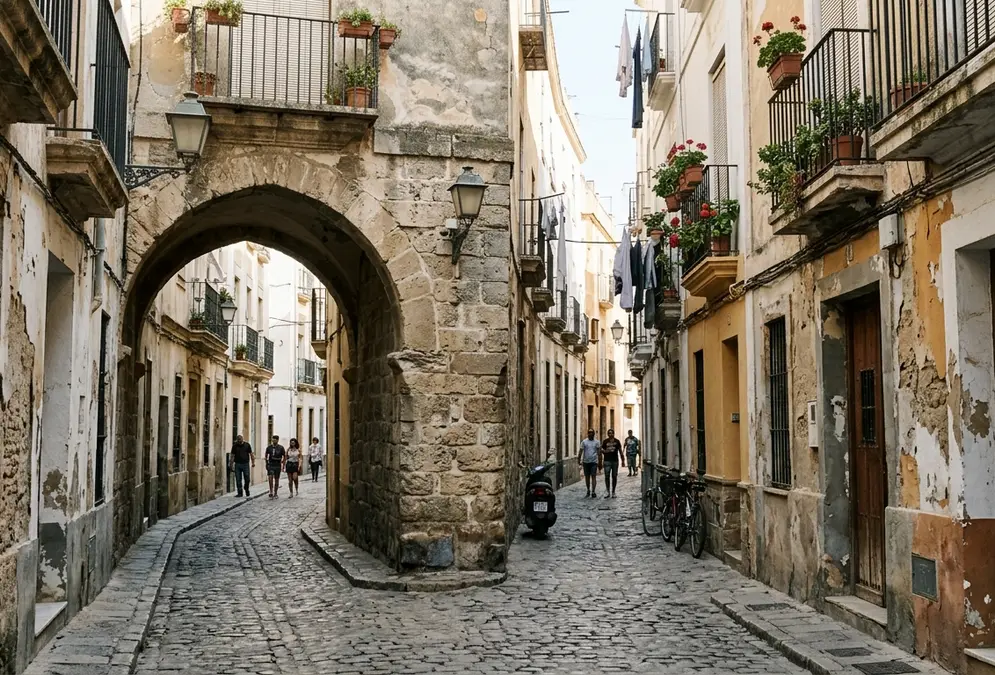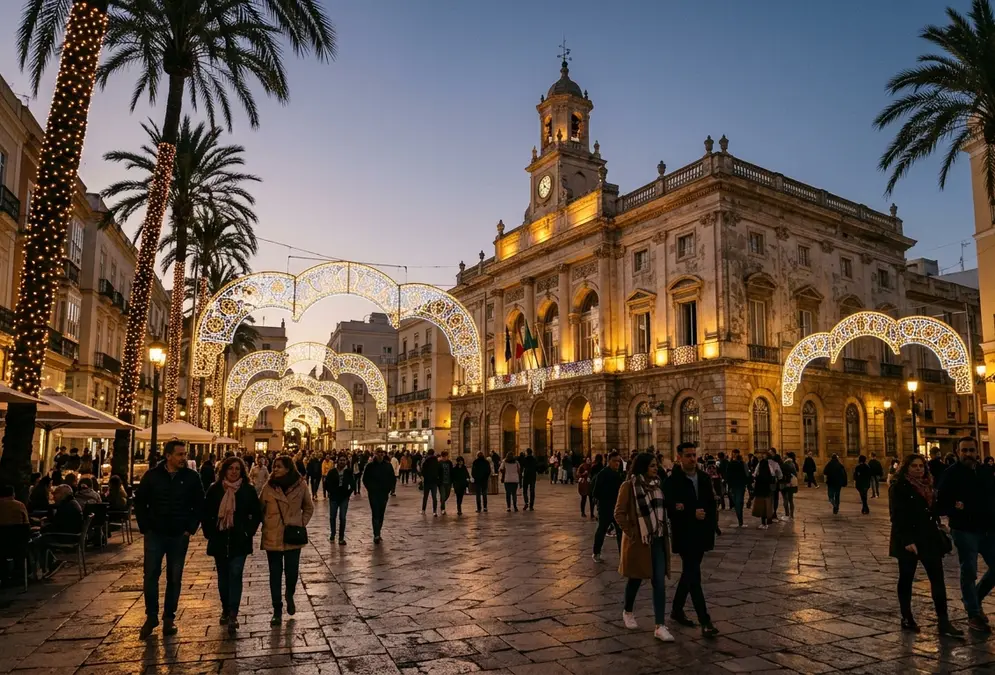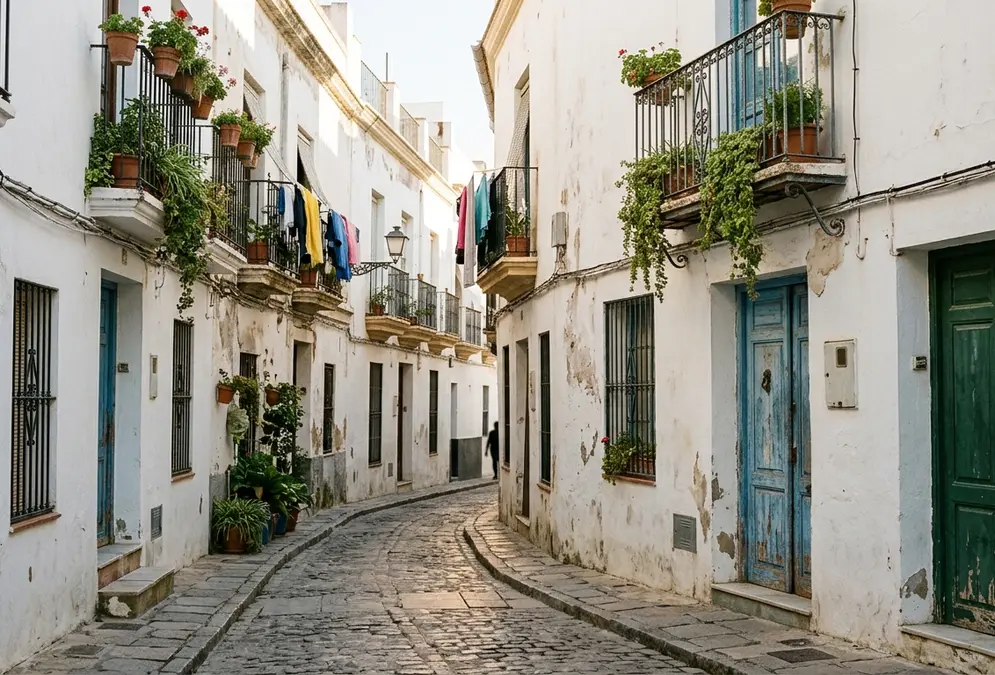
Santa María is the barrio people mean when they say Cádiz flamenco was born in a gitano quarter. It is one of the oldest neighbourhoods in the city, arising in the 15th century when the medieval town began to overflow, and it takes its name from the Santa María chapel that later became a convent. It runs from the Puertas de Tierra to the Plaza de San Juan de Dios and El Pópulo, a compact tangle of low houses and narrow lanes in the historic centre.
The curves in those lanes are not an accident. A Roman amphitheatre lies buried beneath the barrio, and the circular bend of the streets around Santa María and the Plaza de San Juan de Dios still traces its original perimeter. Nothing of it stands above ground to photograph, so the pleasure is in noticing: walk any lane that arcs for no obvious reason and you are following the edge of a Roman arena.
Why Santa María is the flamenco barrio
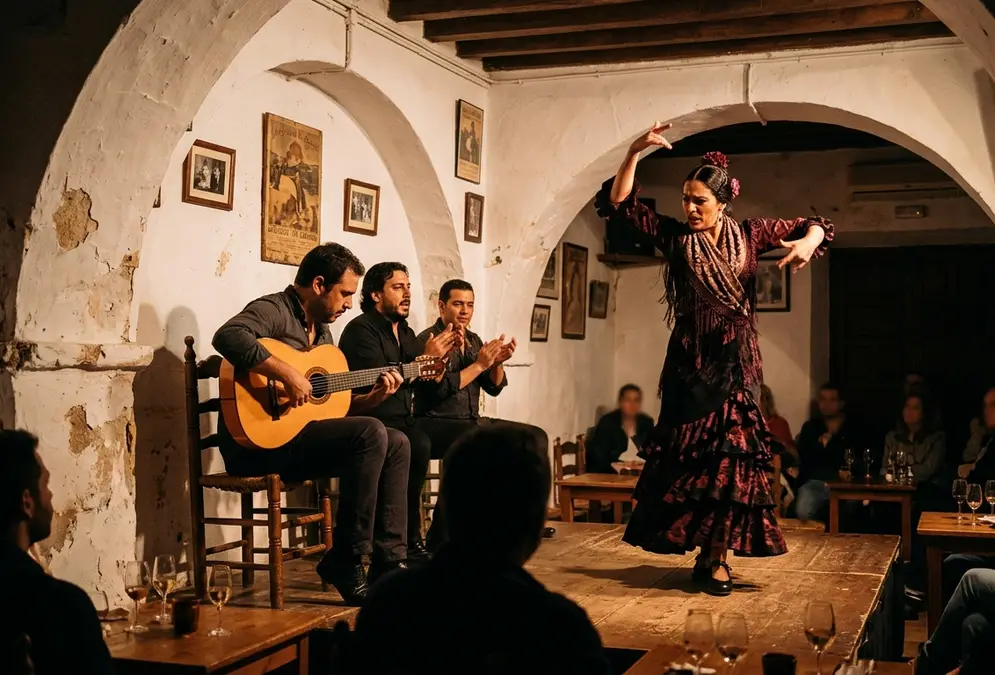
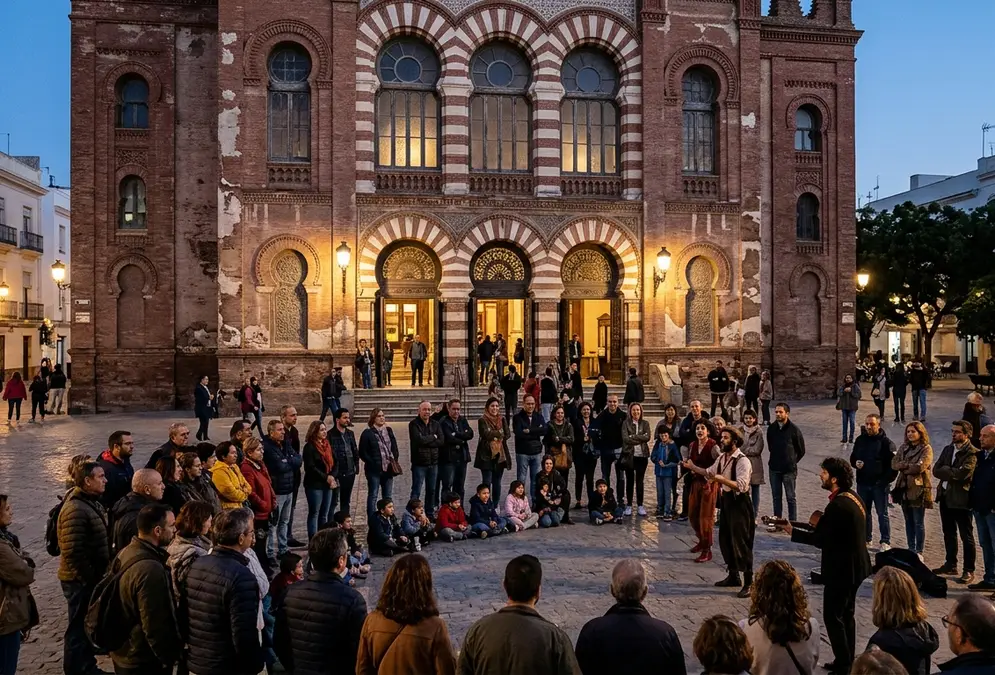
A press feature on the quarter put the difference with its neighbour neatly: La Viña breathes Carnival verses, while Santa María breathes alegrías. The singer most tied to the place is Enrique el Mellizo (1848-1906), described as the most influential figure in the development of the Cádiz flamenco styles, and a bust of him stands in the heart of the barrio. Look up at the house fronts as well: old plaques name the artists who lived behind them.
For something more structured than wandering, the Centro de Arte Flamenco La Merced occupies the former market in Plaza de la Merced. Its iron structure is the work of Eiffel et Cie, and inside are four soundproofed rooms for teaching and rehearsal plus a large stage for shows and master classes. Beside the sea, next to La Caleta, the Peña Flamenca La Perla is the other address visitors ask about. Check current timetables and programmes with each venue before you plan an evening around them.
A chapel and a convent
The Convento de Santa María, home to Conceptionist nuns, was the first convent founded in the city, around 1527. Its sisters have kept the building open to the public and run guided visits by reservation to raise funds for its restoration, so it is worth booking rather than turning up on the day.
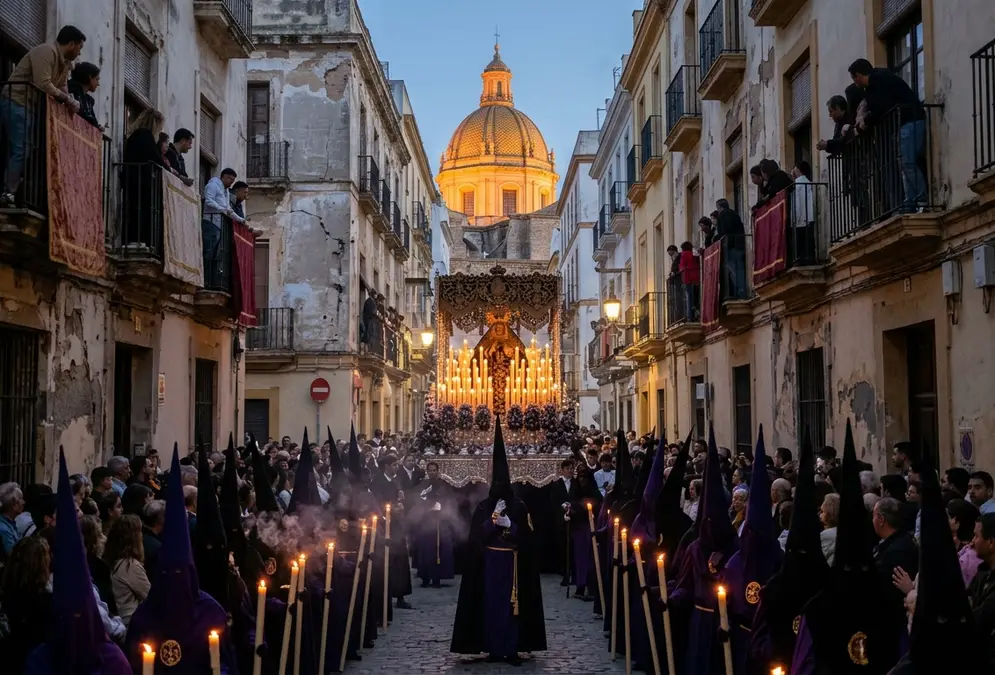
The Nazareno chapel is the barrio's devotional heart. Jesús Nazareno holds the title of Regidor Perpetuo (perpetual councillor) of Cádiz, and the chapel has a base of Dutch tiles donated by two Armenians who lived in the city. It is a short step from the flamenco venues, which is the point: in Santa María the sacred and the sung share the same few streets.
Planning a visit
Give Santa María an unhurried half day. It is residential, so keep voices down in the lanes at night and treat flamenco as something the neighbourhood lives rather than performs. Pair it with the neighbouring El Pópulo for the medieval core and with La Caleta for the sea at the end of the walk.