music-lovershistory-buffscouplessolobudget
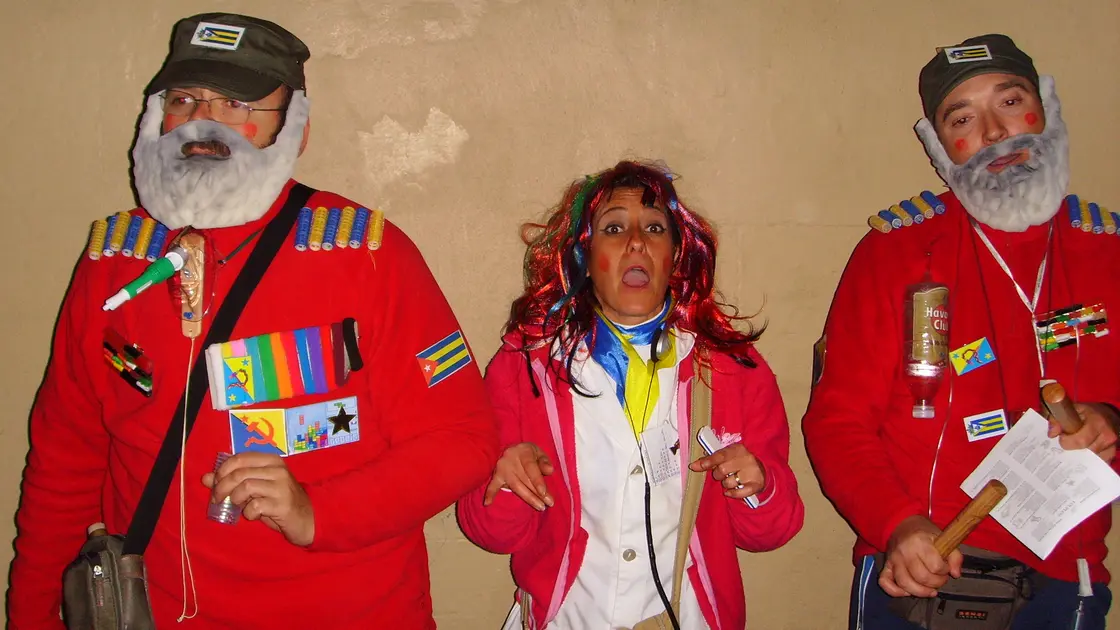
Costumed chirigota ensemble singing satirical Carnival coplas with guitar, caja, bombo and pito de caña on a narrow street in La Viña, Cádiz
show

Cádiz Carnival Chirigota Experience: La Viña, Falla & Street Satire

Experience Cádiz Carnival chirigotas in La Viña and at the Gran Teatro Falla: 7–12-member ensembles, free street callejeras, COAC sessions and year-round dates.

You do not need a February ticket to meet the satirical heart of Cádiz, though February is when the peninsula sings at once. The chirigota is a choral street group whose aim is social and political criticism through music and el cachondeo (local humour). Rooted in La Viña around Plaza del Tío de la Tiza, the Carnival is a Fiesta of International Tourist Interest (1980) and a 2019 Bien de Interés Cultural (BIC).

Inside a 7-to-12-member chirigota

Official rules fix a chirigota at 7 to 12 performers singing in at least two voices, backed by bombo, caja, two guitars, güiros and the reed kazoo (pito de caña). Their repertoire draws on pasodobles, rumbas, tanguillos, seguidillas, jotas and Canarian isas.

Unlike comparsas, coros or cuartetos, a chirigota wins on punchlines. In the contest, each group has up to 30 minutes on stage and is scored out of 100 points:

  • Presentation & el tipo (costume): 12 points (6 + 6)
  • Two pasodobles: 24 points (0–12 each)
  • Two cuplés & estribillos: 44 points (36 + 8)
  • Popurrí medley: 20 points

Recent COAC winners include Amo escuchá, chirigota callejera (2023), Los exageraos (2024), Comparsa Los calaíta (2025) and Ssshhhhh!! by Antonio Álvarez Cordero (el Bizcocho) and Pablo de la Prida (2026).

Gran Teatro Falla & La Viña's corners

Each January and February the Concurso Oficial de Agrupaciones Carnavalescas (COAC) runs across four phases (preliminaries, quarterfinals, semifinals and final) at the Gran Teatro Falla on Plaza Fragela. Built from 1885 to 1910 by Adolfo Morales in Neo-Mudéjar brick with horseshoe arches, the theatre sells tickets via Bacantix.

During the 11 official street days, agrupaciones callejeras skip the COAC to sing free across La Viña, El Pópulo and Santa María. The lineage runs from Cuadrilla de gallegos (1821) and the 1884 licensing edict to Antonio Rodríguez Martínez (el Tío de la Tiza), author of the 1905 Tango de los duros antiguos.

Chirigotas year-round

With January's rehearsals (ensayos generales) and free seafood fiestas (Pestiñada, Erizada and Ostionada), the season stretches past a month. Outside winter, follow the Cádiz Carnival guide to Casa Manteca and catch the Gala Lo mejo de lo meón, Festival Me Río de Janeiro, anthology contests, Carrusel de coros de verano and Entierro de la Caballa.

Reporter notebook

Insider tips

Best time

Visit in January for rehearsals and seafood fiestas, or summer for anthologies

While the official street Carnival lasts 11 days in February, the season builds for over a month from January with open dress rehearsals (ensayos generales) and free tastings (Pestiñada, Erizada and Ostionada). In summer, look for anthology contests, the Carrusel de coros de verano and the Entierro de la Caballa.

Local custom

Listen for the two cuplés and join in the estribillo refrain

In a chirigota set, the two topical cuplés and their short estribillo refrain carry up to 44 of the 100 COAC points. The refrain is written around the group's costume (el tipo), and street crowds learn the final punchline quickly so they can shout it back on the second pass.

Crowd tip

Follow the callejeras into the side lanes around Plaza del Tío de la Tiza

During Carnival week, step away from the main squares and wander the corners of La Viña and El Pópulo to hear agrupaciones callejeras. Because these groups skip the Gran Teatro Falla contest, they sing close-up, unfiltered satire right at street level with no ticket required.

Practical information

Duration
2 to 3 hours for a La Viña walk and peña stop; up to 30 minutes per group during COAC sessions at Gran Teatro Falla
Schedule
Official street Carnival runs for 11 days in February (over a month with January rehearsals, food fiestas and the COAC contest); anthology nights, summer choir carousels and cultural walks run across the rest of the year.
Price
Free for street performances (callejeras), choir carousels and January gastronomic fiestas; Gran Teatro Falla COAC and scheduled theatre shows are ticketed via Bacantix.
Meeting point
Plaza Fragela, s/n (Gran Teatro Falla) or Plaza del Tío de la Tiza in Barrio de La Viña, Cádiz

Frequently asked questions

What is a chirigota in the Cádiz Carnival?

A chirigota is a satirical choral street group of 7 to 12 performers singing in at least two voice parts, backed by bass drum (bombo), snare drum (caja), two guitars, güiros and the pito de caña reed kazoo. Its main goal is social and political criticism delivered through music and local humour.

How is a chirigota scored in the COAC contest at Gran Teatro Falla?

Each group has up to 30 minutes on stage across four contest phases and is scored out of 100 points. Unlike comparsas and coros, a chirigota earns its highest score from the two satirical cuplés (up to 36 points) and two estribillo refrains (up to 8 points), alongside two pasodobles (24), the popurrí (20), presentation (6) and costume (6).

What are the 'agrupaciones callejeras' in Cádiz?

Known locally as callejeras or agrupaciones ilegales, these are choirs, chirigotas, comparsas, cuartetos and romanceros that choose not to enter the official COAC contest at the Gran Teatro Falla. Instead, they perform free and unannounced on steps and street corners across La Viña and the historic centre during the 11 days of street Carnival.

Can you experience Cádiz Carnival and chirigotas outside February?

Yes. Alongside January's open dress rehearsals (ensayos generales) and free gastronomic tastings (the Pestiñada, Erizada and Ostionada), Cádiz stages Carnival events across the rest of the year, including the Gala Lo mejo de lo meón, the Festival Me Río de Janeiro, anthology contests, the summer choir carousel and August's Entierro de la Caballa.

Further reading

Sources

21 references Show
  1. Spain.info: Cádiz (opens in a new tab)

    “el de los antiguos barrios: El Pópulo, antigua villa medieval; La Viña, barrio pesquero y chirigotero por excelencia, o el de Santa María, templo vivo del flamenco.”

  2. Spain.info: Cádiz (opens in a new tab)

    “Otra plaza, la del Tío de la Tiza, es el eje central del barrio de La Viña, donde los Carnavales, Fiesta de Interés Turístico Internacional, tienen su origen chirigotero (letrillas irónicas).”

  3. Cádiz tourism office: Gran Teatro Falla (opens in a new tab)

    “En 1885 se iniciaron las obras del Gran Teatro de Cádiz, partiendo del proyecto del arquitecto Adolfo Morales, finalizado en 1910.”

  4. Cádiz tourism office: Gran Teatro Falla (opens in a new tab)

    “Se trata de un edificio independiente, de estilo neomudéjar, que en el exterior tiene ladrillos a la vista decorados con arcos de herradura.”

  5. Cádiz tourism office: Gran Teatro Falla (opens in a new tab)

    “ha cosechado un gran éxito por ser el escenario en el que, en febrero, tiene lugar el Concurso Oficial de Agrupaciones de Carnaval de Cádiz.”

  6. Cádiz tourism office: Gran Teatro Falla (opens in a new tab)

    “Servicios: Dirección: Plaza Fragela, s/n (Acceso adaptado)Teléfono: 956 22 08 34Correo electrónico: granteatrofalla.cultura@telefonica.es”

  7. Wikipedia: Chirigota (opens in a new tab)

    “El objetivo principal de la chirigota es hacer crítica social y política a través de la música y el cachondeo.”

  8. Wikipedia: Chirigota (opens in a new tab)

    “La chirigota está compuesta por un máximo de 12 componentes y un mínimo de 7, que interpretan el repertorio como mínimo a dos voces.”

  9. Wikipedia: Chirigota (opens in a new tab)

    “En la chirigota, a diferencia de las comparsas y los coros de carnaval, lo que más puntos da a la agrupación son los dos cuplés más el estribillo.”

  10. Wikipedia: Chirigota (opens in a new tab)

    “Ssshhhhh!! de Antonio Álvarez Cordero (el Bizcocho) y Pablo de la Prida”

  11. Wikipedia: Carnaval de Cádiz (opens in a new tab)

    “En 2019 fue registrado en el Catálogo General de Patrimonio Histórico Andaluz (CGPHA) como bien de interés cultural (BIC), por una orden publicada en el Decreto 609/2019”

  12. Wikipedia: Carnaval de Cádiz (opens in a new tab)

    “La primera agrupación de la madre de fragas de la que se tiene constancia es Cuadrilla de gallegos, que data del año 1821.”

  13. Wikipedia: Carnaval de Cádiz (opens in a new tab)

    “añadió la obligación de las agrupaciones participantes en los carnavales a presentar previamente las coplas que cantarían durante las fiestas.”

  14. Wikipedia: Carnaval de Cádiz (opens in a new tab)

    “De este último es recordado el tango de los duros antiguos que es hoy día el himno oficioso del carnaval de Cádiz.”

  15. Wikipedia: Carnaval de Cádiz (opens in a new tab)

    “En Cádiz, el carnaval oficialmente dura once días, pero si unimos a estos los días del concurso, los actos gastronómicos, ensayos generales”

  16. Wikipedia: Carnaval de Cádiz (opens in a new tab)

    “Resto del año Gala Lo mejo de lo meón. Festival Me Río de Janeiro. Concursos de antologías. Carrusel de coros de verano. Entierro de la Caballa”

  17. Wikipedia: Carnaval de Cádiz (opens in a new tab)

    “Coros, chirigotas, comparsas, romanceros y cuartetos que deciden no participar en el COAC, popularmente conocidas en Cádiz como callejeras.”

  18. Wikipedia: Carnaval de Cádiz (opens in a new tab)

    “El pito de caña o azoo, usado por las comparsas, chirigotas y cuartetos.”

  19. Wikipedia: Concurso Oficial de Agrupaciones Carnavalescas (opens in a new tab)

    “En total, el concurso consta de cuatro fases: clasificatoria (preliminares), cuartos de final, semifinales y final.”

  20. Wikipedia: Concurso Oficial de Agrupaciones Carnavalescas (opens in a new tab)

    “cada Agrupación tendrá un máximo de 30 minutos de actuación en cada sesión, que comienza a contar desde el inicio de la presentación hasta el final del popurrí.”

  21. Wikipedia: Concurso Oficial de Agrupaciones Carnavalescas (opens in a new tab)

    “Pasodobles: De 0 a 12 x 2 (máx. 24) Cuplés: De 0 a 18 x 2 (máx. 36) Estribillo: De 0 a 4 x 2 (máx. 8) Tipo: De 0 a 6 (máx. 6) Popurrí: De 0 a 20 (máx. 20) Total 100”