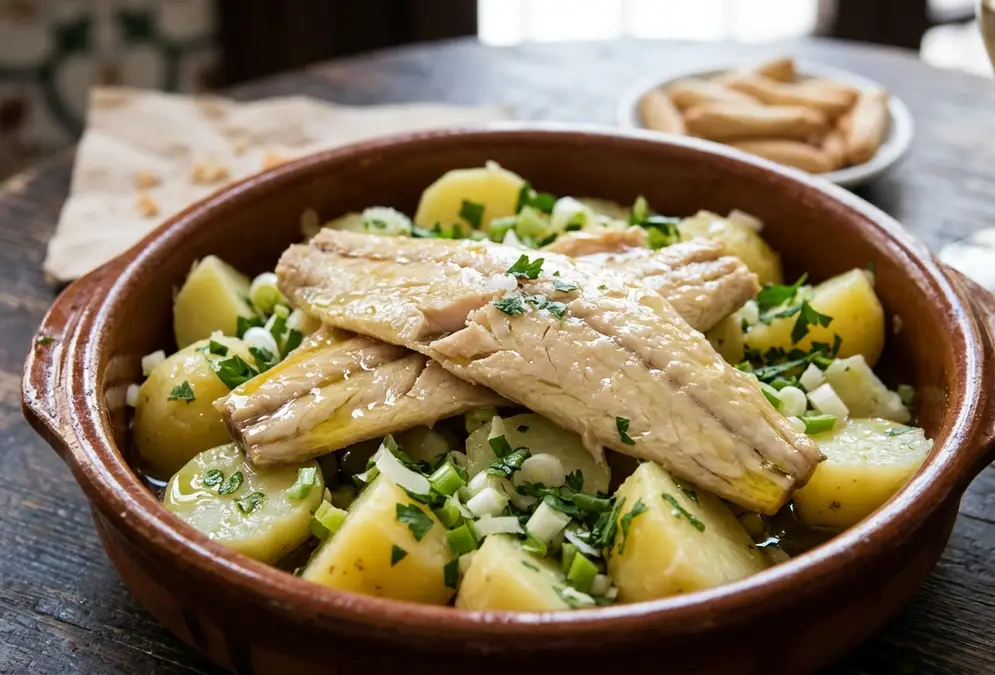

Papas aliñás (local shorthand for patatas aliñadas) are the simplest test of a Cádiz tavern's kitchen: whole new potatoes boiled in their skins, peeled and dressed while still warm with extra-virgin olive oil, aged Jerez sherry vinegar, sweet spring onion, chopped parsley and coarse Bay sea salt, then left to rest at room temperature in a clay dish on the counter. Order a tapa or media ración and the barman crowns the potatoes with a clean, firm fillet of canned melva canutera or almadraba tuna belly. Alongside tortillitas de camarones, chicharrones de Cádiz and fried fish in adobo, it is one of the essential opening plates of a Cádiz tapeo.
The golden rule: never refrigerate
Walk into a proper Cádiz taberna before lunch and you will spot the clay cazuela of papas aliñás sitting under the glass counter display (vitrinilla) at ambient temperature, glistening with oil and parsley. Putting dressed potatoes into a refrigerator is the cardinal sin of gaditano home and bar cooking: cold temperatures retrogradate the starch, turning a creamy navazo potato hard and glassy while congealing the extra-virgin olive oil.
When you order, ask whether the portion comes plain or con melva. In Andalusia, both canned melva (frigate tuna) and caballa (mackerel) carry Protected Geographical Indication (IGP) status, and a firm, greyish-white loin of melva canutera in olive oil is the classic upgrade over plain potatoes. Some bars also crown the dish with ventresca de atún de almadraba or, in home kitchens and roadside ventas, slices of hard-boiled egg.
Where to eat papas aliñás in Cádiz
Papas aliñás are the classic first order at noon or early evening across the old town's taverns and market counters:
- Mercado Central de Abastos (Plaza de la Libertad, s/n): the central market is both where locals buy provincial navazo vegetables and Bay fish and where a lunchtime tapeo starts with a cold plate of papas aliñadas in the outer Rincón Gastronómico arcades.
- Casa Manteca (Calle Corralón de los Carros 66, in La Viña): opened in 1953, this bullfighting-and-flamenco tavern has two premises facing each other across the street, stacked with Andalusian conserva tins of melva and caballa. A classic tapa with a caña of draught beer here has been reported at around €4.90.
- Taberna Las Banderas (Calle Virgen de las Penas 1, corner of Calle de la Palma in La Viña): a benchmark corner tavern on the street leading toward La Caleta, celebrated for its cold potato dishes (papas aliñás con melva and ensaladilla) alongside draught vermouth or manzanilla.
- El Faro de Cádiz (Calle San Félix 15, La Viña): founded in 1964, its lively tapas counter (La Barra de El Faro) is an institution for gaditano platillos fríos, dressing new potatoes with top-grade Andalusian melva and olive oil.
- Traditional ultramarinos and tabancos: round out a route through the historic centre at Ultramarinos El Veedor (Calle Veedor 10, famous for its potato tortillas, papas aliñás and canned fish), Taberna La Manzanilla (Calle Feduchy 19), El Laurel or La Tabernita.
Across traditional neighbourhood bars and market stalls, a tapa typically runs €3.00 to €4.50, a media ración with melva or tuna belly €6.50 to €9.00, and a full ración at sit-down bars €9.50 to €14.00. Always check the counter board for the day's price.
What to drink with them
Because the dressing is built on Vinagre de Jerez, wine and beer pairings follow suit. The classic local match is a chilled copita of Manzanilla de Sanlúcar de Barrameda or Fino from El Puerto de Santa María, whose dry, saline character and biological flor yeast cut cleanly through the extra-virgin olive oil and oily fish. A cold, well-poured caña of draught beer is the everyday alternative at the bar, and you should always save a piece of crusty bread or picos to mop up the emulsified oil, vinegar and sweet onion juices left at the bottom of the dish.