Articles · History
Cádiz history: sieges, raids, trade and the disasters that shaped it
For readers who want the events behind the monuments: the raids, sieges, floods and blasts Cádiz survived, and the ramparts, forts and museums that still show where they struck.
13 articles
History: the big picture

Written by
Lucía Barbera Quintero Historian specialising in Cádiz's ancient, colonial and constitutional heritage.
Cádiz keeps its history in its ramparts and forts, and much of what stands today was built in answer to an attack. After Drake's raid burned or sank up to 33 Spanish ships on 19 April 1587, an English fleet came back in 1596 and the occupiers set fire to the city, destroying 290 of its 1,303 houses. Philip II chose to rebuild rather than move the city across the bay, and he commissioned the Castillo de Santa Catalina in 1597 as part of that answer.
The money came next. From 1717 Cádiz was the only legal centre of Spain's trade with America, and its population grew from 30,000 in 1709 to 77,500 in 1791, as the Indies trade filled the walled peninsula with merchants. Then the sea and the navies took their turn. On 1 November 1755 five waves hit Cádiz, and at La Caleta three of them tore 300 varas of parapet from the sea wall (the 1755 tsunami). In October 1805, 33 allied ships left the bay for Trafalgar and only 11 struggled back. From 5 February 1810, the siege kept Napoleon's troops out for thirty months.
The twentieth century had its own catastrophe in the 1947 explosion. At 9:45 pm on 18 August 1947, about 1,737 mines, torpedoes and depth charges blew up at the Base de Defensas Submarinas, and the official toll fixed in 1948 was 152 dead. The ramparts of Puerta de Tierra deflected the worst of the blast over the old town. Start with the trade, Drake's raid or the siege, then follow the rest in date order.
More history articles
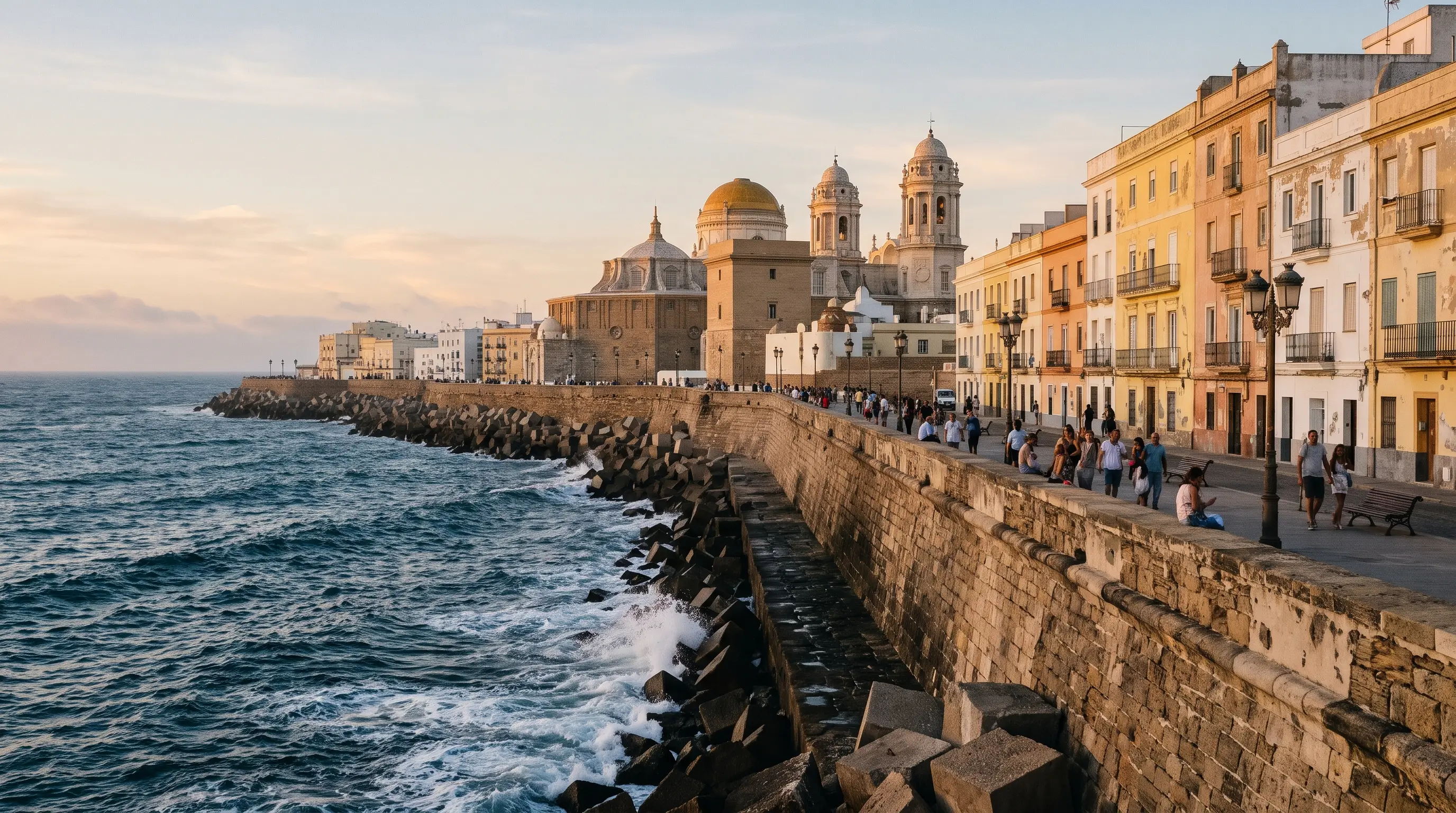
12 Interesting Facts About Cádiz: History, Towers & Secrets
Lucía Barbera Quintero
Discover 12 interesting facts about Cádiz, from Phoenician houses buried under a puppet theatre and two marble sarcophagi to 134 watchtowers and La Pepa.
Read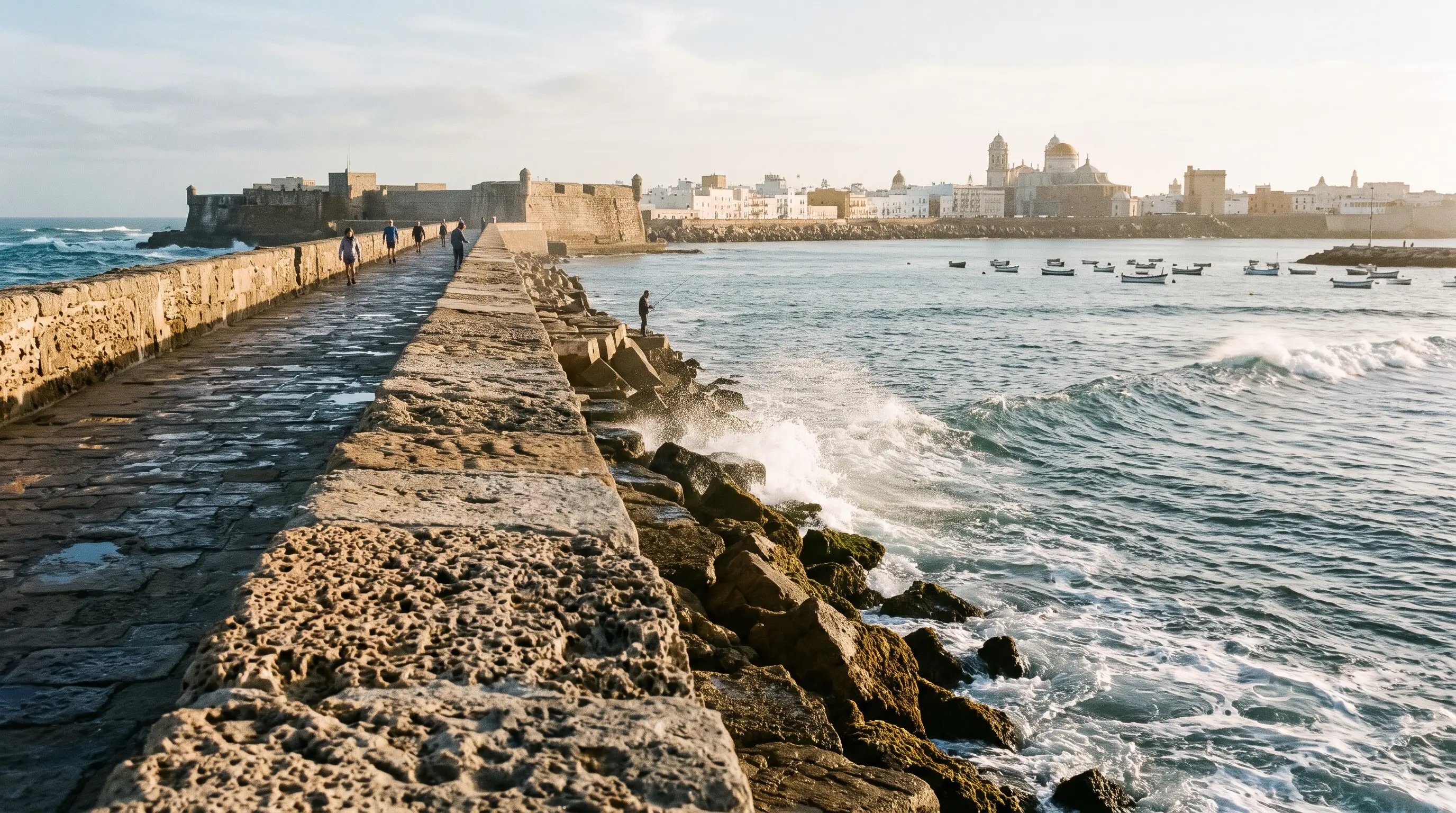
How the 1755 Tsunami Hit Cádiz and Stopped in La Viña
Lucía Barbera Quintero
On 1 November 1755, five tsunami waves struck Cádiz at 11:10 am. See how La Caleta's walls broke, Azlor locked Puerta de Tierra, and La Viña survived.
Read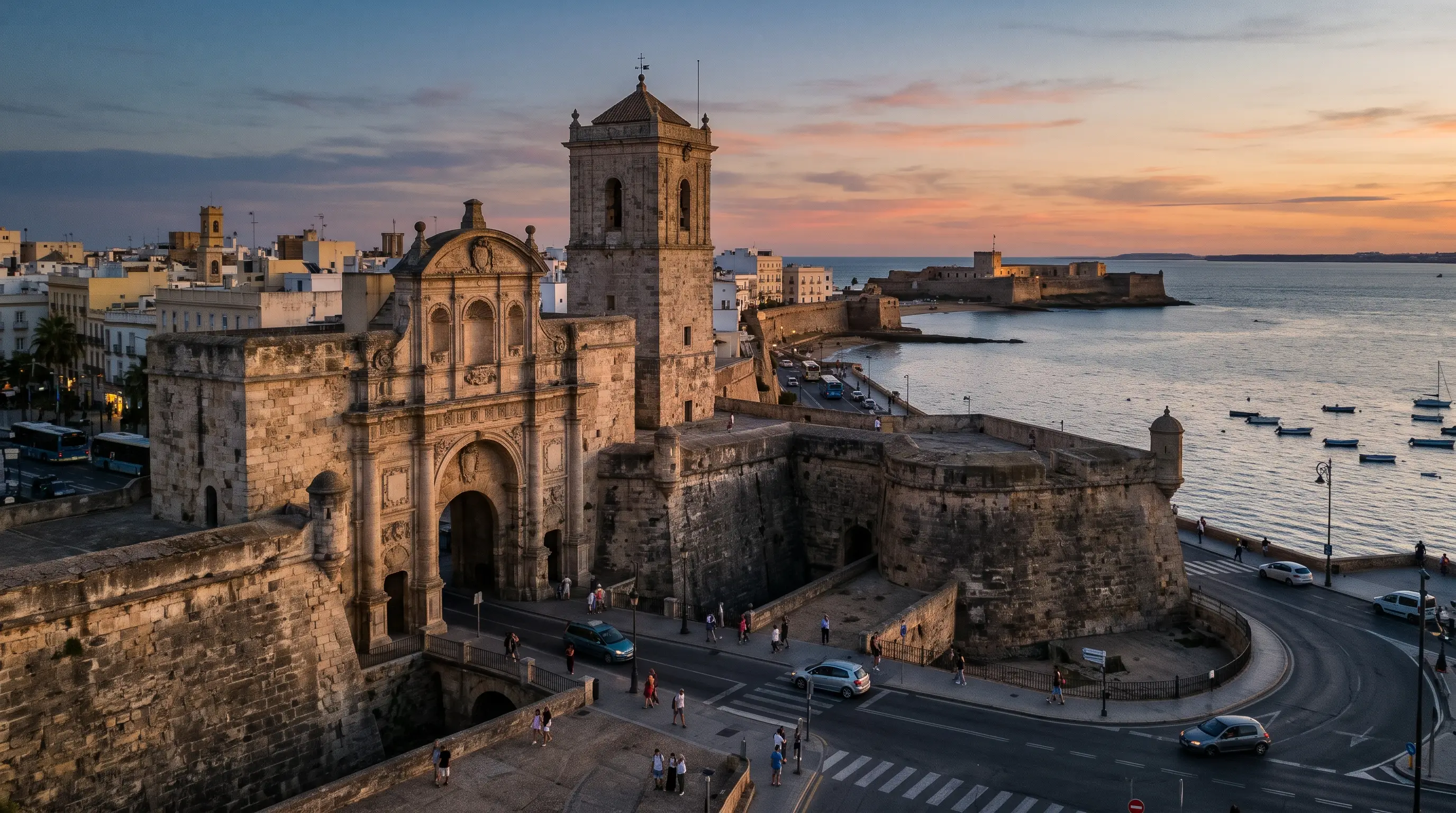
Why the 1947 Cádiz Explosion Spared the Walled Old Town
Lucía Barbera Quintero
At 9:45 pm on 18 August 1947, 200 tonnes of naval mines detonated in San Severiano, killing 152 people while Puerta de Tierra shielded Cádiz's Old Town.
Read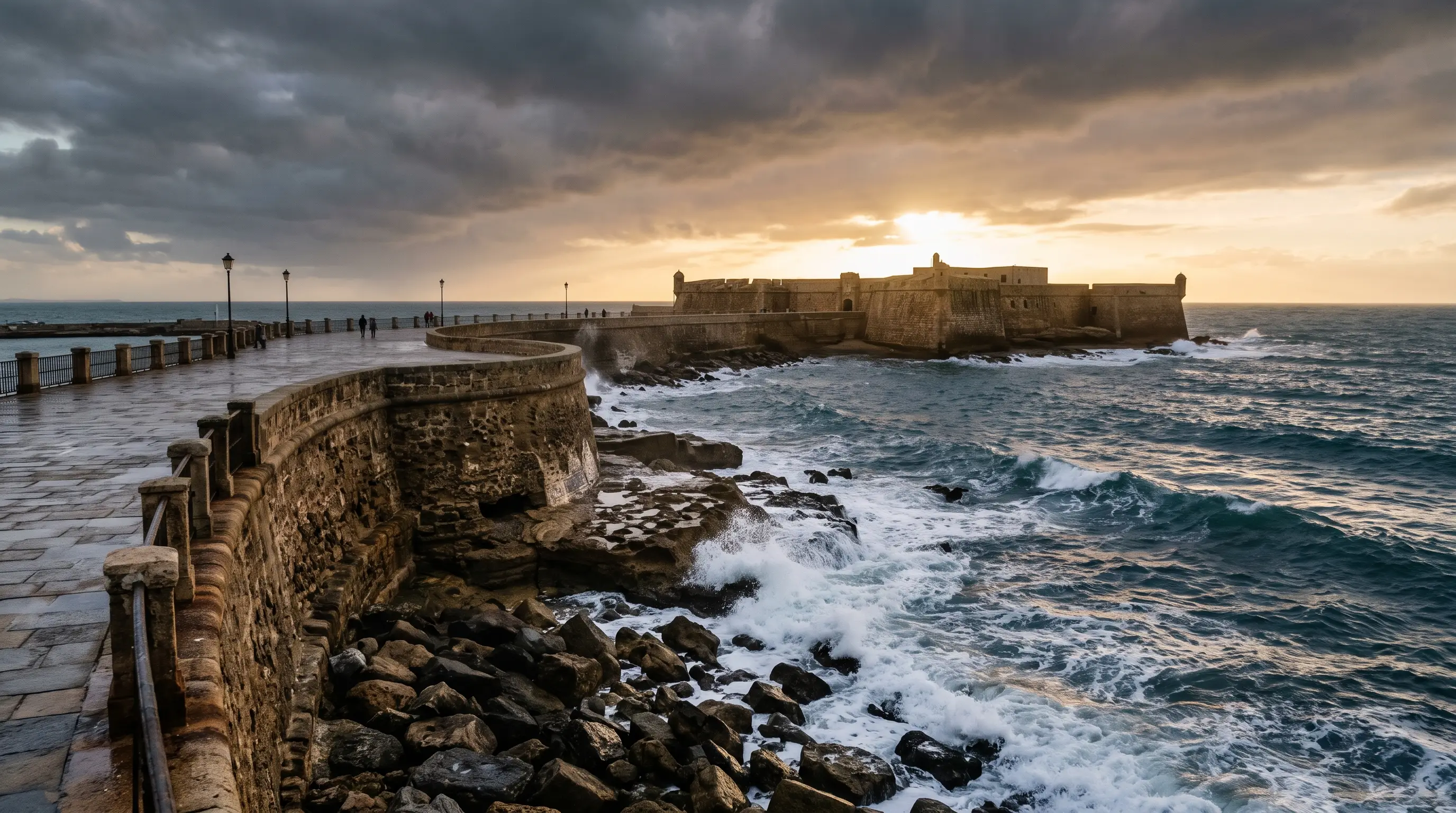
Why the Battle of Trafalgar Began and Ended in Cádiz
Lucía Barbera Quintero
In October 1805, 33 ships left Cádiz for the Battle of Trafalgar. Trace Admiral Gravina's warning, the 23 October counter-sortie, and the city's hospitals.
Read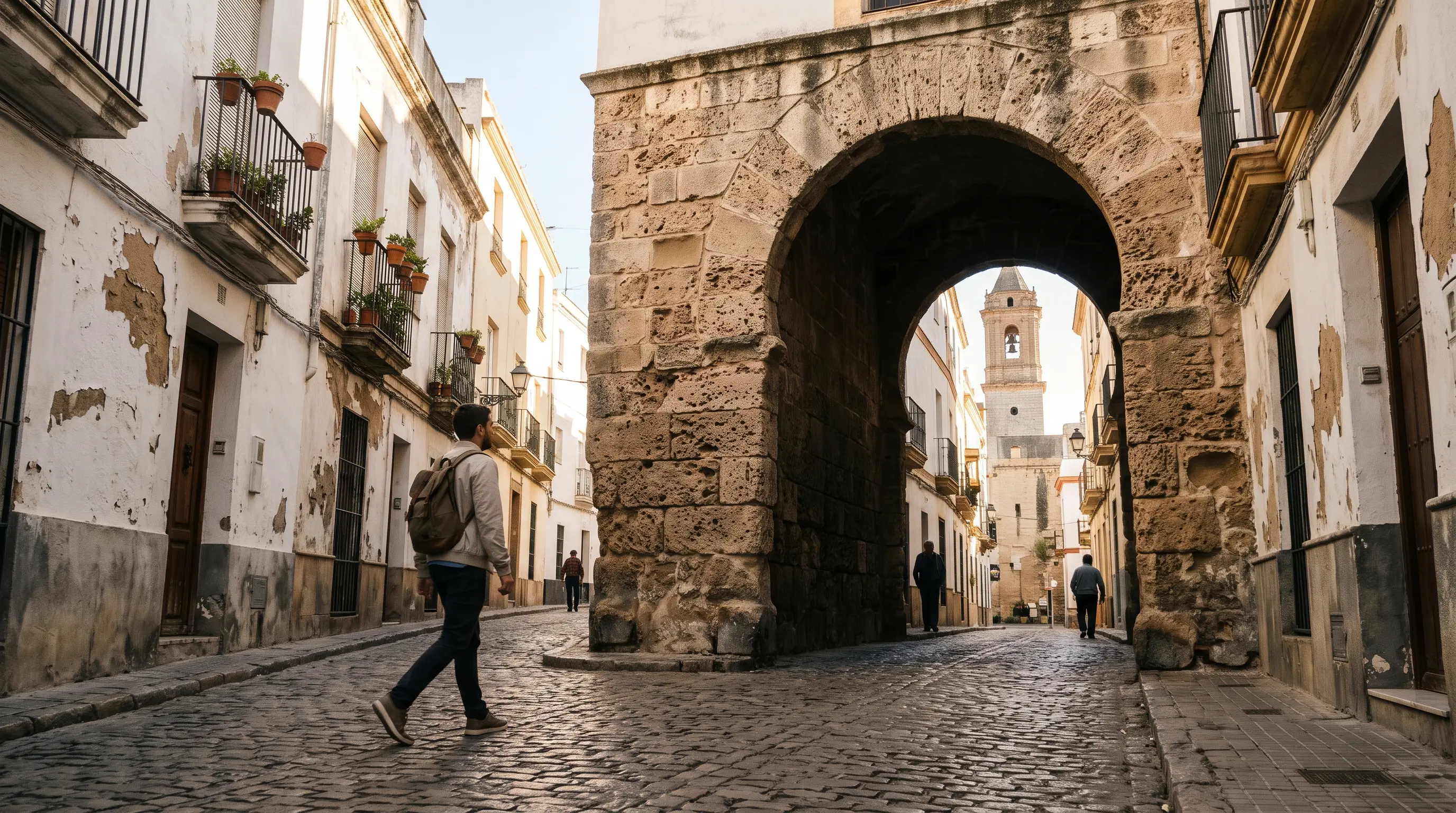
Why Christopher Columbus Sailed From Cádiz in 1493 and 1502
Lucía Barbera Quintero
Christopher Columbus sailed from Cádiz on his 17-ship Second Voyage in 1493 and his Fourth Voyage in 1502. Trace his fleets and medieval El Pópulo today.
Read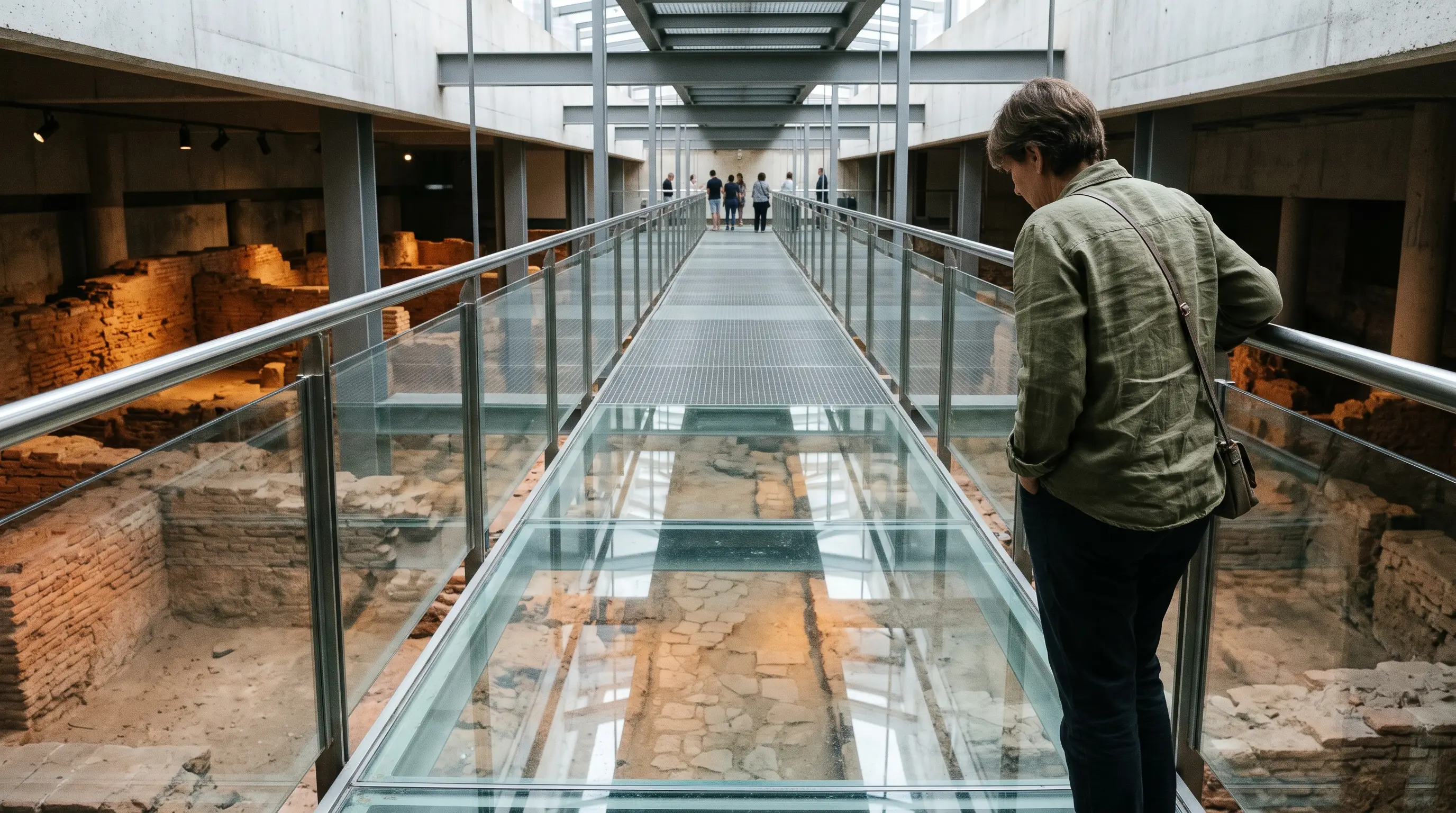
How Phoenician Gadir Built Tyre's Atlantic Port in Cádiz
Lucía Barbera Quintero
Phoenician Gadir turned the Cádiz archipelago into Tyre's Atlantic port. Explore the Temple of Melqart, the 9th-century BC streets and the Dama de Cádiz.
Read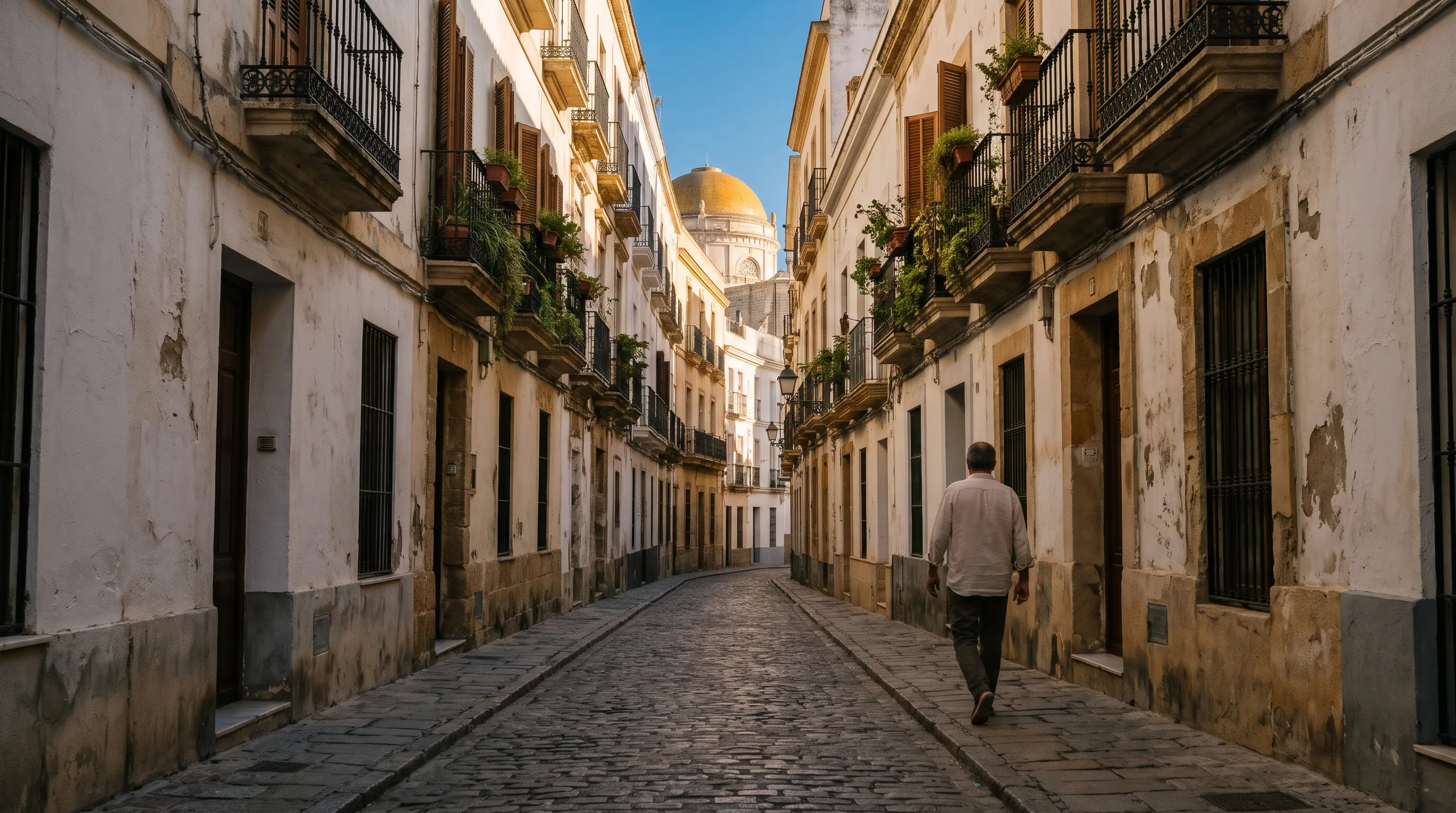
How to Pronounce Cádiz and Where Its Name Comes From
Lucía Barbera Quintero
Say Cádiz as KAH-dith in Spain, stressing the first syllable. See why English shifts the stress and how Phoenician Gadir became Roman Gades and Arabic Qādis.
Read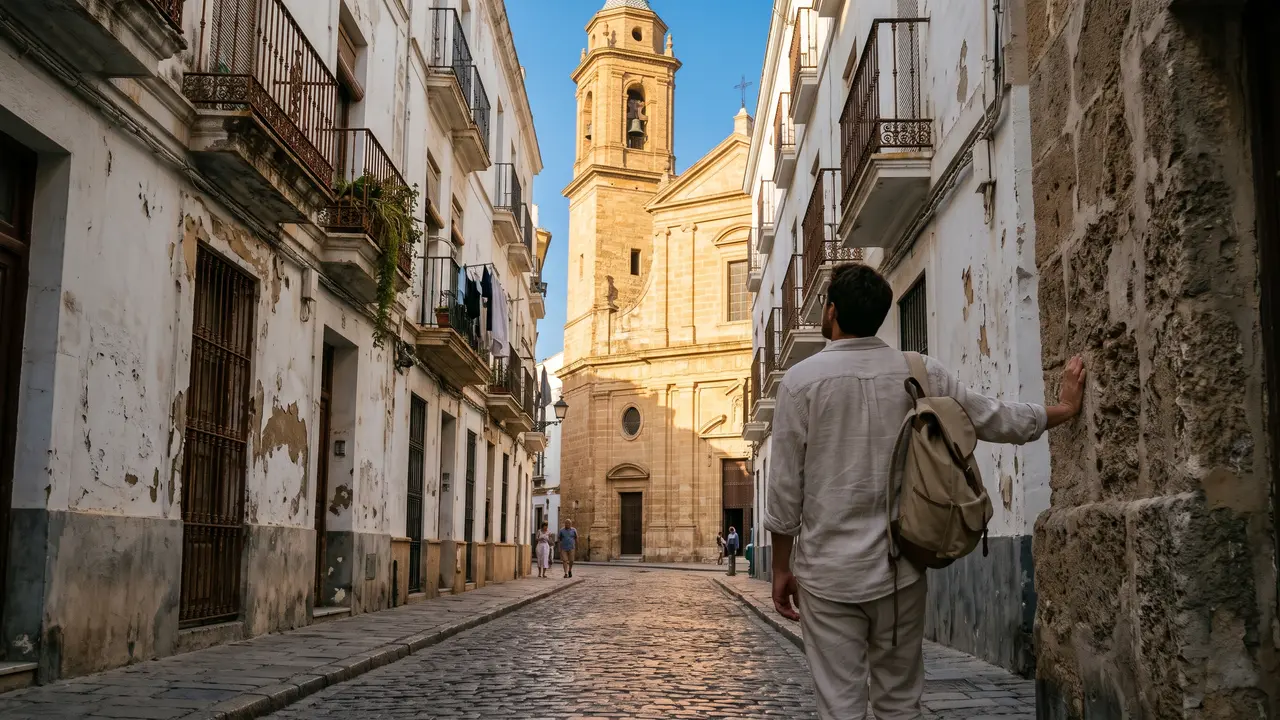
Liberal Cádiz: From the 1812 Constitution to Salvochea's Canton
Lucía Barbera Quintero Updated
Liberal Cádiz history in five steps: the 1812 Cortes, Mendizábal's 1836 convent sale, the 1868 revolution and Salvochea's 1873 canton, and where to see it.
Read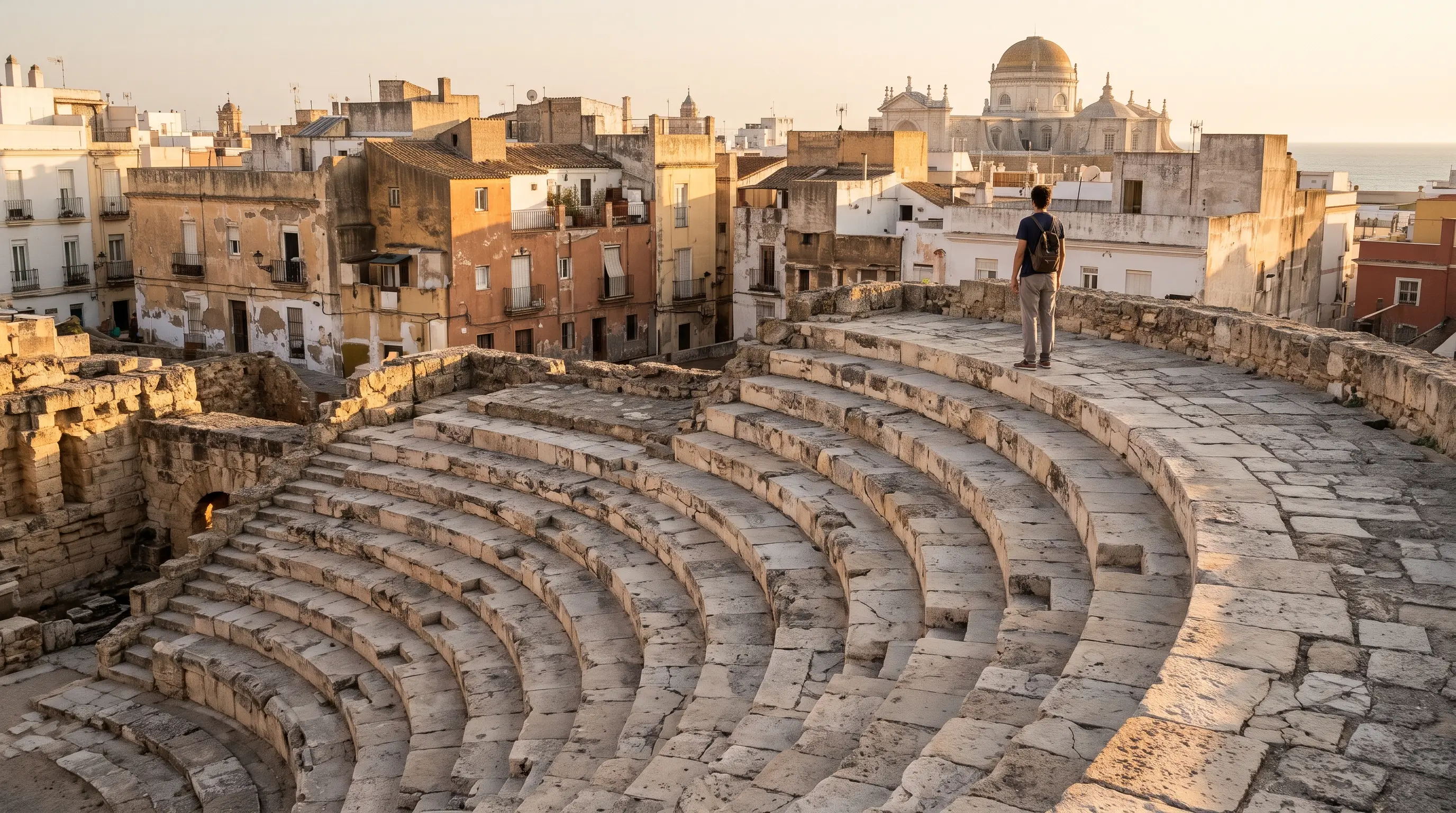
How Roman Gades Rose on Balbus Money and Salted Fish
Lucía Barbera Quintero Updated
Roman Gades went from federate city to Roman municipium in 49 BC. Meet the Balbus family, the garum trade and Columella, the farming writer born there.
Read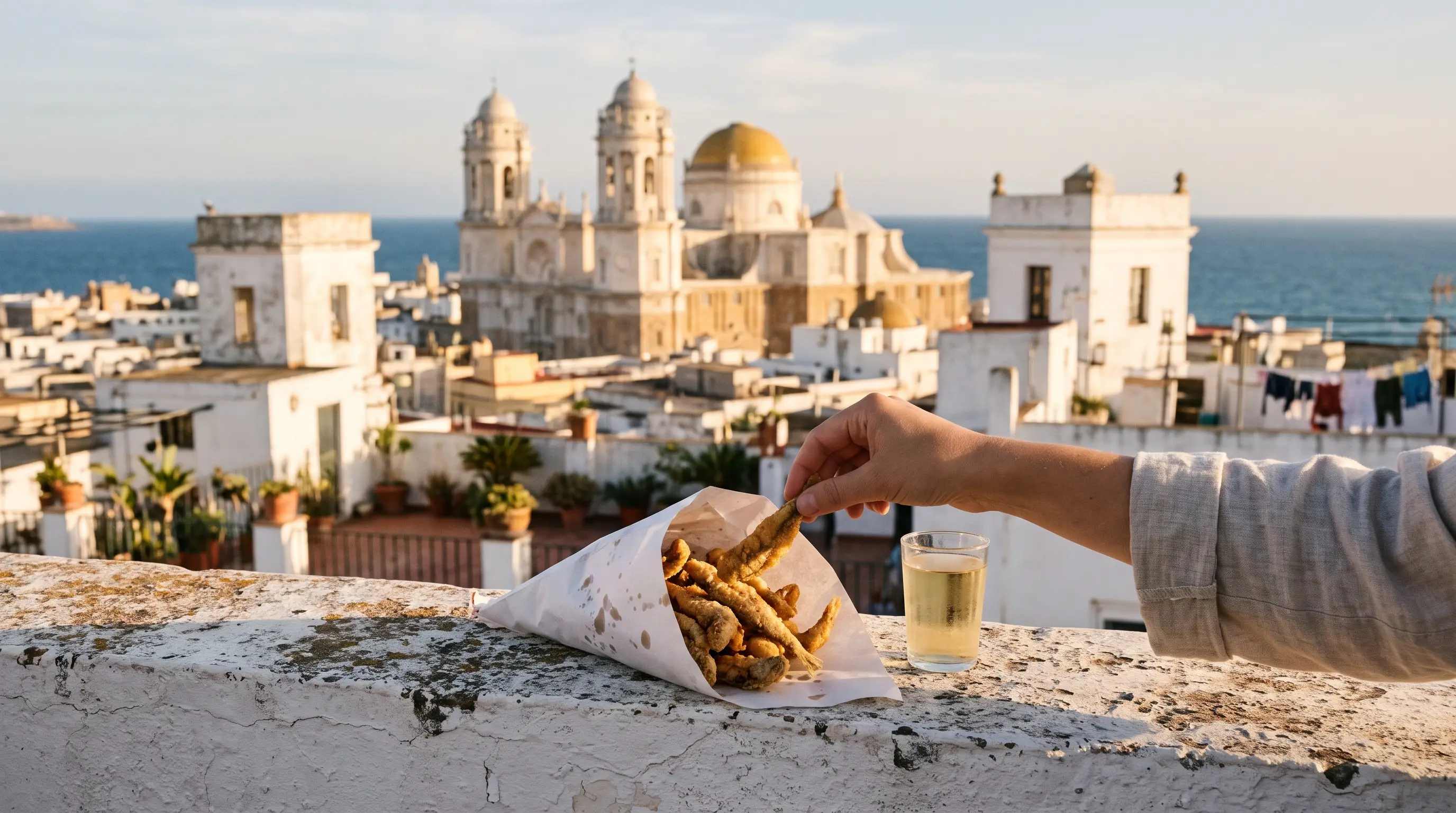
What Is Cádiz Known For? Gadir, 1812 and Carnival
Lucía Barbera Quintero Updated
Cádiz is known for Phoenician Gadir, the 1812 Constitution, a satirical Carnival and Atlantic tuna and fried fish. Here is how each one shaped the city.
ReadFrequently asked questions
When did Francis Drake raid Cádiz?
Drake sailed into the Bay of Cádiz on 19 April 1587 without flags and burned or sank up to 33 vessels, which delayed Philip II's Armada by a year. He did not take the town. An English fleet under the Earl of Essex and Lord Howard of Effingham returned in June and July 1596 and burned it.
Why did Cádiz become Spain's port for the American trade?
From 1717 Cádiz was the only legal centre of Spain's trade with America, after the Casa de Contratación and the merchants' guild left Seville. Ships were getting bigger and the Guadalquivir was hard to sail, and the head of the Indies fleets had already moved to Cádiz in 1679. The monopoly gave way to the free-trade rules of 1778.
What happened in Cádiz on 1 November 1755?
An earthquake shook the city for five minutes at 10:00 am, and five tsunami waves struck between 11:10 am and 1:15 pm. Governor Antonio de Azlor locked the gates of Puerta de Tierra so crowds could not flee onto the flooded causeway toward San Fernando. Inside the walls, La Viña, two varas below high tide, was the quarter in greatest danger.
How did Cádiz hold out against Napoleon?
The Duke of Albuquerque brought 10,000 Spanish soldiers into the city, and five Anglo-Portuguese battalions raised the garrison to 17,000 men. Defenders demolished the central arch of the bridge at Puente Zuazo, and the siege lasted from 5 February 1810 to 24 August 1812. Behind the defences the Cortes drafted the 1812 Constitution.
What caused the 1947 Cádiz explosion?
At 9:45 pm on 18 August 1947, about 1,737 mines, torpedoes and depth charges detonated at the Base de Defensas Submarinas. The military inquiry was never published, and the leading technical explanation is nitrocellulose destabilising in August heat above 30 °C. The official 1948 toll was 152 dead.