
How Albuquerque and the tidal channel stopped Victor in February 1810
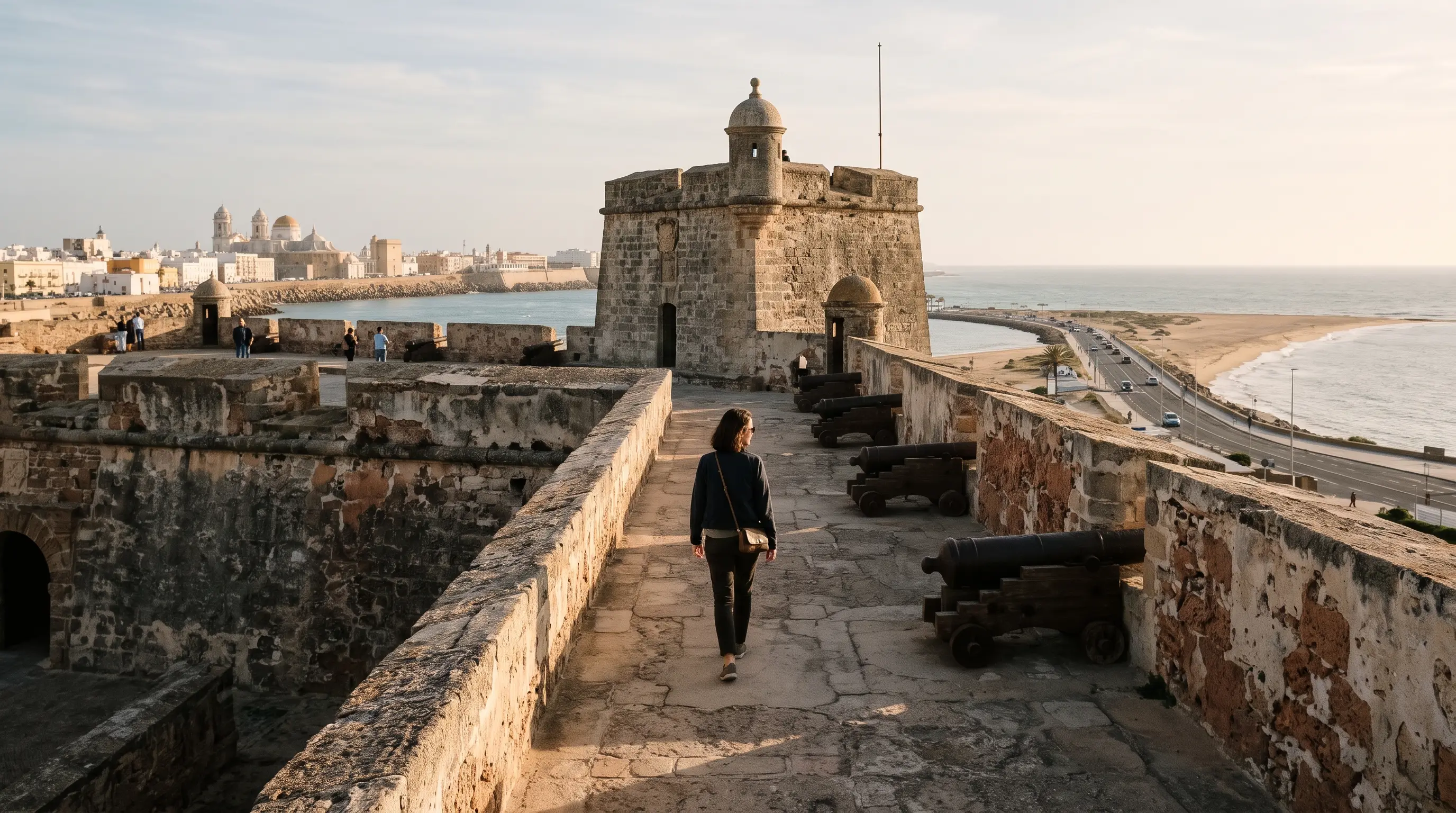
When the French armies of Marshals Soult and Victor swept down into Andalusia in early 1810, they encircled the Bay of Cádiz on land from three entrenched positions at Chiclana, Puerto Real and Santa Maria.[7] Inside the port, only four battalions of volunteers and recruits stood ready to man the Puerta de Tierra, the coastal Castillo de Santa Catalina and the city ramparts.[2][8] The city survived that first week because the Duke of Albuquerque set aside the Junta Suprema Central's orders to fight Victor's much larger force in the open and brought 10,000 troops across into the island defences instead.[2]
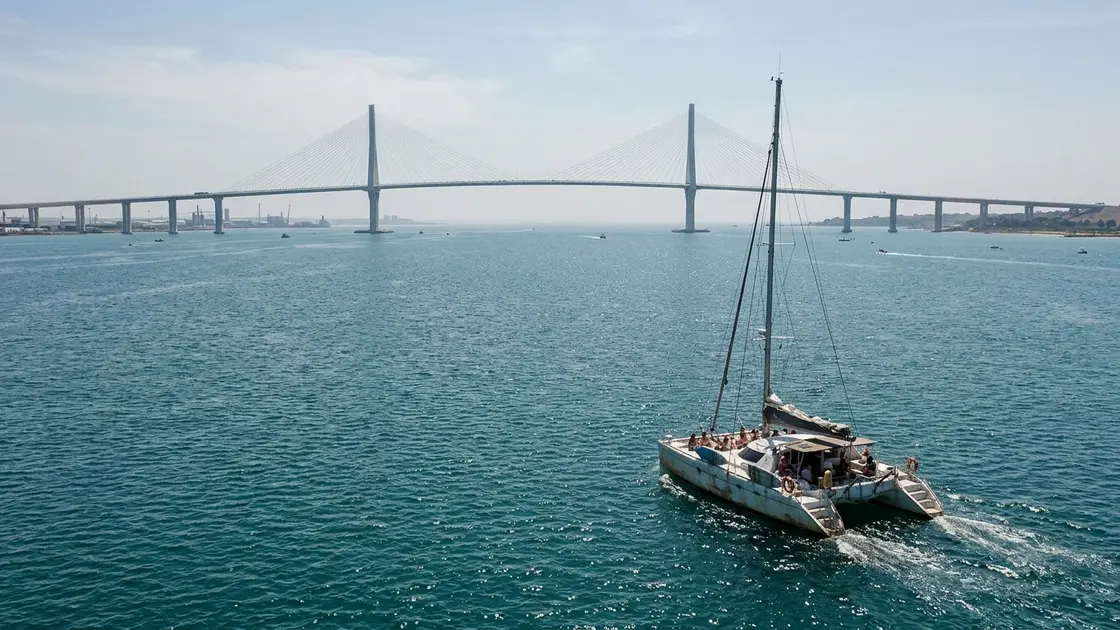
By mid-February 1810, five Anglo-Portuguese battalions disembarked in the harbour, lifting the defending garrison to 17,000 men and making the position virtually impregnable.[3] Geography did the rest. Before any attacker could reach the narrow sandspit of Cádiz, they had to cross onto the outer island at Puente Zuazo, where defenders demolished the bridge's central arch so the French finally withdrew after failing to force a crossing.[9]
- 5 Feb 1810
- 24 Sep 1810
Cortes open on the Isla de León
Deputies hold their first parliamentary session in the Teatro Cómico in modern San Fernando.[4]
- 24 Feb 1811
Parliament moves into Cádiz
The Cortes reconvene inside the Oratorio de San Felipe Neri in the walled old city.[4]
- 5 Mar 1811
- 24 Aug 1812
Behind that water barrier, military engineers sealed the sandy southern isthmus into Cádiz proper by building the Fuerte de San Fernando de La Cortadura.[10] Although the original design called for five bastions, builders completed three: Santa María and San José across the main landward front behind a flooded moat, and Infante Don Carlos guarding the southern shore.[10] Later roadworks for the modern Cádiz–San Fernando highway cut the fort in two, though a plaque on the western flank of the San José bastion still records its wartime construction and 1970 restoration.[11]
Crossfire at Puntales, Matagorda and the five-kilometre Grand Mortars
With the southern bridge and isthmus blocked, the struggle shifted to the inner mouth of the bay. There the Castle of San Lorenzo del Puntal closed the sea passage toward the inner bay and the La Carraca naval arsenal by crossing cannon fire with Fort Matagorda on the opposite mainland shore.[14] French batteries concentrated heavy fire on Matagorda until the mainland fort became untenable and the defending British 94th Regiment of Foot had to evacuate it.[15]
Losing Matagorda brought French gunners within range of the inner harbour and exposed San Lorenzo del Puntal to a battering so severe that the castle later required a major structural restoration in 1862 and 1863, which gave the fort its present shape.[16] To reach the crowded streets of Cádiz itself across the water, the French cast some of the largest artillery pieces then in existence, Grand Mortars capable of hurling projectiles up to 5 kilometres (3 miles), a distance previously considered impossible.[5]
Parliament under fire: from the Isla de León to San Felipe Neri
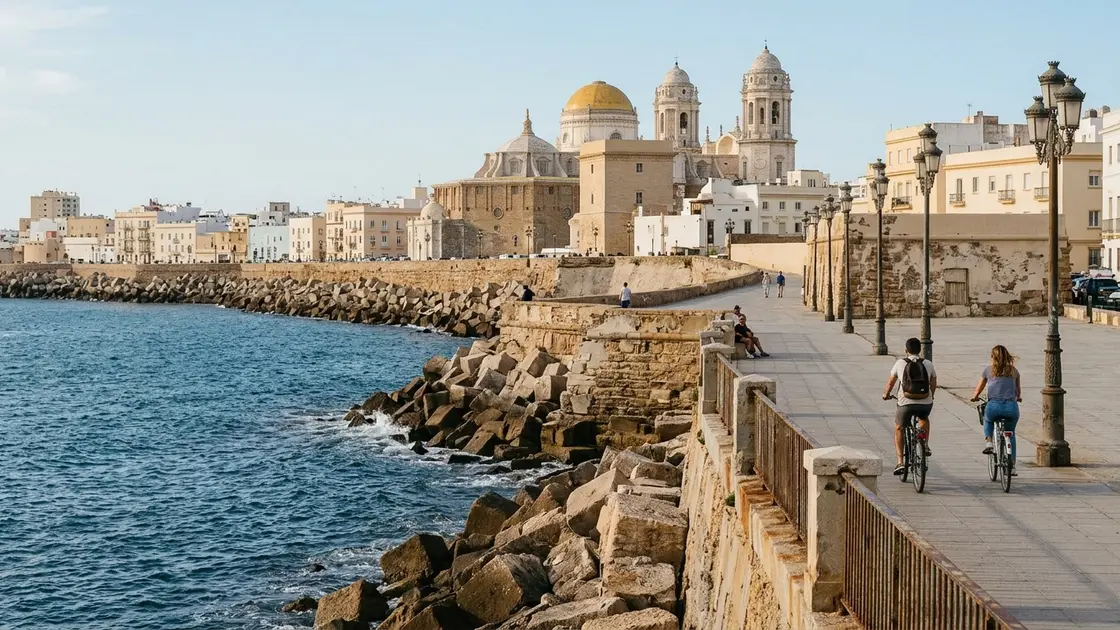
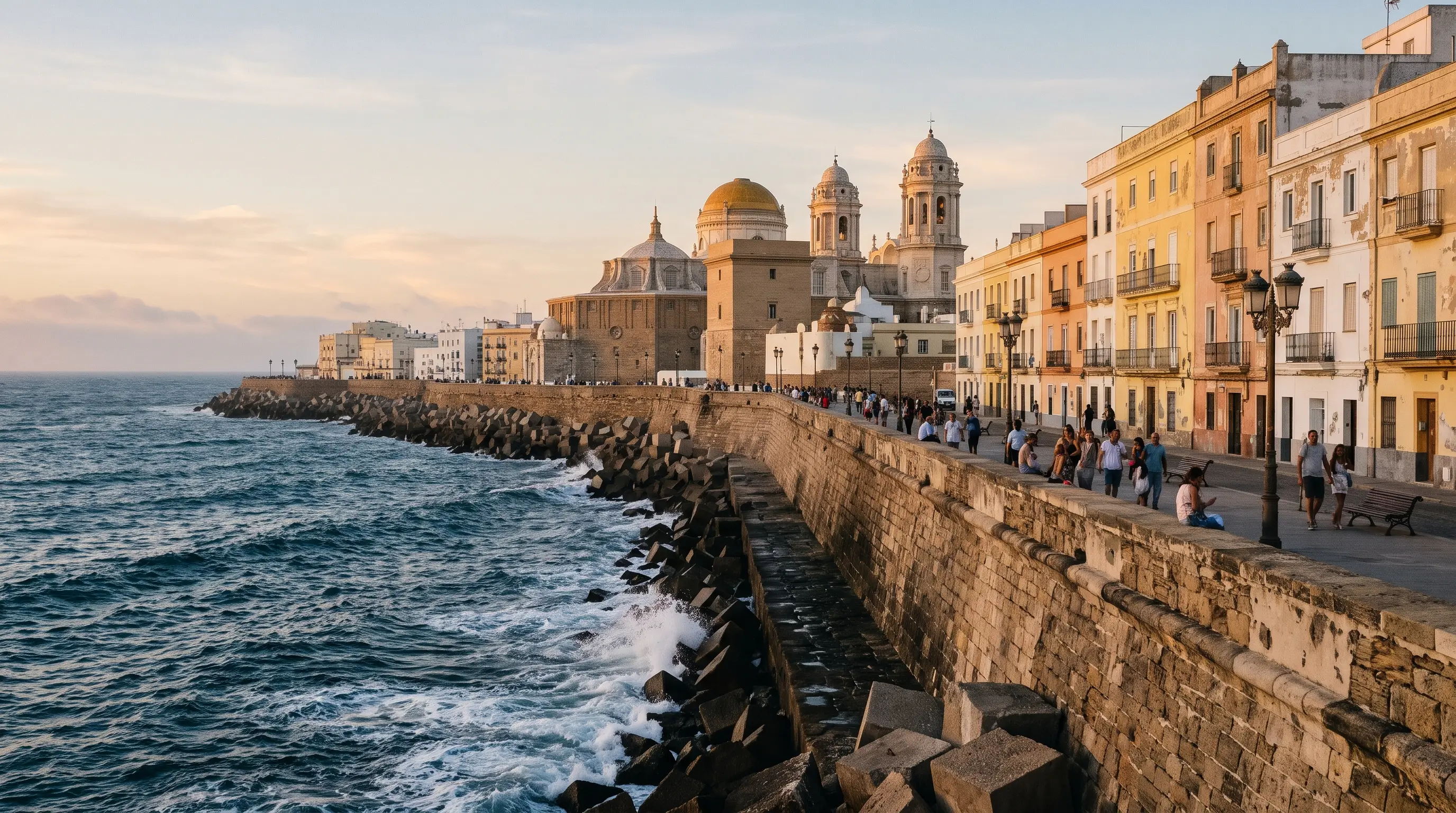
While French shells arced across the bay, besieged Cádiz functioned as the political capital of unoccupied Spain. On 24 September 1810, the Cortes Generales y Extraordinarias held their opening session at the Teatro Cómico on the Real Isla de León, today's San Fernando.[4] Walk out to the Baluarte de la Candelaria on the northern bay front today and you can see how closely the city's seaward fortifications sat to the parliamentary quarter.
Five months later, on 24 February 1811, the deputies moved across the isthmus into the Oratorio de San Felipe Neri inside the walls of Cádiz, where they continued sitting until 25 September 1813.[4] Inside that oval baroque church, parliament drafted and proclaimed the 1812 Constitution that shaped nineteenth-century liberal Cádiz. Bombs fell outside while the deputies voted.
Protecting that parliament on the landward side of the old city stood the Puerta de Tierra, a curtain wall flanked at its ends by the San Roque and Santa Elena bastions with a central watchtower marking the main axis.[8]
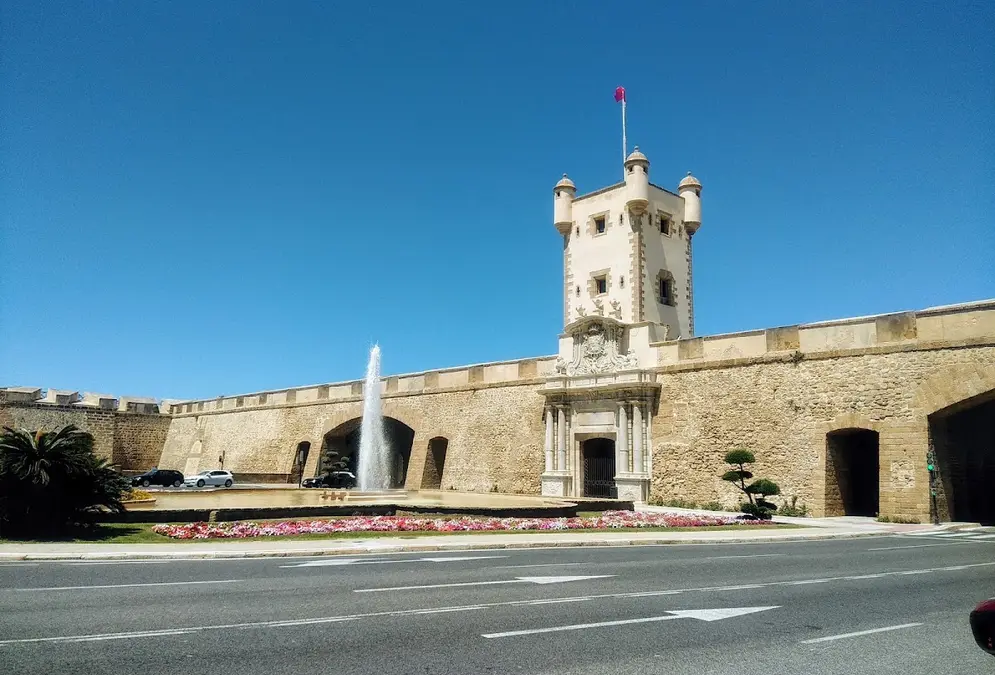
Don't miss · Monument
Puerta de Tierra
Cádiz's surviving 18th-century land gate, with Cayón's 1756 marble portal, a walkable upper level and the Puppet and Lithography museums. C…
The Battle of Barrosa and the lifting of the blockade in August 1812
In February and March 1811, an allied Anglo-Iberian relief force sailed out to break the French blockade from the rear.[12] On 5 March 1811, Marshal Victor attacked the expedition near Barrosa (also known in Spain as the Battle of Chiclana).[12][13] During the fighting, the French 8th Line Regiment lost half its men, and Ensign Keogh of the British 87th Regiment died seizing its Imperial Eagle before Sergeant Patrick Masterson secured the standard, the first French eagle won by British troops in the Peninsular War.[13]
Recommended tours
Tours are selected for quality, not commission. We earn a small fee if you book, at no extra cost to you.
Barrosa cost the French nearly 2,380 casualties, against roughly 1,240 troops under British command (including Portuguese and German soldiers) and between 300 and 400 Spanish losses.[18] Yet the siege held.
What finally ended the blockade was the wider war across Iberia. By 1812, the French had more than 350,000 soldiers in the peninsula, yet 200,000 of them were tied down guarding supply lines rather than fighting at the front.[19] When Allied victories in the summer campaign threatened to cut the French off in Andalusia and southern Spain, the besiegers had to pull out.[20] After firing a final overnight barrage before 24 August 1812, French gunners deliberately overcharged and detonated most of their 600 guns, leaving behind 30 gunboats and vast military stores for the Coalition.[1][6]
Deep dive · Article
12 Interesting Facts About Cádiz: History, Towers & Secrets
Discover 12 interesting facts about Cádiz, from Phoenician houses buried under a puppet theatre and two marble sarcophagi to 134 watchtower…
Where to trace the 1810–1812 siege in Cádiz today
You can walk the surviving inner defences and museum rooms of the 1810–1812 siege in a single morning inside the old town, then follow the isthmus south toward San Fernando for the outer forts. Begin at the Museo de las Cortes de Cádiz, whose full title, the Museo Iconográfico e Histórico de las Cortes y Sitio de Cádiz, pairs the parliament with the military blockade.[21]
Inside, the museum's Sala del Asedio focuses directly on how Cádiz and the Isla de León defended themselves against Napoleon's armies.[22] Its centrepiece is a three-dimensional relief model of the walled city built at roughly 1:250 scale between July 1777 and March 1779 by artisans working under the military engineer Alfonso Ximénez for King Charles III.[23] Study that mahogany plan first, then cross Plaza de San Juan de Dios toward the landward wall along these four stops:
- Museo de las Cortes de Cádiz: displays 18th- and 19th-century weapons, medals, flags, constitutional editions, portraits of the Junta Superior de Defensa y Gobierno, and uniform models of the Voluntarios Distinguidos militia corps.[21][22]
- Oratorio de San Felipe Neri: stands immediately next door to the museum and preserves the church chamber where the Cortes met from 24 February 1811 to 25 September 1813.[4]
- Puerta de Tierra: climb the central vault, turret and upper rampart walkway, reopened to visitors since 2013, to look down the isthmus between the San Roque and Santa Elena bastions.[8][24]
- Fuerte de La Cortadura: stop along the southern beach highway to see the surviving Santa María, San José and Infante Don Carlos bastions and the commemorative plaque on the western wall of San José.[10][11]