couplesphotographers
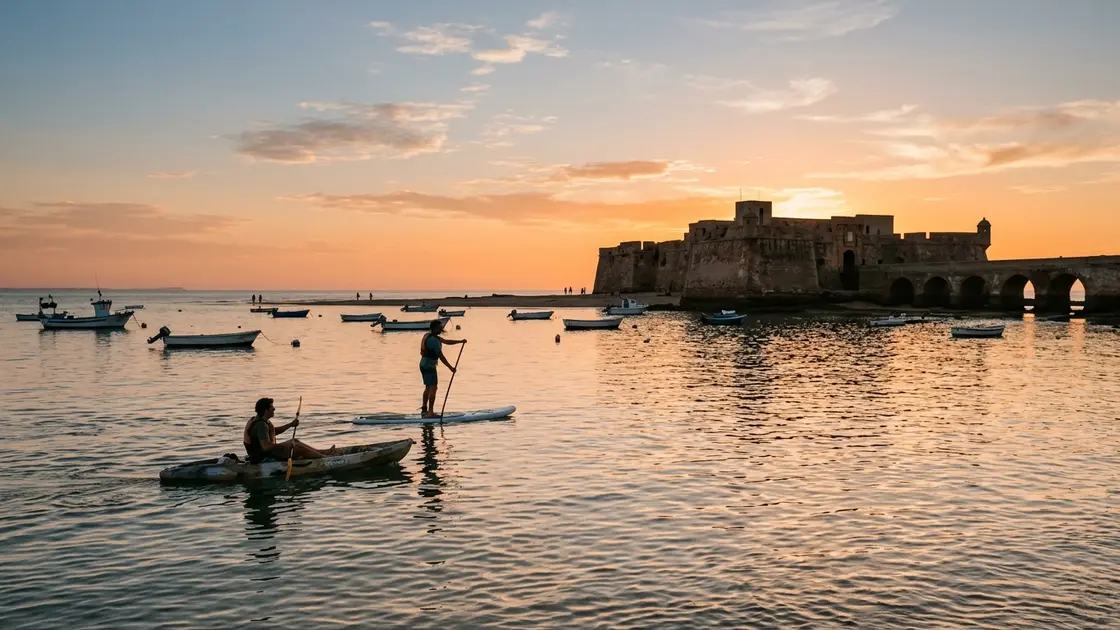
Panoramic view of the La Caleta neighbourhood
Neighbourhood of Cádiz

La Caleta: Cádiz's Bay Between Two Castles

A calm urban bay closed by two castles, on the seascape of Phoenician Gadir, with the old town at your back and the Atlantic ahead

La Caleta is Cádiz's small walled-city beach, closed at each end by a castle. Where Phoenician Gadir met the sea, with practical beach and walking notes.

Portrait of Marta Jiménez Cossío
Written by

Outdoors and travel writer covering Cádiz beaches, coastal walks and day trips.

Updated

Is La Caleta your base?

Suits couples, photographers and anyone who wants a swim and a walk without leaving the old town. Expect an urban beach, not a wild one.

  • Couples
  • Photographers
  • Nature
  • History
  • 1.5 km from the Cádiz Cathedral
  • No hotels on our list yet
  • 2 monuments
  • Open the map

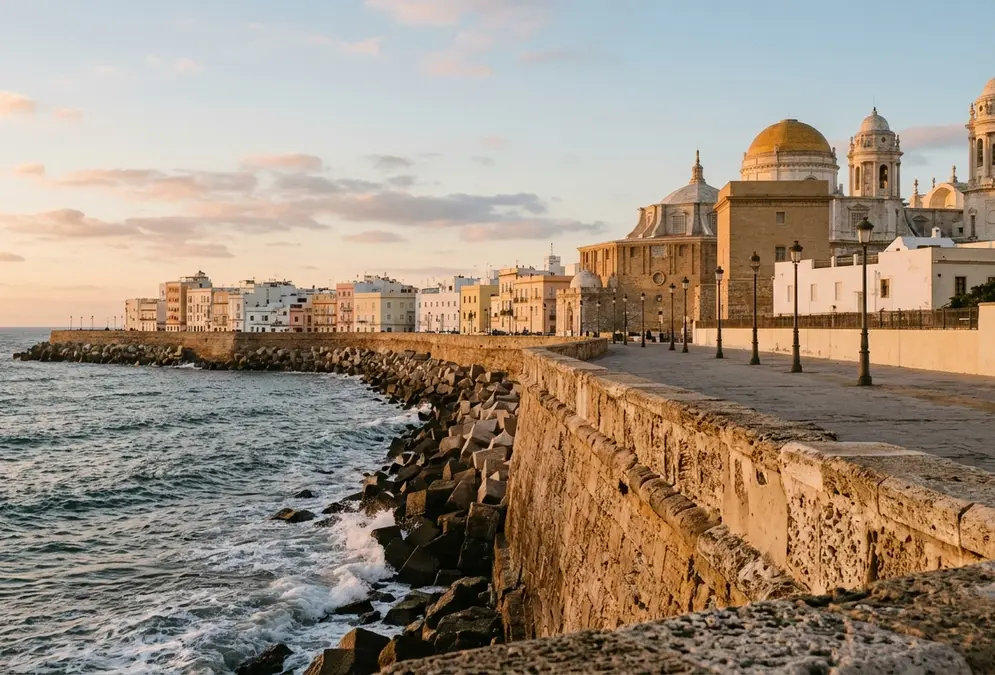
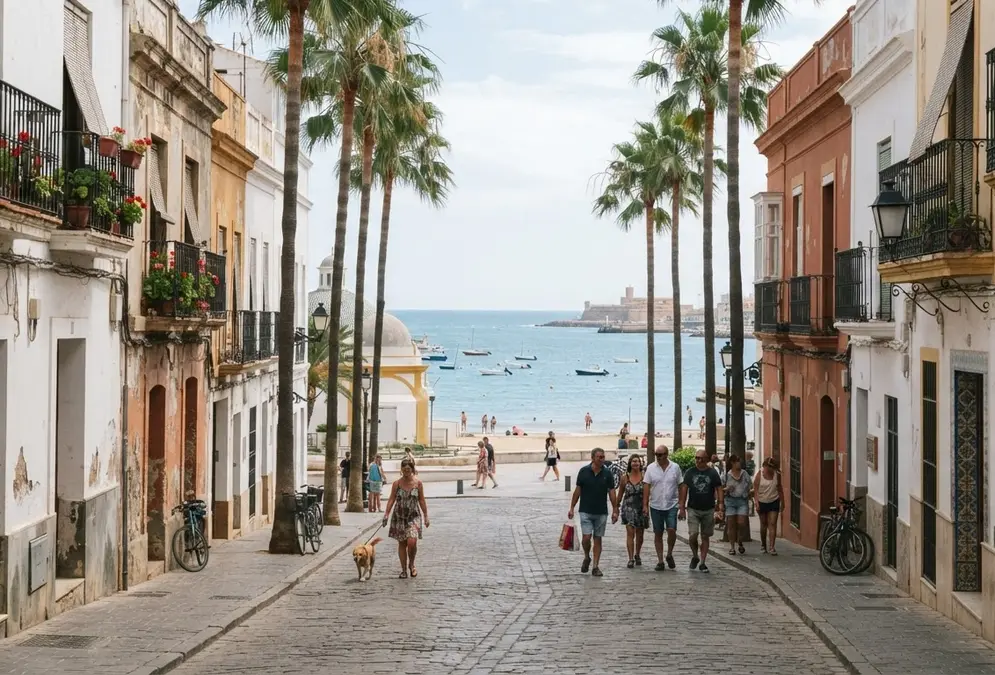
La Caleta is the small bay on the north-west edge of Cádiz's old town, and it is closed at each end by a fortress: the Castillo de Santa Catalina on one side and the Castillo de San Sebastián on the other. Between them lies about 450 metres of golden sand, a palm-lined promenade and water that stays calm enough for an easy swim. It is an urban beach in the full sense: the apartment blocks and the old walls are right behind you, and the Atlantic is right in front.

The bay is far older than the postcard. Archaeologists treat La Caleta as a key location for understanding how the Phoenician city of Gadir related to the ocean, with a channel that linked the settlement to open water. Two sanctuaries stood at the western end of the rocky promontories around that channel, and many offerings have been recovered from the area. Nearby, the Yacimiento de Gadir presents almost 3,000 years of history of the first Phoenician traders to settle here. None of this is obvious from the sand, which is part of the appeal: you swim over a very old harbour without a plaque in sight.

The two castles

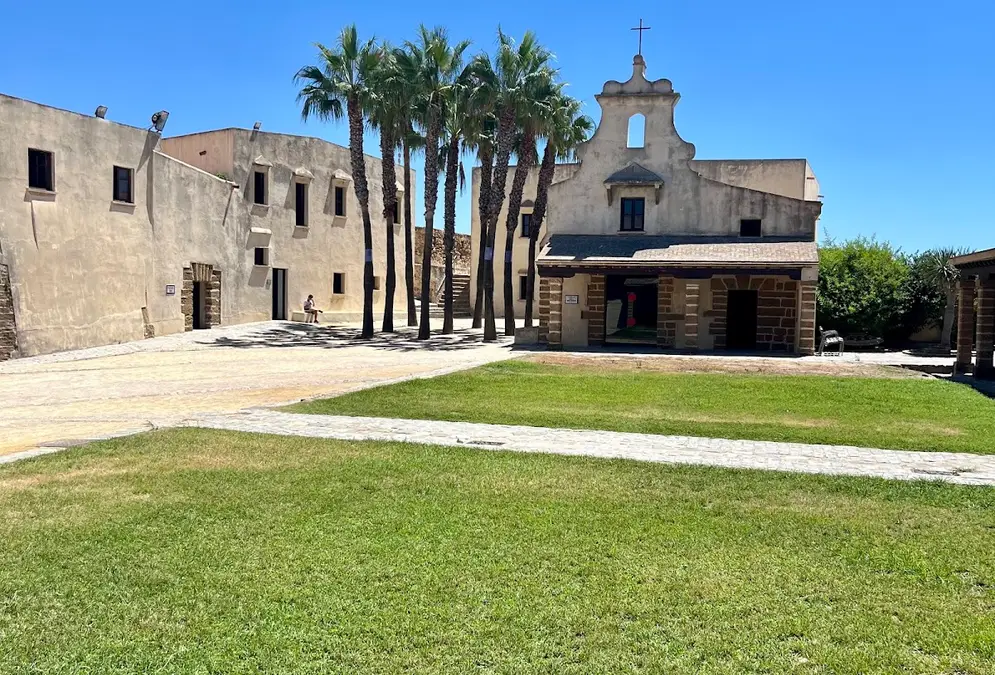
Santa Catalina came after disaster. Following the Anglo-Dutch assault of 1596, Philip II ordered the engineer Cristóbal de Rojas to build a defensive fortress, by royal decree of 25 October 1597. The chapel and sacristy were added in 1693, the fort later served as a military prison, and the Ministry of Defence stopped using it in 1991. It now works as a cultural venue; a 2024 press report described three rotating exhibition rooms and a permanent display over the sea.

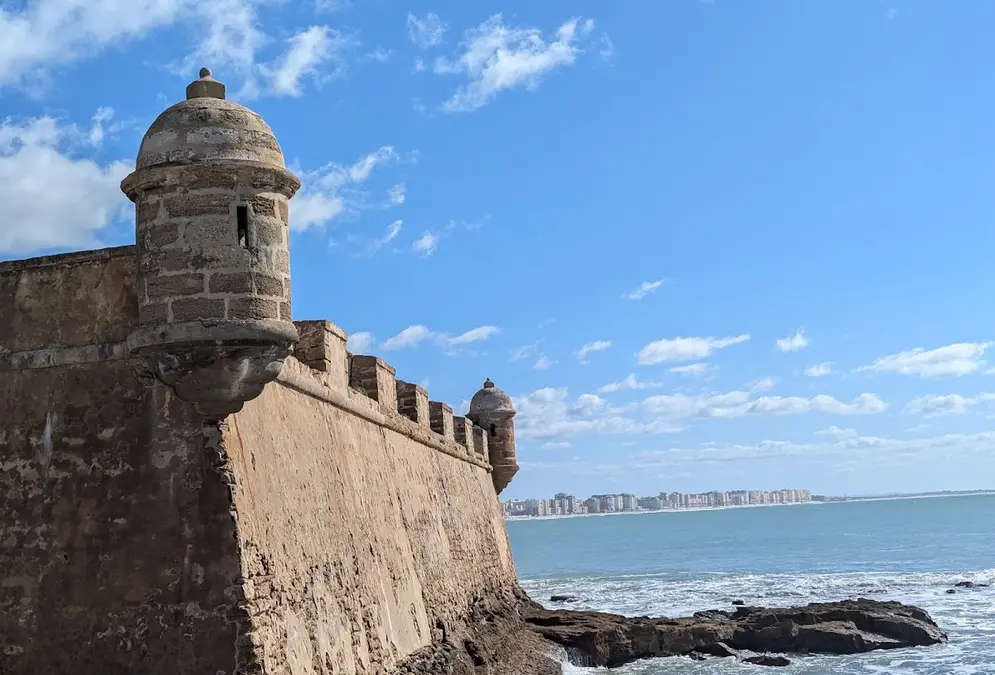
San Sebastián sits on a small islet at the far end of the beach. Work on the castle began in 1706, and a causeway linking the islet to the city was built in 1860. Walking out along it is one of the best short walks in Cádiz, with the surf on both sides and the old town shrinking behind you. The city council lists it open every day from 9:00 until sunset, free, subject to the weather, and lists Santa Catalina at 11:00 to 19:00 in winter and 11:00 to 19:30 in summer.

The Balneario de la Palma

Halfway along the beach stands the Balneario de la Palma, a bathing house built in reinforced concrete on pillars that rest on the sand, in a Modernist style with regionalist touches. Sources disagree on whether it opened in 1926 or 1927, so "the late 1920s" is the safe way to put it. It was declared a Bien de Interés Cultural by royal decree dated 28 December 1990, and a 1997 Junta de Andalucía order assigned it to the Centro de Arqueología Subacuática of the IAPH. Treat it as a landmark to photograph, not a place to order a drink.

Using the beach

The beach has showers, toilets, sunbed and parasol hire, and chiringuitos, and it is easy to reach on foot or by car. It sits within a few minutes of El Pópulo and Santa María, so it slots easily into a day of sightseeing: a morning in the old town, then the sand or the castle walls.
See

Two fortresses define the bay: Santa Catalina, a late 16th-century response to the English and Dutch assault, and San Sebastián on its islet at the far end.

Do

Swimming, walking the causeway and visiting Santa Catalina's exhibitions are the main things to do.

Insider tips

  • Come for the evening light The bay opens onto the Atlantic and the castles catch the low light, so late afternoon and evening reward a slow walk along the promenade more than the middle of the day.
  • Frame the Balneario from the sand The concrete pillars of the Balneario de la Palma make a strong foreground, with San Sebastián's islet behind. Walk toward the causeway for a clean line of sight.
  • Know the castle hours The council lists Santa Catalina at 11:00 to 19:00 in winter and 11:00 to 19:30 in summer, and San Sebastián from 9:00 until sunset. Both can change with events or the weather, so check the council's tourism page on the day.

Frequently asked questions

Is La Caleta the best beach in Cádiz?

It is the most characterful beach inside the old town, framed by two castles and a historic bathing house. It is a compact urban beach of about 450 metres with golden sand, so judge it by setting and convenience rather than by space.

Is entry to Santa Catalina Castle free?

Yes, except for events announced in advance. The city council lists daily hours of 11:00 to 19:00 from 1 October to 31 March and 11:00 to 19:30 from 1 April to 30 September, with summer hours subject to concerts and other programmed activities.

Can you walk to San Sebastián Castle?

Yes, a causeway built in 1860 links the islet to the city, and walking out along it is the usual way to see the castle. The city council lists the castle as open every day from 9:00 until sunset, with free entry, and says the hours can change with the weather.

How long is La Caleta beach?

Turespaña lists the beach at 450 metres, with golden sand. Some press coverage gives a longer figure, so treat 450 metres as the official one.

Where does La Caleta get its name?

In Spanish a caleta is a small cove, which describes the bay exactly: a small sheltered inlet closed at both ends by fortifications.

Cádiz Cathedral Extramuros 1 El Pópulo 2 Santa María 3 Barrio del Mentidero 4 La Caleta 5
Where La Caleta sits. Not to scale. Open in Google Maps

Further reading

Sources

17 references Show
  1. Spain.info — Caleta cadiz (opens in a new tab)

    “Tiene dos fortificaciones: el Castillo de Santa Catalina y el Castillo de San Sebastián cada uno en un extremo que cierran la cala.”

  2. repositorio.iaph.es (opens in a new tab)

    “The area of La Caleta, north-west of Cadiz, is a key location for studies of the relationship between the Phoenician city of Gadir and the ocean.”

  3. repositorio.iaph.es (opens in a new tab)

    “two sanctuaries were located at the western end of the rocky promontories that surround the channel, and many items identified as offerings have been found.”

  4. Spain.info — Yacimiento gadir (opens in a new tab)

    “Un lugar con casi 3.000 años de historia para conocer a los primeros comerciantes que habitaron Cádiz, en Andalucía.”

  5. Wikipedia — Castillo de Santa Catalina (Cádiz) (opens in a new tab)

    “Tras el asalto anglo-neerlandés de 1596, Felipe II ordenó a Cristóbal de Rojas la construcción de una fortaleza defensiva a través de una Real Cédula el 25 de octubre de 1597.”

  6. Wikipedia — Castillo de Santa Catalina (Cádiz) (opens in a new tab)

    “Durante el reinado de Carlos II se construyó la capilla y la sacristía en 1693.”

  7. eldebate.com (opens in a new tab)

    “El rincón gaditano alberga tres salas con exposiciones que van renovándose y un espacio que acoge una muestra permanente ubicada sobre el mar.”

  8. Wikipedia — Castillo de San Sebastián (Cádiz) (opens in a new tab)

    “El castillo de San Sebastián es una fortaleza de la ciudad española de Cádiz, ubicada en uno de los extremos de la playa de La Caleta, sobre un pequeño islote.”

  9. Wikipedia — Castillo de San Sebastián (Cádiz) (opens in a new tab)

    “En 1860 se construyó un malecón que sirve de nexo entre la isla y el casco urbano de la ciudad.”

  10. dialnet.unirioja.es (opens in a new tab)

    “Está construido en hormigón armado a base de pilares que se asientan sobre la arena”

  11. boe.es (opens in a new tab)

    “Dado en Madrid a 28 de diciembre de 1990.”

  12. dialnet.unirioja.es (opens in a new tab)

    “el uso y la gestión del inmueble Balneario de la Palma y el Real de la ciudad de Cádiz”

  13. Turismo de Cádiz — Castillo de san sebastian (opens in a new tab)

    “Lunes a domingo de 9h hasta la puesta de sol.”

  14. Turismo de Cádiz — Castillo de santa catalina (opens in a new tab)

    “Horario de verano: del 1 de abril al 30 de septiembre de lunes a domingo de 11 a 19.30 horas”

  15. Turismo de Cádiz — Castillo de santa catalina (opens in a new tab)

    “Horario de invierno: del 1 de octubre al 31 de marzo, de lunes a domingo de 11 a 19 horas.”