
Why the Battle of Trafalgar Began and Ended in Cádiz
In October 1805, 33 ships left Cádiz for the Battle of Trafalgar. Trace Admiral Gravina's warning, the 23 October counter-sortie, and the city's hospitals.
Historian specialising in Cádiz's ancient, colonial and constitutional heritage.
Published
At 06:00 on 19 October 1805, the Franco-Spanish Combined Fleet of 33 ships of the line began weighing anchor from Cádiz Bay against the advice of Spanish officers who watched the barometers drop.[2][3] Two days later, Horatio Nelson's 27 British warships intercepted that column off Cape Trafalgar, and only 11 battered allied vessels managed to struggle back to Cádiz before a week-long Atlantic gale turned the coast into a graveyard of hulls.[1][4] For Cádiz, the campaign did not close at sunset on 21 October: it continued through a daring counter-sortie, coastal rescues, and hospital wards that treated wounded sailors from all three navies.
Ships of the line at sea
33 vs 27
18 French and 15 Spanish ships from Cádiz fought 27 British ships under Nelson[1]
Struggled back to Cádiz
11 ships
Out of 33 allied warships after firing ended at 5:30 pm on 21 October 1805[4]
Spanish battle fatalities
1,022 dead
Plus 1,383 wounded; half the dead served on three heavily attacked ships[18]
In this article
Jump to a section
⌄
Why the Combined Fleet sailed from Cádiz against Spanish advice
When French Admiral Pierre-Charles Villeneuve pressed the war council in Cádiz to put to sea in October 1805, Spanish Admiral Federico Gravina argued that the fleet should remain inside the bay and let winter storms punish the blockading British squadron as severely as a pitched naval battle.[9] Cosme Damián Churruca, commanding the San Juan Nepomuceno, and General Baltasar Hidalgo de Cisneros, aboard the giant Santísima Trinidad, backed him strongly.[3] Both men pointed to unfavourable winds and a storm building along the coast.[3]
The Spanish ships anchored in the bay already carried structural handicaps before a single hawser was cast off. Between 1802 and 1804, a yellow fever epidemic had killed nearly 60,000 people across Spain, hitting coastal towns hardest and draining the pool of skilled mariners available in Cádiz.[10] Many hulls were elderly veterans of the eighteenth-century Atlantic trade: the Spanish ships averaged nearly 25 years of service, led by the oldest warship in the battle, the 57-year-old Rayo.[11]
Personal pride overrode maritime meteorology. Once Villeneuve received a dispatch from Paris stating that Admiral Rosily was travelling to Cádiz to relieve him of command, he ordered the Combined Fleet out of the roadstead at 06:00 on 19 October 1805, hoping to slip into the Mediterranean without giving battle.[2][12][13] Getting 33 ships of the line clear of the harbour took two full days, which gave Horatio Nelson, stationed 40 miles offshore after leaving Portsmouth on HMS Victory on 14 September, all the warning he needed.[1][13][14]
Timeline
14 Sep 1805
Nelson leaves Portsmouth
Horatio Nelson sails aboard HMS Victory and stations the British fleet 40 miles off Cádiz.[14]
19 Oct 1805
Combined Fleet weighs anchor
At 06:00, 18 French and 15 Spanish ships begin a two-day exit from the roadstead of Cádiz.[1][2][13]
21 Oct 1805
Battle off Cape Trafalgar
Nelson attacks in two columns; firing ceases at 5:30 pm with 17 allied ships captured and 11 retreating to Cádiz.[4][15]
23 Oct 1805
Cosmao-Kerjulien counter-sortie
Allied warships sail out of Cádiz on a northwest wind and recapture the Spanish ships Santa Ana and Neptuno.[5][16]
27 Oct 1805
Rescue of the Rayo
Fisherman Félix Odero takes two bou boats and twenty sailors to rescue survivors from the wrecked Rayo.[6]
21 October 1805: five hours off Cape Trafalgar
Nelson caught the Franco-Spanish fleet off Cape Trafalgar on 21 October 1805, forming his 27 ships into two columns that sailed straight into the allied line of 33 vessels in a head-on assault.[1][13][15] Firing lasted until 5:30 pm.[4] Britain won a decisive victory, though Nelson was shot aboard HMS Victory at 1:15 pm and died at 4:30 pm, an hour before the guns fell silent.[4][17]
Among the Spanish crews, half of all fatalities occurred on just three heavily attacked ships: the four-decker Santísima Trinidad lost nearly 300 dead, the San Juan Nepomuceno nearly 200, and the Santa Ana almost 100.[18] Three Spanish ship commanders died in action: Cosme Damián Churruca (alongside his second-in-command Francisco de Moyua) on the San Juan Nepomuceno, Dionisio Alcalá Galiano on the Bahama, and Francisco Alcedo y Bustamante on the Montañés.[19]
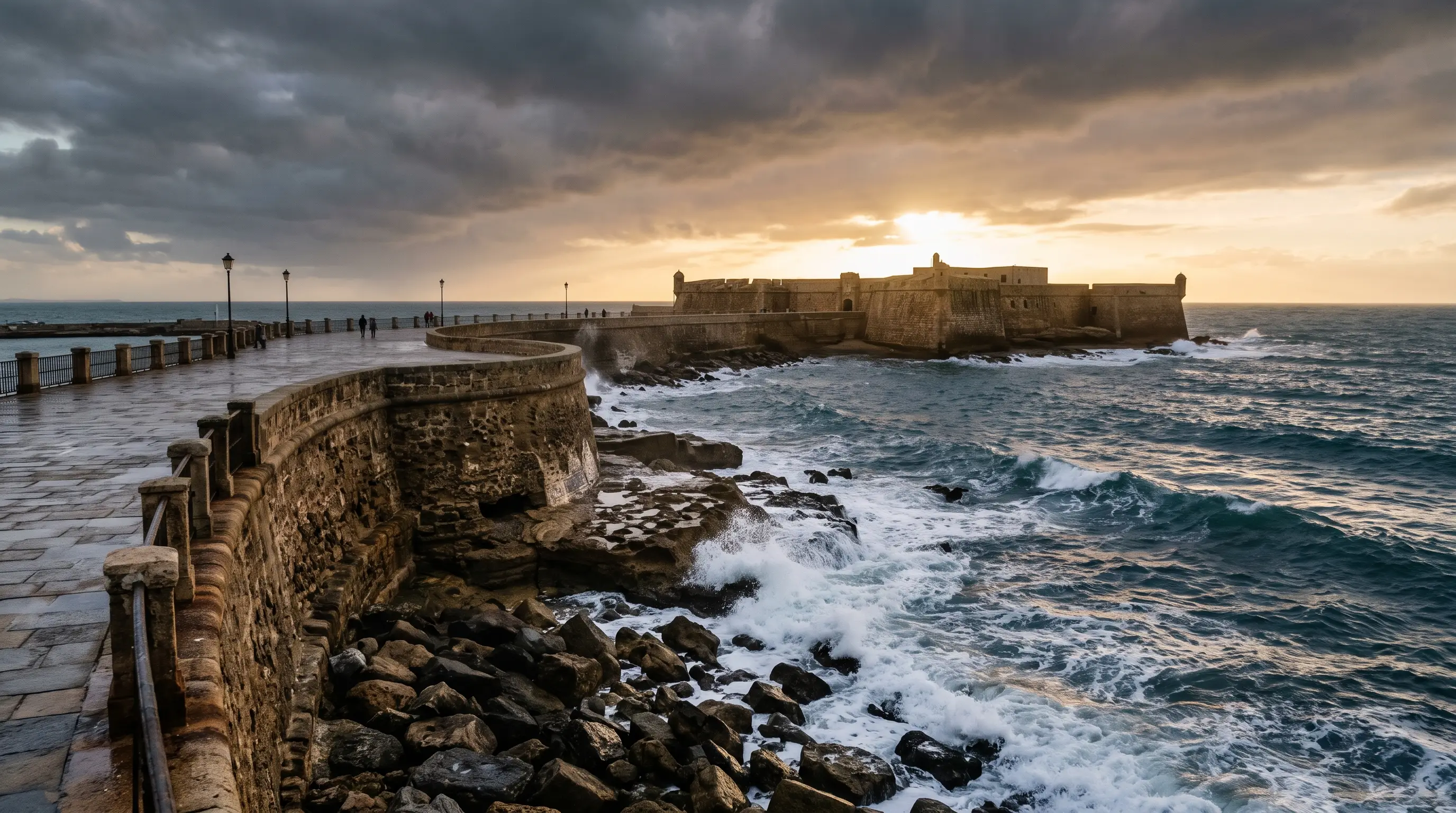
By 5:30 pm, 17 allied ships had been captured, another was a burning wreck, four escaped seaward only to be taken a few weeks later, and 11 battered warships struggled back to Cádiz.[4] Stand at the Baluarte de la Candelaria at the mouth of the bay and you look straight across the channel where those splintered hulls limped home.
The 23 October counter-sortie and the wreck of the Rayo
Most English-language accounts stop on the evening of 21 October, yet on the morning of 23 October 1805 a northwest wind prompted Captain Julien Cosmao-Kerjulien, the senior officer in port, to leave his anchorage in the bay or outer harbour entrance of Cádiz with several allied warships to recapture prizes from the British.[5] The 57-year-old Spanish ship Rayo sailed in the sortie.[6][11]
Cosmao-Kerjulien's squadron retook two Spanish ships of the line: the Santa Ana, whose crew rebelled against their captors when they saw the allied squadron approaching, and the Spanish Neptuno.[16] Only the Santa Ana made it safely back into port.[16]
The storm the Spanish commanders had warned of now broke with full force.[3][16] Both the Neptuno and the old Rayo ended up wrecking along the coast, though the Neptuno's crew was saved.[6][16] On 27 October 1805, six days after the battle, local fisherman Félix Odero took two bou boats and twenty sailors to the stretch of coast where the Rayo had wrecked to rescue the survivors.[6]
How Cádiz's hospitals cared for wounded sailors from all three navies
Casualties across the three fleets were staggering, and Cádiz bore the immediate medical burden as survivors and shipwrecked crews came ashore.[7][18][20] The losses broke down across the three navies as follows:
Recommended tours
Tours are selected for quality, not commission. We earn a small fee if you book, at no extra cost to you.
French fleet: 2,218 dead and 1,155 wounded, including nearly 500 killed when the Achille blew up and almost another 500 on the Redoutable.[20]
Spanish fleet: 1,022 dead and 1,383 wounded, half of the dead coming from the Santísima Trinidad, San Juan Nepomuceno and Santa Ana.[18]
British fleet: 449 dead and 1,241 wounded in the battle, plus prisoners and wounded treated ashore after Gibraltar's medical capacity collapsed.[7][20]
With Gibraltar overwhelmed, the Marquis of Solano, Governor of Andalusia, took a remarkable step. He offered the hospitals of Cádiz to the British for both their troops and their prisoners.[7] The British were deeply impressed when Spanish soldiers in Cádiz gave up their own beds to British prisoners.[7] Five years later, Britain and Spain fought side by side during the 1810–1812 French siege of Cádiz.
Where to trace the Trafalgar story in Cádiz and San Fernando today
Although the battle was fought off the southern headland of Cape Trafalgar, the decisions before 19 October and the human aftermath unfolded around the Bay of Cádiz.[1][2][7] You can follow the physical trail of the October 1805 campaign across Cádiz and nearby San Fernando at four stops:
Panteón de Marinos Ilustres (San Fernando): Across the bay from Cádiz, the main facade of this naval pantheon is guarded by two old cannons resting on their carriages from the batteries of the Santísima Trinidad, the eighteenth-century flagship of the Spanish Royal Navy that lost nearly 300 men in the battle.[8][18]
Museo de las Cortes de Cádiz (Calle Santa Inés): Visit the Museo de las Cortes de Cádiz in the old town to see the 1777–1779 mahogany scale model of the walled city and harbour as it stood when the Combined Fleet anchored in the bay.
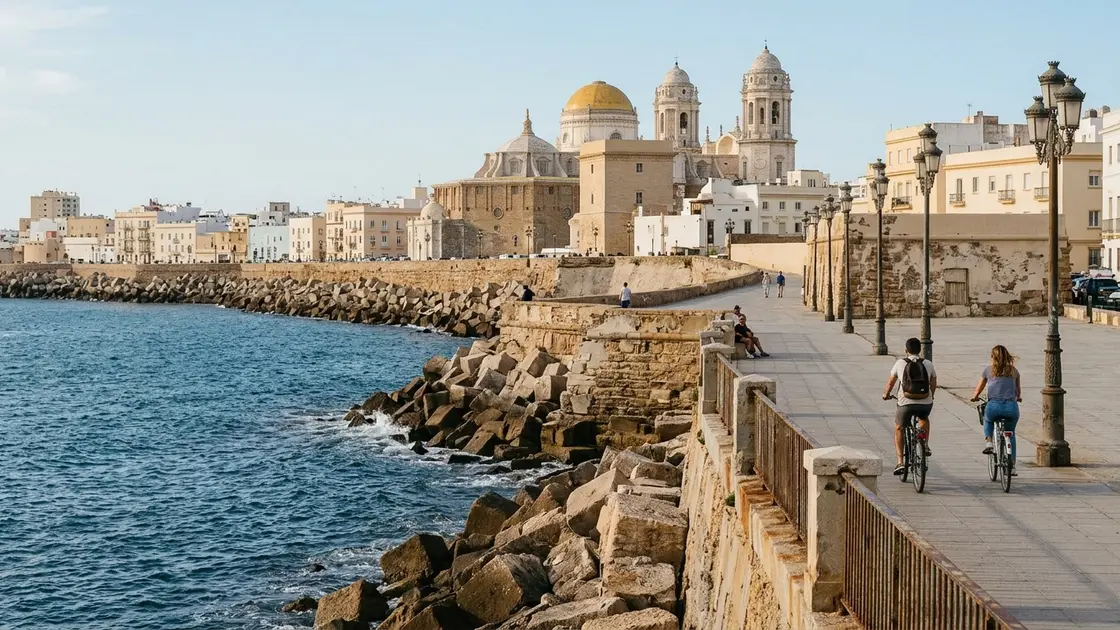
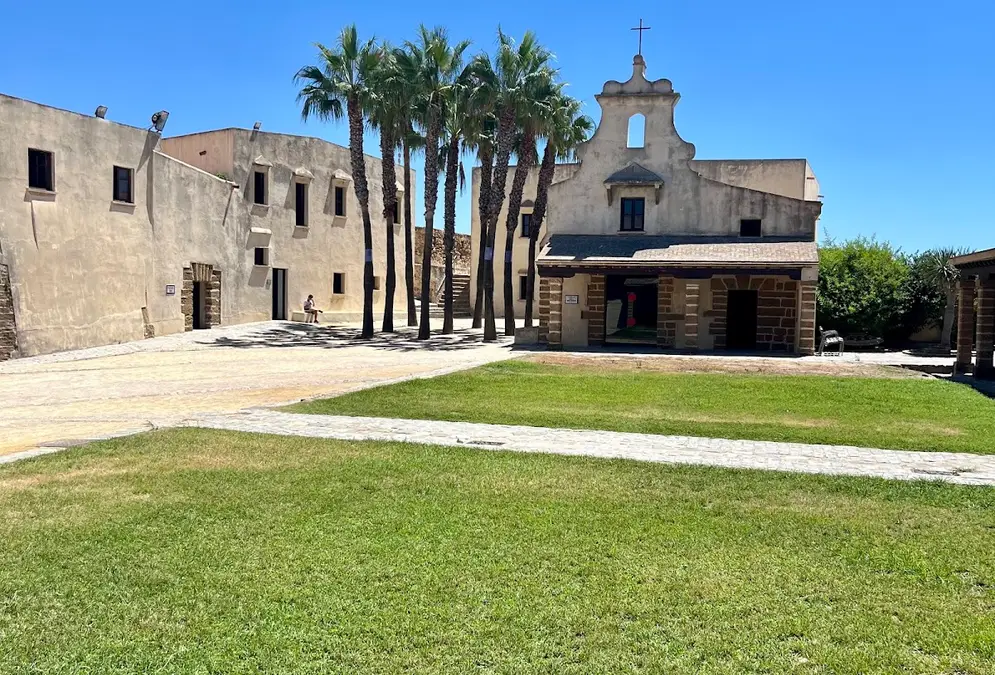
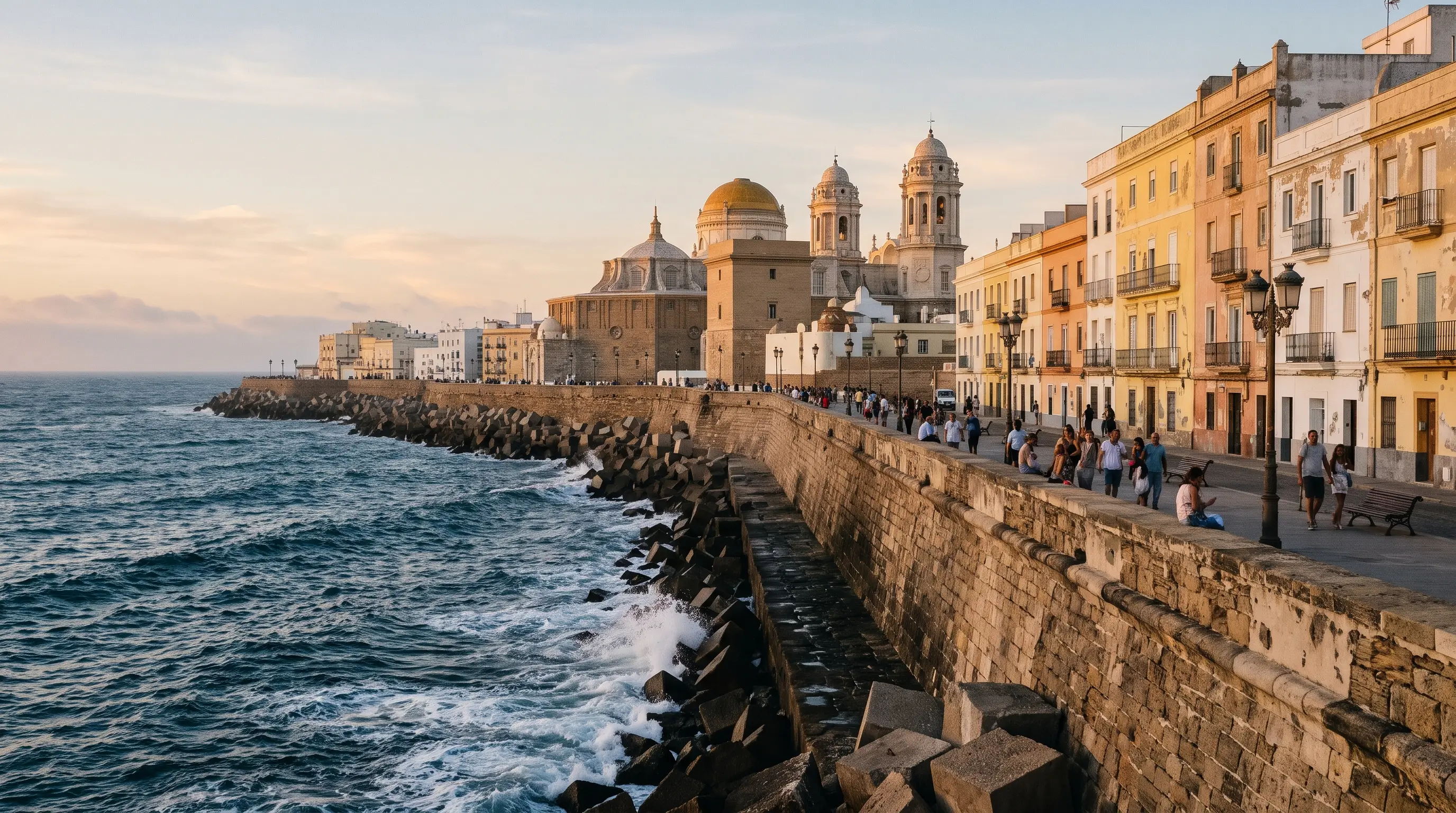
Seafront bastions and watchtowers: Walk from Castillo de Santa Catalina beside La Viña along the bay walls to look over the roadstead where the 33 warships weighed anchor at 06:00 on 19 October 1805 and where 11 surviving hulls returned on 21 October.[1][2][4]
Cape Trafalgar (Los Caños de Meca, Barbate): Drive south down the Atlantic coast of Cádiz province to the headland where Nelson's two columns intercepted Villeneuve's line on 21 October 1805.[13][15]
What role did the battle of trafalgar cadiz port play in October 1805?
Cádiz was the home anchorage from which the 33-ship Franco-Spanish Combined Fleet sailed on 19–20 October 1805 and the refuge to which 11 surviving warships returned on 21 October.[1][4][13] After the battle, Cádiz launched the 23 October counter-sortie under Captain Julien Cosmao-Kerjulien and opened its hospitals to wounded sailors from the Spanish, French and British fleets.[5][7]
Why did Admiral Villeneuve leave Cádiz Bay against Spanish warnings?
Spanish commanders Federico Gravina, Cosme Damián Churruca and Baltasar Hidalgo de Cisneros urged Villeneuve to stay inside Cádiz Bay because the wind was unfavourable, a storm was approaching, and winter weather would damage the blockading British fleet without risking battle.[3][9] Villeneuve ordered the fleet out after learning from Paris that Admiral Rosily was travelling to Cádiz to replace him.[12]
How many ships and men fought at the Battle of Trafalgar?
Thirty-three Franco-Spanish ships of the line (18 French and 15 Spanish) fought 27 British ships under Admiral Horatio Nelson.[1] Casualties totalled 2,218 French dead and 1,155 wounded, 1,022 Spanish dead and 1,383 wounded, and 449 British dead and 1,241 wounded.[18][20]
What happened during the 23 October 1805 counter-sortie from Cádiz?
Taking advantage of a northwest wind on the morning of 23 October, French Captain Julien Cosmao-Kerjulien led several allied warships out of Cádiz to recapture prizes from the British.[5] They retook the Spanish ships Santa Ana and Neptuno, though only the Santa Ana reached Cádiz harbour safely before the gale wrecked the Neptuno and the 57-year-old Rayo.[6][11][16]
How did Cádiz treat British wounded and prisoners after the post-Trafalgar storm?
When Gibraltar's medical facilities were overwhelmed after the battle, the Marquis of Solano (Governor of Andalusia) offered Cádiz's hospitals to the British for their troops and prisoners, and Spanish soldiers gave up their own beds to British prisoners.[7]
Where can you see cannons from the flagship Santísima Trinidad near Cádiz?
At the Panteón de Marinos Ilustres in nearby San Fernando, the main facade is flanked by two old cannons resting on their carriages from the batteries of the Santísima Trinidad, the eighteenth-century flagship of the Spanish Royal Navy that lost nearly 300 dead at Trafalgar.[8][18]
“En Cádiz, Federico Gravina y otros altos mandos españoles, como Cosme de Churruca (al mando del navío San Juan Nepomuceno) o el general Hidalgo de Cisneros (al mando del enorme Santísima Trinidad), mantuvieron fuertes discusiones con los mandos franceses. Estos optaban por salir de Cádiz, mientras que los españoles recomendaban esperar, por ser el viento desfavorable y aproximarse un temporal en la zona.”
“When firing finally ceased at 5.30pm, 17 enemy ships had been captured and another was a blazing wreck. Four managed to escape but were captured a few weeks later, and 11 managed to struggle back to Cadiz.”
“El viento del noroeste, que sopló la mañana del 23, fue el acicate para dejar su anclaje en la bahía o la entrada del puerto externo de Cádiz, del Capitán Cosmao-Kerjulien, el oficial de mayor antigüedad en el puerto, de varios navíos aliados para intentar represar más navíos capturados”
“El 27 de octubre de 1805, seis días después de la batalla, Félix Odero se presentó con dos barcas bou, con veinte marineros, a la zona de la costa donde había naufragado el navío Rayo”
“A los ingleses les impresionó cosas como que los propios soldados españoles cedieran sus camas a los prisioneros británicos y que el Marqués de Solano (Gobernador de Andalucía) ofreciera los hospitales de Cádiz a los ingleses para sus tropas y sus prisioneros ante el colapso de Gibraltar.”
“La fachada principal del panteón está escoltada por sendos antiguos cañones, acostados sobre su cureña, pertenecientes a las baterías del navío de línea Santísima Trinidad, nave almiranta de la Real Armada en el siglo XVIII.”
“Desde el principio Villeneuve pretende que la escuadra salga de Cádiz, pero Gravina sensatamente le replica que lo mejor es quedarse en Cádiz y esperar a que el invierno haga el bloqueo de los británicos tan duro en pérdidas como un combate naval.”
“En el otro lado opuesto se encuentra la flota española, con casi 25 años de media de edad, y con el navío más antiguo de la batalla: el Rayo de 57 años.”
“Pero Villeneuve recibe una misiva de Paris en el que se le informa de su sustitución por el Almirante Rosilly, que se dirige a Cádiz a tomar el relevo.”
“On October 19–20 his fleet slipped out of Cádiz, hoping to get into the Mediterranean Sea without giving battle. Nelson caught him off Cape Trafalgar on October 21.”
“Outnumbered 33 to 27 the British Fleet, under the command of Admiral Lord Nelson, formed two columns and sailed straight at the French in a risky head-on assault.”
“represaron al Santa Ana, cuya tripulación se había rebelado al ver que la escuadrilla se acercaba, y el Neptuno (el español), aunque sólo el Santa Ana llegaría a puerto ya que el Neptuno terminaría naufragando, aunque la tripulación fue salvada.”
“En la batalla de Trafalgar los españoles tuvieron 1.022 muertos y 1.383 heridos, siendo la mitad de estos muertos correspondientes a las tripulaciones de sólo tres navíos, que fueron salvajemente atacados: el Santísima Trinidad con cerca de 300 muertos, el San Juan Nepomuceno con cerca de 200 y el Santa Ana con casi 100 muertos.”
“De los comandantes de los buques españoles murieron en combate Cosme Damián Churruca de Elorza, comandante del San Juan Nepomuceno, que luchó hasta la extenuación (al igual que su segundo al mando don Francisco de Moyua); el comandante del Bahama Dionisio de Alcalá Galiano y el comandante del Montañés Francisco Alcedo y Bustamante”
“Los franceses sufrieron la mayor parte de las bajas aliadas con 2.218 muertos y 1.155 heridos de los que cerca de 500 muertos resultaron de la voladura del Achilles y casi otros 500 del Redoutable.”