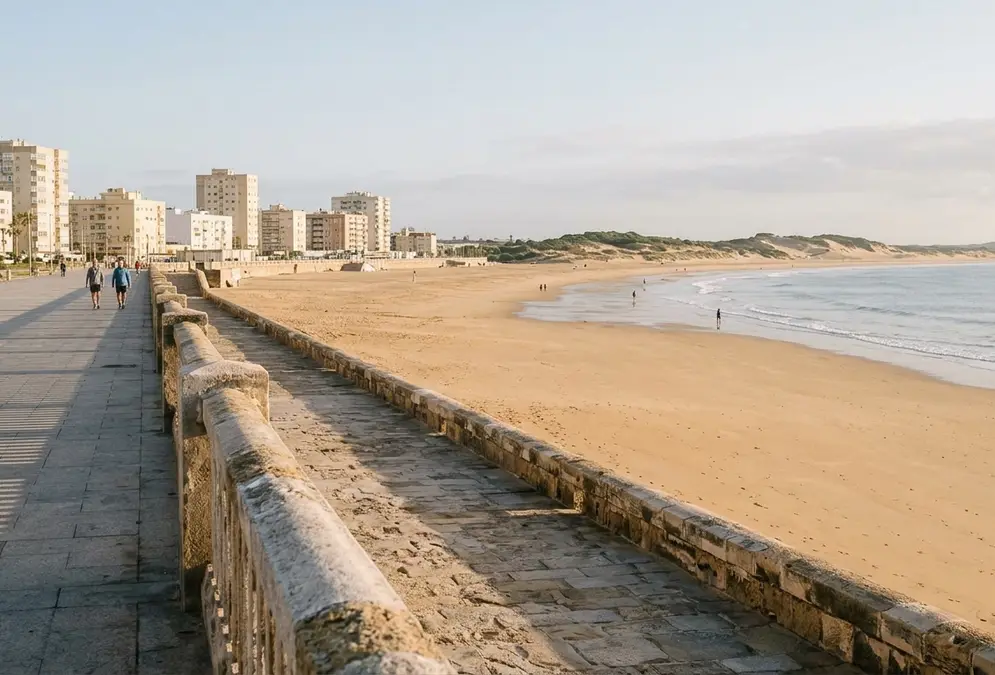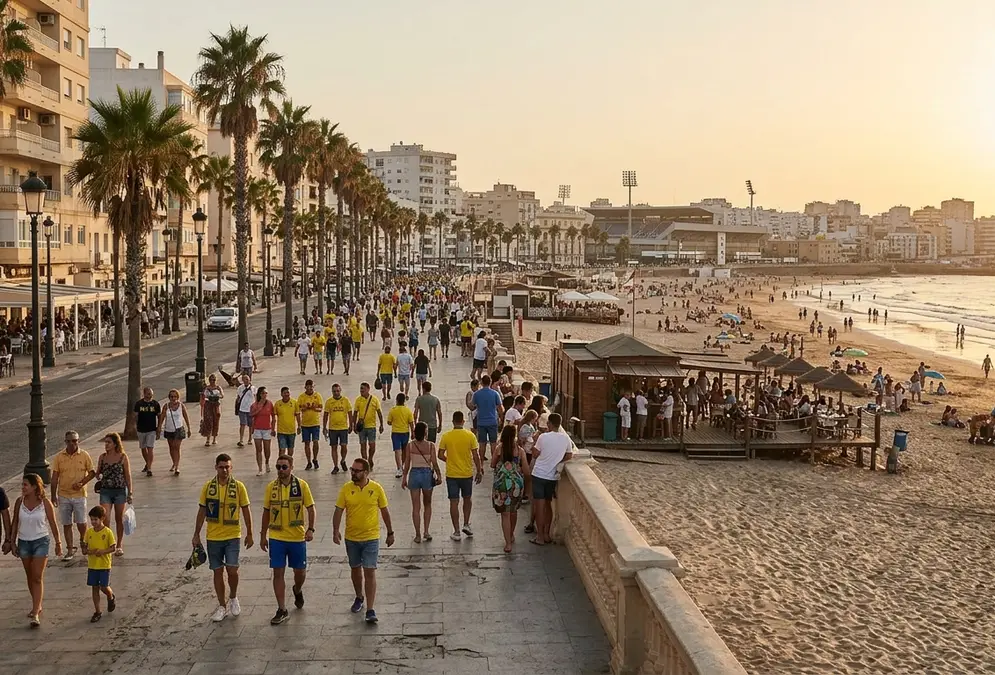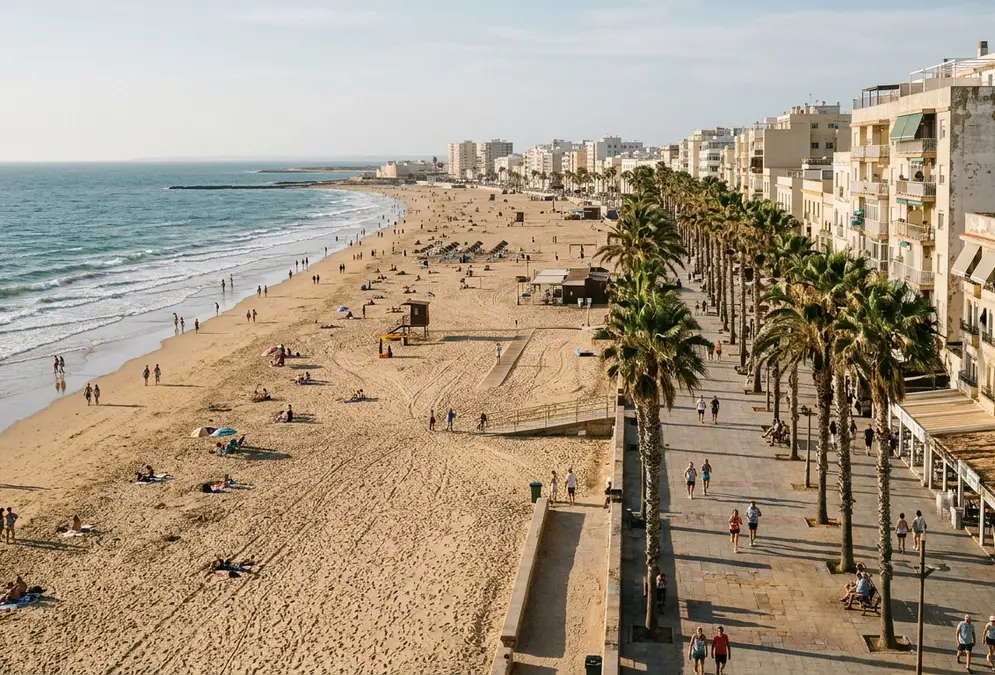

Extramuros is what gaditanos call the modern city outside the 18th-century land wall, and you will hear it called Puerta Tierra just as often. Cross the Puerta de Tierra and the narrow grid of the Casco Antiguo (which locals call simply Cádiz or Cádiz Cádiz) gives way to 20th-century apartment blocks, wide avenues and the open Atlantic coast. For a visitor, this is the beach half of the peninsula: three continuous stretches of sand running south from the walls to the isthmus that joins Cádiz to San Fernando, backed by a long seafront promenade and the city's main beachfront hotels.
If you want medieval lanes, watchtowers and standing-room tabancos, stay inside the walls in El Pópulo or La Viña. Come to Extramuros when you want a three-kilometre walk by the surf, a morning run on hard sand, a seafront lunch on the Paseo Marítimo or a base where you can step straight from your hotel lift onto the beach.
The threshold at Puerta de Tierra
Everything in Extramuros starts at the rampart that cuts across the neck of the peninsula. The central marble portal of the Puerta de Tierra was designed by José Barnola in 1756 under the architect Torcuato Cayón. As the city grew out into Extramuros during the first half of the 20th century, the council considered demolishing the whole fortification to let road traffic into the centre; instead, the architect Antonio Sánchez Esteve partially filled the moats and opened two vehicular arches through the curtain wall.
Those arches mark the psychological border of the city. Inside the rampart's vaulted casemates sits the Museo del Títere, while stepping inside the gate leads toward Plaza de San Juan de Dios; step through to the seaward side and the wall drops away to the first of the three beaches.
Three beaches in one continuous line
The Atlantic edge of Extramuros reads as one long shoreline, but each section has its own character and crowd:
| Beach | Length & width | Character & best use |
|---|---|---|
| Playa de Santa María del Mar (Playita de las Mujeres) | 630 to 850 m long | Framed by two rock breakwaters from Puerta de Tierra to Plaza Asdrúbal; popular for morning runs, evening strolls and surf waves |
| Playa de la Victoria | 2,800 m long, 185 m wide | Main urban beach with Blue Flag, Q Calidad and ISO 14001 certifications, backed by the Paseo Marítimo restaurant strip |
| Playa de Cortadura | 3,900 m long, 60 m wide | Longest beach in the municipality; starts beside the 17th- to 19th-century Cortadura ramparts and opens into a natural reserve of active dunes |
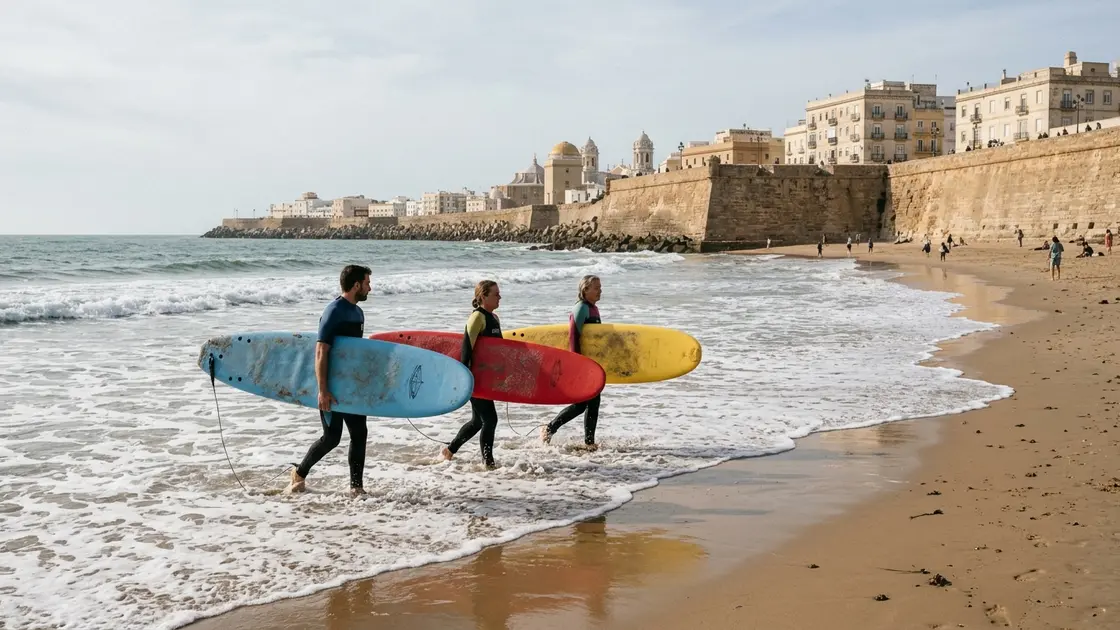
Playa de Santa María del Mar, known locally as the Playita de las Mujeres, is the northernmost cove. Enclosed between two rock breakwaters (espigones), it is the top choice near the walls for a first-hour morning run or a walk before bed.
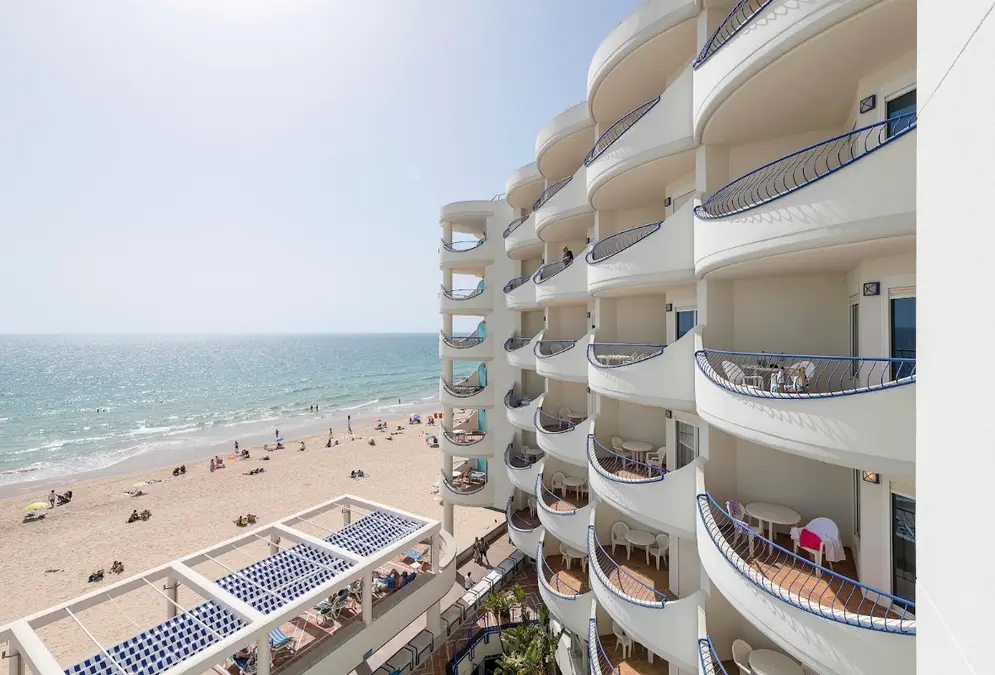
South of Plaza Asdrúbal, the coast opens into Playa de la Victoria, which runs for 2,800 metres with 185 metres of width down to the start of Cortadura. It carries the Q for Tourist Quality (Q Calidad), the European Blue Flag and UNE-EN-ISO 14001 environmental certification. Between 1907 and 1931 bathers gathered here at the historic Balneario Reina Victoria, whose footprint was later taken by the modern Hotel Playa Victoria.
At the southern end of the built-up strip, Playa de Cortadura begins beside the 17th- to 19th-century Cortadura fortifications, the outer limit of the city's historic defences. Running along the sandy margin of the CA-33 road toward San Fernando where the Bay of Cádiz separates from the Atlantic, it is the municipality's longest beach at 3,900 metres and preserves a natural reserve of active dunes with coastal flora and fauna. You can follow the whole sequence on foot using the Playa Victoria to Cortadura Promenade Walk.
Eating, staying and the inner bay
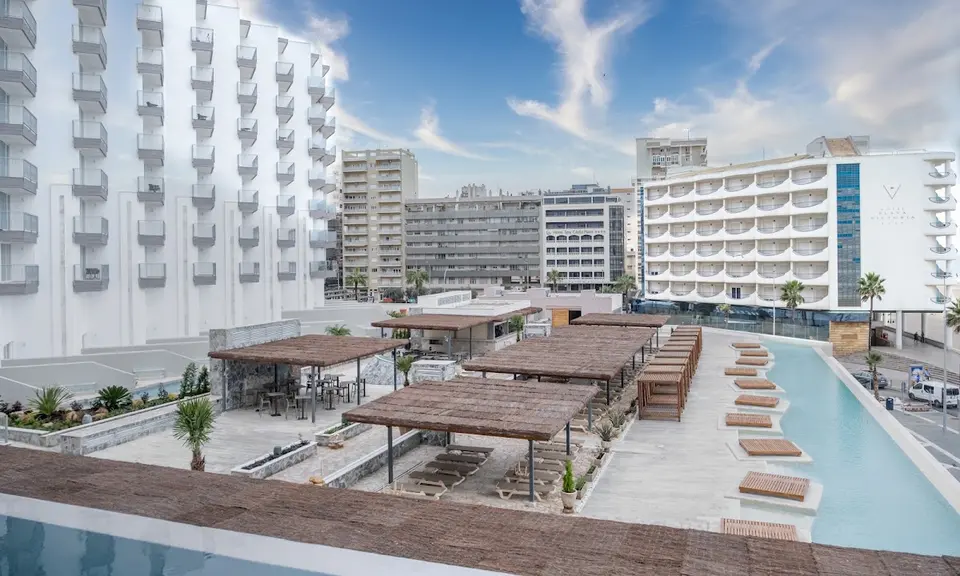
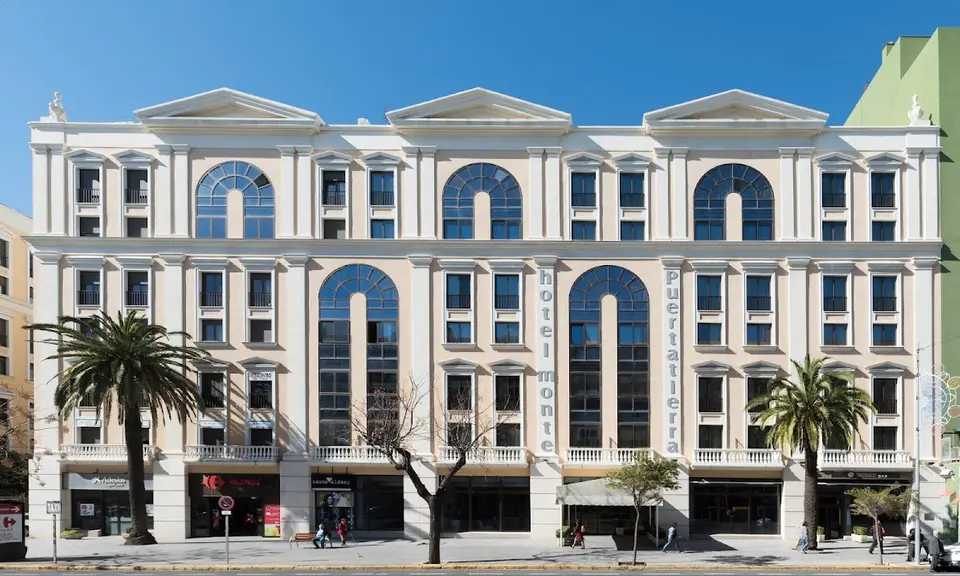
Behind Playa de la Victoria runs a wide Paseo Marítimo that continues south as Avenida Amílcar Barca, lined with restaurants and terraces serving local gaditano cooking. Around Plaza Ingeniero La Cierva and the Hotel Playa Victoria, the beachfront blocks form the main hospitality hub outside the old town.
Extramuros also has a sheltered eastern shore facing the inner Bay of Cádiz. In this Avenida zone, the municipality operates the Complejo Deportivo Puerto Elcano, a large recreational and nautical sports complex away from the Atlantic swell.
To link the beaches with the old town, follow these practical stops:
- Start outside the Puerta de Tierra ramparts to see how Sánchez Esteve's 20th-century arches opened the modern city.
- Drop down to Playa de Santa María del Mar between its two breakwaters for an early run or a look back toward the old town.
- Follow the Paseo Marítimo along Playa de la Victoria for a seafront lunch.
- Keep walking past the Cortadura ramparts to reach the active sand dunes along the CA-33 isthmus.