Liberal Cádiz: From the 1812 Constitution to Salvochea's Canton
Liberal Cádiz history in five steps: the 1812 Cortes, Mendizábal's 1836 convent sale, the 1868 revolution and Salvochea's 1873 canton, and where to see it.
Historian specialising in Cádiz's ancient, colonial and constitutional heritage.
Updated ·Published
Cádiz withstood Napoleon's armies, and while it was under siege its Cortes drafted the 1812 Constitution that Spanish liberals would fight over for decades.[1] The city then gave Spain the minister who sold off the convents in 1836,[2][3] and in 1868 and 1873 it staged two uprisings of its own. The last ended on 4 August 1873, when General Pavía's troops entered the city and dissolved the Cantón de Cádiz.[4]
Deputies in the Cortes
702
Sat between 1810 and 1814, first on the Isla de León, then in Cádiz[5]
La Gloriosa begins
18 Sep 1868
Admiral Topete's navy pronounced in Cádiz, opening the revolution[6]
Cantón de Cádiz proclaimed
19 Jul 1873
Dissolved on 4 August when General Pavía's troops entered the city[4]
In this article
Jump to a section
⌄
The Cortes that wrote La Pepa inside a besieged port
The Cortes opened on 24 September 1810 in a theatre on the Isla de León, now the town of San Fernando. From 24 February 1811 to 25 September 1813 the deputies sat in the Oratorio de San Felipe Neri in Cádiz itself.[7] Napoleon's troops were besieging the city and the island, and the Museo de las Cortes still keeps a room devoted to that defence.[1]
On 19 March 1812, the feast of San José and so nicknamed La Pepa, the Cortes approved a text that moved sovereignty from the king to the nation.[8][9] It was liberal on that point and conservative on another: it declared Spain a confessional state and recognised no freedom of religion.[10] That gap between a sovereign nation and a single permitted faith is the one the rest of this story keeps reopening.
6 years
Absolutist rule that followed the 1814 repeal of the Constitution, until the 1820 revolution forced Ferdinand VII to swear it again.
Ferdinand VII repealed the Constitution on his return in 1814 and ruled as an absolutist for six years.[11] It came back with the 1820 revolution, and briefly again in 1836.[12] The Cortes's own history says its influence on national politics lasted directly until 1868, the year Cádiz rose again.[13]
Mendizábal and the 1836 sale of the convents
Juan Álvarez Mendizábal was born in Cádiz in 1790 and led the Spanish government from September 1835 to May 1836.[2][14] His name is tied to the decree of 19 February 1836, issued while he was in office, which put up for sale the property of the suppressed religious communities.[3] That measure is the desamortización (disentailment) of Spanish history books.
Its effects were physical. The sale of church property led to the disappearance of numerous convents and monasteries and to the remodelling of cities, and it helped form an enterprising middle class.[15] In Cádiz the clearest survivor is a museum. The provincial fine-arts collection that became the Museo de Cádiz began in 1835 with works from the Mendizábal disentailment and with paintings from convents whose friars had been turned out.[16]
The family tree matters here. Mendizábal was a cousin of the mother of Fermín Salvochea, the man who in 1873 would push the same anticlerical programme much further.[17] The first of them did it by decree from Madrid; the second did it from the town hall of his own city.
1868: the fleet in the bay and the barricades
The 1868 revolution began off Cádiz. On 18 September Admiral Juan Bautista Topete's navy pronounced against Isabella II, with the generals Prim and Serrano on the army side, and the movement became known as La Gloriosa.[6] The squadron fired 21 cannon shots at the harbour mouth to declare itself in revolt.[18]
The young Fermín Salvochea had made his name two years earlier, through a plan to free political prisoners held in the casemates of the Castillo de San Sebastián and the Castillo de Santa Catalina.[19] The plot shows what those fortresses were then: sea defences that doubled as prisons for opponents of the crown.
The new order did not satisfy Cádiz's republicans. In December 1868, when Madrid ordered the Voluntarios de la Libertad disarmed, militiamen occupied the town hall and began to raise barricades.[20] Accounts of the toll differ widely, from 56 dead and 195 wounded to more than 300 dead.[21] Salvochea, an officer of the volunteers, defended the city until 11 December, when he surrendered and was locked up in the Castillo de Santa Catalina.[22]
He did not stay there long. Elected to the Constituent Cortes from his cell in January 1869, he was amnestied by the new parliament the following month, although the provisional government never recognised the election.[23]
1873: Salvochea's mayoralty and the Cantón de Cádiz
Under the First Republic Salvochea became mayor of Cádiz in March 1873, and later chaired the administrative committee of its canton. As mayor he expropriated church property and banned religious teaching.[24] His council demolished the Candelaria convent after evicting its 21 Augustinian nuns, and it seized the convent of Santa Catalina, sending its paintings, several by Murillo, to the provincial museum.[25][26]
The Cantón de Cádiz was proclaimed on 19 July 1873, in support of the federal movement that had started in Cartagena. It was dissolved on 4 August, when General Pavía's troops entered the city.[4]
Salvochea was tried by a court martial in Seville in early 1874 and sentenced to life. He served his first years in the Peñón de La Gomera and then in Ceuta.[27] Years later he wrote that after what happened in 1873 "nothing should be expected from politics".[28]
Timeline
24 Sep 1810
Cortes open on the Isla de León
The first session is held in the Teatro Cómico, today in San Fernando.
19 Mar 1812
Constitution approved
The Cortes approve La Pepa on the feast of San José.
1814
Constitution repealed
Ferdinand VII restores absolutist rule on his return.
19 Feb 1836
Convent property put up for sale
The decree associated with Mendizábal declares it for sale.
18 Sep 1868
La Gloriosa
Topete's navy pronounces in Cádiz.
Dec 1868
Barricades in Cádiz
Volunteers resist disarmament; Salvochea surrenders on 11 December.
19 Jul 1873
Cantón de Cádiz proclaimed
Salvochea's committee backs the federal movement begun in Cartagena.
4 Aug 1873
Canton dissolved
General Pavía's troops enter the city.
Where to see liberal Cádiz today
The liberal story is easy to follow on foot, because its main stages sit within a few streets of each other in the old town. The best starting point is the Museo de las Cortes de Cádiz, which stands beside the Oratorio where the deputies sat.[29] These are the places that carry the story:
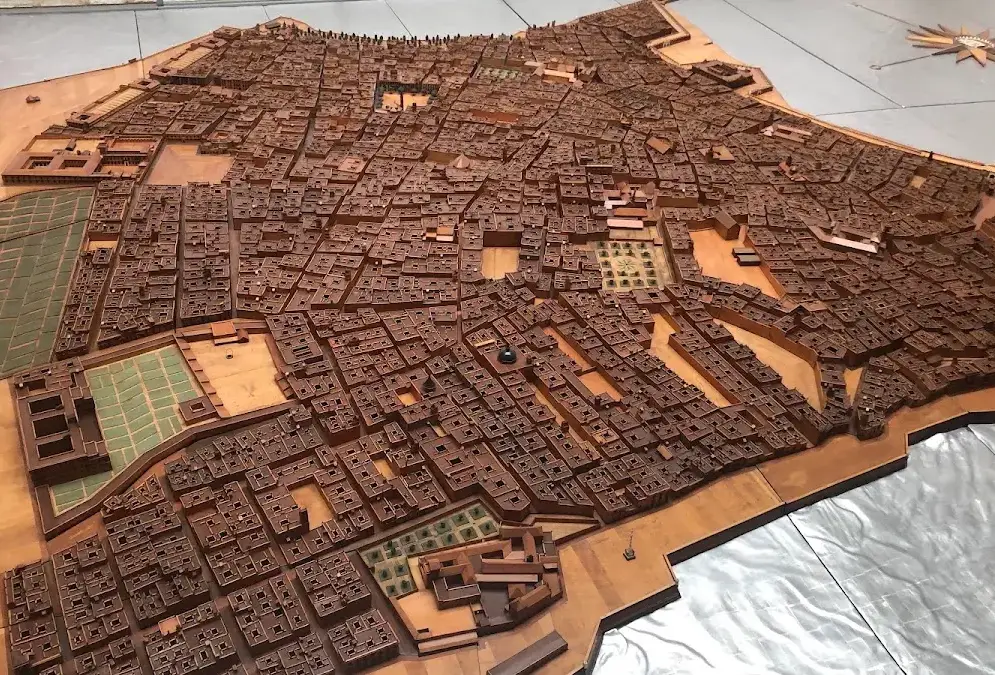
Museo de las Cortes: a relief model of the city made between July 1777 and March 1779, and a huge canvas by Salvador Viniegra of the 1812 promulgation, painted from 1910 to 1912.[30][31]
Cathedral, Sala 1812: the table of Bishop Acisclo Vera, said to be where the first copy of the Constitution was signed on 19 March 1812.[32]
Museo de Cádiz: the collection that grew out of the 1835 disentailment, with its fine-arts rooms.[16]
Castillo de San Sebastián and Castillo de Santa Catalina: the two fortresses of La Caleta behind Salvochea's 1866 plot and his imprisonment in December 1868.
Recommended tours
Tours are selected for quality, not commission. We earn a small fee if you book, at no extra cost to you.
A sensible order follows the chronology. Begin at the Museo de las Cortes and the Oratorio de San Felipe Neri beside it for 1812, move on to the Museo de Cádiz for the convent paintings of 1835 and 1873, then finish at the two castles of La Caleta, where the 1866 plot and the 1868 imprisonment belong.
Salvochea has his own trail. A marked route of eight points runs through the city, and a plaque outside the former Cárcel Real, now the Casa de Iberoamérica, marks one of the places where he was held.[33][34] His grave is in the Cementerio de San José.[35] Check opening times at each site before you plan a day around them.
Frequently asked questions
Why is Cádiz central to Spain's liberal history?
The Cortes that approved the 1812 Constitution sat there from 1811 to 1813, in the Oratorio de San Felipe Neri. The city then kept producing liberal and radical leaders, from Mendizábal to Salvochea.
Why is the 1812 Constitution called La Pepa?
It was approved on 19 March 1812, the feast of San José, which gave it its nickname.
Where did the Cortes of Cádiz meet?
The first session was held on the Isla de León, now San Fernando, and the deputies then sat in the Oratorio de San Felipe Neri in Cádiz. The Museo de las Cortes is next door.
Who was Fermín Salvochea?
He was a Cádiz-born republican and later anarchist who became mayor in March 1873 and led the city's canton. He was sentenced to life in 1874, escaped in 1884 after refusing a pardon, returned to Cádiz after a later amnesty, and died there in 1907.
What was the Cantón de Cádiz?
It was a short-lived federal-republican revolt proclaimed on 19 July 1873 and dissolved on 4 August, when General Pavía's troops entered the city.
Did Mendizábal's disentailment change Cádiz?
It emptied convents across Spain, and the Museo de Cádiz traces its own beginnings to works that came from it in 1835.
Which Cádiz castles are linked to Salvochea?
The Castillo de San Sebastián and the Castillo de Santa Catalina were the target of his 1866 plan to free political prisoners, and he was locked up in Santa Catalina in December 1868.
Can I visit the Museo de las Cortes for free?
The city council lists free entry, but hours change, so check its page before you go.
“centrada en la defensa de Cádiz y de la Isla de León -hoy ciudad de San Fernando- de las tropas napoleónicas durante la Guerra de la Independencia española”
“Declaración en venta de todos los bienes que hubieran pertenecido a las suprimidas corporaciones religiosas, con las excepciones que estableció el Decreto que lo acordó de 19 de febrero de 1836.”
“El 19 de julio de 1873 se proclama el Cantón de Cádiz y se aboga por la República Federal, secundando el movimiento cantonal español iniciado en Cartagena. El 4 de agosto del mismo año se disuelve tras entrar en la ciudad las tropas del General Pavía.”
“La revolución conocida como La Gloriosa comienza el 18 de septiembre de 1868 con el pronunciamiento de la Armada en Cádiz, al mando del almirante Juan Bautista Topete y del ejército dirigido por los generales Juan Prim y Francisco Serrano.”
“Las Cortes Generales y extraordinarias celebran su primera sesión el 24 de septiembre de 1810 en el Teatro Cómico de la Real Isla de León (actual ciudad de San Fernando, Cádiz). A partir del 24 de febrero de 1811y hasta el 25 de septiembre de 1813 se reúnen en el Oratorio de San Felipe Neri, en la ciudad de Cádiz.”
“Esta desamortización fue el origen, entre otros aspectos, de la desaparición de numerosos conventos y monasterios, de la remodelación de las ciudades y de la formación de una burguesía emprendedora.”
“El origen del actual Museo de Cádiz se inicia con la colección de fondos de Bellas Artes procedentes de la Desamortización de Mendizábal en 1835 y de depósitos de la Academia de Bellas Artes de la ciudad de una serie de pinturas procedentes de diversos conventos exclaustrados.”
“En 1866 Salvochea adquirió relevancia por su participación en un proyecto de liberación de presos políticos encerrados en las casamatas gaditanas de San Sebastián y Santa Catalina.”
“Estando en la cárcel en enero de 1869 fue elegido diputado a Cortes Constituyentes sin que el Gobierno provisional reconociera esta elección. En febrero de 1869 el nuevo Parlamento le concedió la amnistía.”
“el 23 de marzo de 1873 fue nombrado alcalde de Cádiz. Durante su mandato, entre otras actuaciones, expropió bienes eclesiásticos de la ciudad y prohibió la enseñanza religiosa. Posteriormente, sin dejar de lado el fusil, fue elegido presidente del Comité administrativo del revolucionario Cantón de Cádiz.”
“Cuando el Cantón capituló ante las tropas gubernamentales del general Pavía, Salvochea fue detenido y juzgado a comienzos de 1874 por un Consejo de Guerra en Sevilla. Fue condenado a cadena perpetua. Permaneció dos años encarcelado en el Peñón de La Gomera y, a partir de 1876, en Ceuta”
“la mesa del Obispo Acisclo Vera (cuyo retrato también es posible contemplar) en la que se afirma fue firmado el primer ejemplar de la Constitución el 19 de marzo de 1812”