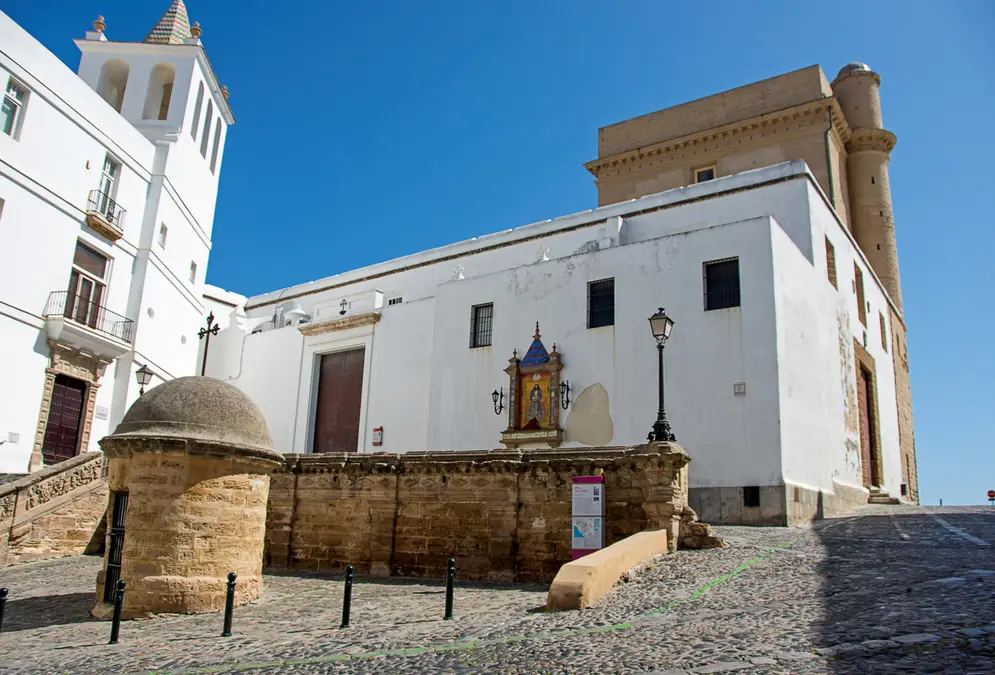
Medieval stone archway and cobbled passage inside Barrio del Pópulo, the oldest walled quarter of Cádiz
Qādis Heritage · Atlantic Seafood

Muslim Traveler & Halal Guide to Cádiz: Qādis Heritage, Seafood & Prayer Info

How to trace Cádiz’s medieval Islamic and Eastern Mediterranean footprint from the gates of El Pópulo to the 10th-century mosque walls across the bay, plus practical advice on dining well in an Atlantic seafood capital.

Portrait of Andrés Villanueva Rondón
Written by

Food and drink writer covering Cádiz tapas, seafood and the sherry triangle.

Published

Founded in 1100 BC by Phoenician sailors as Gadir and later ruled by Carthaginians, Romans, Byzantines (522) and Visigoths (620), Cádiz entered the Islamic world in 711 when the troops of Tariq ibn Ziyad took the peninsula after the Battle of Guadalete. Where Latin speakers had called the city Gades, Arabic geographers and chroniclers knew it as Qādis (قادس).

For Muslim travellers today, Cádiz offers a different rhythm from inland Andalusia. While formal halal meat certification is rarer here than in bigger capitals, the local table is built overwhelmingly around the Atlantic Ocean: wild bluefin tuna, bay prawns, grilled squid, and paper cones of fried fish cooked in vegetable oil. Pair that pescatarian abundance with the medieval arches of El Pópulo and a 25-minute ferry ride to the former mosque of Castillo de San Marcos, and Cádiz becomes one of the easiest coastal cities in southern Spain to navigate without pork or alcohol pitfalls.

On this page

Jump to a section
Quick Reference

Cádiz for Muslim Travellers at a Glance

A practical overview of heritage landmarks, seafood dining, market hours, and bay transport connections.

Category Key Spot or Dish in Cádiz Practical Detail What to Know
Medieval Qādis Core Barrio del Pópulo & Old Cathedral Arco del Pópulo, Arco de la Rosa, Arco de los Blancos Preserves the three gates of the medieval walled city
10th-Century Mosque Site Castillo de San Marcos (El Puerto) 25 mins via Line B-042 catamaran (€2.90 / €1.18 card) 10th to 14th-century fortress built over an Arab mosque
Neo-Mudéjar & Levantine Gran Teatro Falla & Plaza Fragela Built 1885–1910; Hospital de Mujeres begun 1736 Red-brick horseshoe arches; Syrian merchant legacy
Signature Seafood Atún de almadraba & Pescaíto frito Freiduría Las Flores I (11:30–16:30, 19:30–23:30) Sold by the 250g cuarto; ask for a dedicated fish fryer
Self-Catering Market Mercado Central de Abastos Mon–Sat 09:00–15:00 on Plaza de la Libertad Fresh bay fish, Coucheiro tuna stall (since 1961), produce
Mosques & Jumu'ah Bay Area Mosques El Puerto de Santa María & Jerez de la Frontera Local Muslims commute via B-042 ferry or Cercanías C-1
History & Architecture

Islamic & Eastern Mediterranean Heritage: From Qādis to El Pópulo

The Three Medieval Gates of Barrio del Pópulo

To trace the footprint of medieval Qādis, begin in El Pópulo, the oldest quarter of the capital between Plaza de San Juan de Dios and the Cathedral. This compact walled enclosure preserves the three original gates of the primitive medieval city: the Arco del Pópulo facing the harbour, the Arco de la Rosa beside the Cathedral square, and the Arco de los Blancos opening toward the landward side.

Inside those walls, the narrow stone lanes wrap around the excavated Roman Theatre and the Iglesia de Santa Cruz (the Old Cathedral), where the medieval town’s religious and civic core stood before the city expanded westward in the early modern era. You can link all three gates on our self-guided El Pópulo and Santa María walk.

Neo-Mudéjar Horseshoe Arches & Syrian Merchant Legacy at Plaza Fragela

On the northern side of the old town facing Plaza Fragela stands the Gran Teatro Falla. Begun in 1885 to the designs of architect Adolfo Morales and completed in 1910, this freestanding concert hall is a benchmark of Andalusian Neo-Mudéjar architecture, its exposed red-brick exterior punctuated by polychrome red-and-white horseshoe arches (arcos de herradura).

Even the name of the square outside recalls Cádiz’s 18th-century ties to the Eastern Mediterranean. Plaza Fragela honours Juan de Fragela, a Syrian merchant and long-time resident of Cádiz who promoted the construction of the historic Hospital de Mujeres (Casa Fragela) starting in 1736.

25 Minutes Across the Bay: The Former Mosque of Castillo de San Marcos

For the best-preserved Islamic architectural structure on the Bay of Cádiz, walk down to the Terminal Marítima by Plaza de Sevilla and board the Line B-042 catamaran to El Puerto de Santa María. The crossing takes barely 25 minutes and lands you a short walk from the Castillo de San Marcos (dating from the 10th to 14th centuries), a fortress built directly out of an original Arab mosque. Read our El Puerto de Santa María day trip guide for visiting details.

Seafood & Freidurías

Halal-Friendly Dining in an Atlantic Seafood Capital

Unlike inland Castilian or mountain kitchens where pork fat and cured meats dominate the menu, Cádiz is a maritime city whose signature dishes come straight from the Atlantic and the Bay of Cádiz. Even when dining at non-certified local restaurants, sticking to whole grilled fish, boiled shellfish, and dedicated seafood houses gives you dozens of authentic options.

Wild Red Almadraba Tuna & Grilled Bay Fish

Every spring, coastal traps along the Cádiz littoral harvest wild Atlantic bluefin tuna, making atún de almadraba the prized centrepiece of local menus. Order cuts such as tarantelo, ventresca (belly), or morrillo seared simply on the plancha (a la plancha) with coarse sea salt and olive oil, or served raw as tartar and sashimi at specialist kitchens in our best seafood restaurants in Cádiz guide.

Other straightforward, naturally halal-friendly dishes on almost every coastal menu include mojama y huevas (salt-cured tuna loin and pressed fish roe drizzled with olive oil), ostiones de Cádiz (crisp bay oysters seasoned only with lemon), seasonal erizos de mar (sea urchins), boiled white bay prawns (gambas blancas cocidas), and grilled cuttlefish (chocos a la plancha).

Traditional Freidurías & Brown-Paper Cones on Plaza de las Flores

No trip to Cádiz is complete without visiting a traditional freidor, where freshly fried fish is displayed in a street-facing glass counter (escaparate de cristal) and sold by weight in cuartos of 250 grams. The fish is served hot inside a cone rolled from stiff brown butcher paper (cartucho de papel de estraza), which absorbs excess frying oil while keeping the flour coating crisp.

The city’s benchmark counter is Freiduría Las Flores (Las Flores I) at Plaza Topete 4 (Plaza de las Flores), operating since the late 19th century and open daily from 11:30 to 16:30 and 19:30 to 23:30. Standout orders include pescaíto frito, strips of fried cuttlefish (chocos fritos), slices of whiting (tajaitas de pescadilla), fried roe (huevas), and cazón en adobo (bienmesabe).

“In a city surrounded by the Atlantic on almost every side, the finest plates on the table are fresh tuna from the almadraba traps, bay prawns, and hot fried fish wrapped in brown paper on Plaza de las Flores.”
— Cádiz Gastronomy Notes
Ordering Confidently

What to Watch Out For & Spanish Phrases to Use at the Table

When ordering at traditional Cádiz tapas bars and seafood restaurants, keep three kitchen habits in mind so you can ask the waiter before your plate is prepared:

  • Shared fryer oil vs. dedicated fish vats: Many freidurías and tavern kitchens fry meat croquetas de puchero or croquetas de jamón alongside seafood. Always ask whether fish is fried in dedicated vegetable oil separate from meat items.
  • Sherry wine in stewed sauces vs. vinegar in adobo: Because Cádiz sits next to the Sherry Triangle, braised fish dishes (such as pescado a la roteña or shellfish in sauce) sometimes include a splash of Fino or Manzanilla wine. By contrast, traditional Cádiz cazón en adobo is marinated in wine vinegar, garlic, oregano and cumin rather than alcoholic wine, and lacy tortillitas de camarones are made from wheat and chickpea flour, water, spring onion, parsley and tiny shrimp. Always confirm with the server that no cooking wine is used.
  • Pork dishes and ham garnishes to skip: Avoid traditional meat stews like berza gaditana (cooked with pork pringá, blood sausage and chorizo) and chicharrones de Cádiz (spiced pork belly). When ordering vegetable dishes or papas aliñás, specify no ham garnish.

Useful Spanish phrases for ordering in Cádiz

  • No pork or ham garnish: "No como cerdo ni jamón. ¿Este plato lleva jamón o caldo de carne?"
  • No alcohol or cooking wine in sauces: "¿La salsa lleva vino o algún tipo de alcohol?"
  • Checking the fryer oil at a freiduría: "¿El pescado se fríe en aceite limpio separado de carnes y croquetas?"
Self-Catering & Fresh Produce

Shopping at the Mercado Central de Abastos

If you book an apartment with a kitchen such as Apartamentos GoodNight Cádiz in the old town, self-catering is effortless thanks to the Mercado Central de Abastos on Plaza de la Libertad (open Monday to Saturday from 09:00 to 15:00).

Inside the Neoclassical Doric portico, stalls are grouped by trade, keeping fresh fish from the Bay of Cádiz and provincial fruits, vegetables and cheeses clearly separated from Sierra de Cádiz meat counters. In the fish ring, look for historic family fishmongers like the Coucheiro stall, which has specialised in fresh tuna since 1961 and supplies many of the city’s top restaurants. You can also explore the market’s history on a Mercado Central food tour.

Evening Atmosphere

Alcohol-Free Rooftop Drinks & Historic Grand Cafés

Enjoying Cádiz after sunset does not require visiting wine taverns. For one of the best views in the historic centre, head to Aleph Cocktail Club on the rooftop of Hotel Olom at Plaza de la Catedral 9. Sitting barely 30 metres from the dome of Cádiz Cathedral beside a small saltwater pool, the bar runs a seasonal liquid-cuisine menu (€10 to €14) where the bartender crafts signature alcohol-free cocktails from house macerations with the same care as the main list.

For morning coffee, fresh orange juice, pastries, or an evening stroll, pair a paper cone of churros at the market with a seat under the ornate ceilings of Café Royalty on Plaza Candelaria, or compare more viewpoints in our best rooftop terraces in Cádiz guide.

Mosques & Transport

Prayer Logistics in Cádiz & Across the Bay

Because the historic peninsula of Cádiz is tightly built inside its 18th-century sea walls and has limited formal mosque space, a number of local Muslims regularly travel to established mosques in nearby Bay of Cádiz cities such as El Puerto de Santa María or Jerez de la Frontera.

Reaching both cities without a car is fast and inexpensive from Cádiz’s transport hub at Plaza de Sevilla:

  • To El Puerto de Santa María: Take the Line B-042 Bay catamaran from Terminal Marítima de Cádiz (25 minutes, €2.90 single or €1.18 with the Consortium transport card) or the Renfe Cercanías C-1 commuter train.
  • To Jerez de la Frontera: Board a direct Renfe Cercanías C-1 or Media Distancia train from Cádiz main station at Plaza de Sevilla.

Local correspondent notes

Practical tips for Muslim travellers in Cádiz

What to order

Ask the freidor counter to confirm a dedicated fish fryer

At traditional fried-fish counters like Freiduría Las Flores on Plaza Topete 4, fish is sold by the 250-gram cuarto in brown-paper cones. Because counters also fry croquetas, ask the server: "¿El pescado se fríe en aceite limpio separado de carnes y croquetas?" so you know your fish comes from a fish-only pan.

Local custom

Check vegetable starters for diced jamón garnish

Cold tomato soups and vegetable dishes in Andalusia are frequently topped with diced cured ham even when the menu does not mention meat. When ordering papas aliñás (dressed with olive oil, sherry vinegar, parsley and spring onion, plus melva fish or egg) or cold soups, tell the waiter "sin jamón ni carne, por favor".

Best time

Shop the Mercado Central wet-fish aisle before 13:30

The Mercado Central de Abastos opens Monday to Saturday from 09:00 to 15:00. If you are staying in an old-town apartment, visit historic tuna specialists like the Coucheiro stall (operating since 1961) before early afternoon to buy fresh Atlantic fish and provincial produce.

Pairing tip

Pair the 25-minute El Puerto ferry with Castillo de San Marcos

Use the Line B-042 catamaran from the Cádiz port (€2.90 single, €1.18 with the transport card) to cross the bay in 25 minutes to El Puerto de Santa María, where the 10th-to-14th-century Castillo de San Marcos preserves the origins of its Arab mosque.

Common Questions

Frequently Asked Questions for Muslim Travellers in Cádiz

Is it easy to find halal-friendly food in Cádiz?

Yes. Even where traditional Spanish restaurants do not hold formal halal certification, the culinary identity of Cádiz revolves around Atlantic fish and shellfish: wild red atún de almadraba, boiled prawns, grilled cuttlefish (chocos), and paper cones of pescaíto frito. Confirm with your server that dishes are cooked in olive or sunflower oil without cooking wine or cured-ham garnish.

Does cazón en adobo (bienmesabe) contain alcohol?

Traditional Cádiz cazón en adobo marinade uses wine vinegar, water, garlic, oregano, paprika and cumin rather than alcoholic wine, and the school shark pieces are coated in flour and fried. Still, always ask the kitchen to confirm their house marinade recipe and verify that the fryer oil is kept separate from meat croquettes.

Where can I see Islamic and Eastern Mediterranean heritage in Cádiz?

In Cádiz old town, walk through the three medieval gates of El Pópulo (Arco del Pópulo, Arco de la Rosa and Arco de los Blancos) around the Iglesia de Santa Cruz, and admire the Neo-Mudéjar red-brick horseshoe arches of the Gran Teatro Falla next to Casa Fragela (founded in 1736 by Syrian merchant Juan de Fragela). Across the bay by 25-minute catamaran in El Puerto de Santa María, the Castillo de San Marcos (10th to 14th centuries) began as an Arab mosque.

Are there mosques in Cádiz or nearby in the Bay of Cádiz?

Because the densely built historic peninsula of Cádiz has limited formal mosque space, a number of local Muslims regularly travel to mosques in nearby cities such as El Puerto de Santa María (25 minutes by B-042 catamaran or Cercanías C-1 train) or Jerez de la Frontera (connected directly by Cercanías C-1 rail).

Where can you enjoy Cádiz views with alcohol-free drinks?

On Plaza de la Catedral 9, Aleph Cocktail Club on the rooftop of Hotel Olom sits 30 metres from Cádiz Cathedral and prepares seasonal signature non-alcoholic cocktails (€10 to €14) from house macerations alongside its regular list.

Further reading

Sources

17 references Show
  1. Wikipedia: Cádiz (Etymology & History) (opens in a new tab)

    “En latín, la ciudad es nombrada Gades y en árabe قادس (Qādis).”

  2. Wikipedia: Cádiz (711 Conquest) (opens in a new tab)

    “La ciudad fue conquistada por los bizantinos en el año 522, por los visigodos en el 620 y de nuevo conquistada por las tropas de Tariq Ibn Ziyad en el 711, tras la batalla del Guadalete.”

  3. Wikipedia: Cádiz (Mosques in the Bay Area) (opens in a new tab)

    “Cierto número de musulmanes se desplazan usualmente a mezquitas de ciudades cercanas como El Puerto de Santa María o Jerez.”

  4. Yeah Cádiz: Historical Settlements (opens in a new tab)

    “Su fundación (1100 a. C.) se debe a los fenicios, pueblo marinero que haría de Gadir una importante colonia comercial en la que se asentarían posteriormente cartagineses, romanos, visigodos y musulmanes.”

  5. Yeah Cádiz: Barrio del Pópulo Medieval Gates (opens in a new tab)

    “El Barrio del Pópulo, el más antiguo de la capital, conserva las tres puertas de la primitiva ciudad medieval: Arco del Pópulo, de la Rosa y de los Blancos; además del Teatro Romano la y la Iglesia de Santa Cruz, la antigua Catedral.”

  6. Patronato Provincial de Turismo de Cádiz: Castillo de San Marcos (opens in a new tab)

    “(ss. X-XIV), mezquita árabe en su origen y bella fortaleza en la actualidad cuya visita no pueden perderse.”

  7. Patronato Provincial de Turismo de Cádiz: El Puerto Catamaran (opens in a new tab)

    “estación marítima, desde donde se puede viajar en catamarán hacia o desde Cádiz en apenas 25 minutos.”

  8. Ayuntamiento de Cádiz: Gran Teatro Falla (opens in a new tab)

    “En 1885 se iniciaron las obras del Gran Teatro de Cádiz, partiendo del proyecto del arquitecto Adolfo Morales, finalizado en 1910. Se trata de un edificio independiente, de estilo neomudéjar, que en el exterior tiene ladrillos a la vista decorados con arcos de herradura.”

  9. Ayuntamiento de Cádiz: Juan de Fragela & Hospital de Mujeres (opens in a new tab)

    “Juan de Fragela, comerciante sirio y vecino de la ciudad, fue el impulsor de este edificio, construido entre 1736 y...”

  10. Mercado Central de Cádiz (opens in a new tab)

    “Frutas y hortalizas de la provincia, las carnes, quesos y chacinas provenientes de la Sierra de Cádiz, el pescado fresco de la Bahía.”

  11. Guía Repsol: Coucheiro Tuna Stall at Mercado Central (opens in a new tab)

    “Está en el puesto de 'Coucheiro', que lleva aquí desde 1961. Especializado en el atún, aunque no es lo único que vende, Fernando Coucheiro sirve a los mejores restaurantes de la ciudad.”

  12. Cosas de Comé: Traditional Cádiz Freidores (opens in a new tab)

    “Los freidores (ver que son y su historia aquí) suelen vender el pescado frito en cartuchos de papel de estraza. Se hace un cono con este papel, que además tiene la virtud de absorber el aceite sobrante y en su interior se pone el pescado.”

  13. Cosas de Comé: Fried Fish Sold by Weight (opens in a new tab)

    “El pescado se vende al peso. Se suele medir por cuartos (250 gramos) y lo suyo es comerlo caliente.”

  14. Ayuntamiento de Cádiz: Freiduría Las Flores I (opens in a new tab)

    “La Freiduría Las Flores I, en la Plaza de Topete (Plaza de las Flores), es una freiduría emblemática de Cádiz, con barra, salón y terraza, donde sirven pescado y marisco frito fresco a precios económicos desde finales del siglo XIX.”

  15. Ayuntamiento de Cádiz: Freiduría Las Flores I Hours (opens in a new tab)

    “Horario: Lunes a domingo 11:30 - 16:30 y 19:30 - 23:30Especialidad: Pescaíto frito”

  16. Directo al Paladar: Aleph Alcohol-Free Cocktails (opens in a new tab)

    “La carta de Aleph cambia con la temporada, ofreciendo cócteles clásicos y cócteles de autor, incluyendo algunos sin alcohol.”

  17. Hule y Mantel: Aleph Cocktail Prices (opens in a new tab)

    “con un bajo un concepto de cocina líquida de autor (entre 10 y 14 euros) como combinados como el Sea sour (tequila con salicornia, huevas de trucha, clara de huevo y lima)”